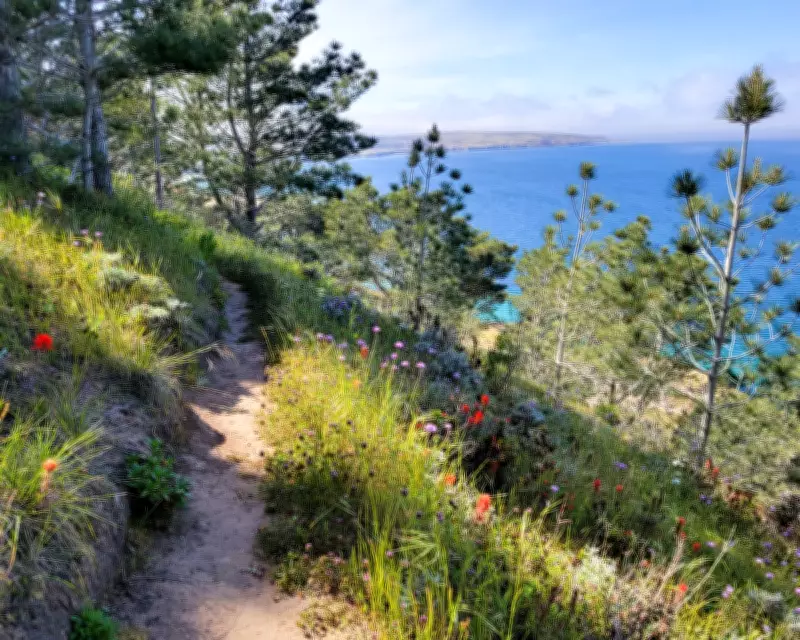
A rare wildfire on Santa Rosa Island, part of California's Channel Islands, is threatening a unique ecosystem home to plants found nowhere else on Earth. The blaze, which has already scorched approximately 18,000 acres, is concentrated on the island's southeastern corner, where a grove of Torrey pines—some over 250 years old—stands as one of only two such populations globally.
Firefighters' Race Against Time
Firefighting crews have been working tirelessly to prevent the fire from reaching the Torrey pine grove. Initial reports suggest they have succeeded in shielding the grove from the worst of the flames, but experts caution that the long-term survival of the trees remains uncertain. "We're all watching this with a little bit of trepidation," said Dr Heather Schneider, director of research and conservation at Santa Barbara Botanic Garden. "Are these plants going to recover on their own?"
Unique Ecosystem Under Siege
The Channel Islands are celebrated by biologists as a conservation success story, where native plants have rebounded after centuries of damage from non-native livestock and wild game. Today, the islands host dozens of endemic species, with six found exclusively on Santa Rosa Island. Among them are the Torrey pine, Santa Rosa Island manzanita, Santa Rosa Island live-forever, Hoffman's slender-flowered gilia, East Point dwarf dudleya, and soft-leaved Indian paintbrush. Ten percent of the island's plants are considered rare.

Threat to Endemic Species
Wildfires are historically rare on the Channel Islands, typically sparked only by lightning strikes. The current fire is believed to be human-caused, after a marooned sailor crashed his boat into the rocks and fired flares that may have ignited the blaze. The fire threatens all six endemic plants, but biologists hold varying degrees of hope for their recovery. Steve Junak, a biologist with nearly four decades of experience studying the islands' flora, noted that manzanita often thrives after fires, while the live-forever and gilia occupy habitats with sparse fuel. However, he expressed deep concern for the Torrey pines and the East Point dwarf dudleya, a succulent whose entire range has been burned.
Uncertain Recovery
The fire's impact on the soft-leaved Indian paintbrush remains unclear, as its range extends north of the burn area. Junak emphasized that the consequences extend beyond the plants themselves. "When we think about the effects of this fire on the special plants on the island, we need to consider how the endemic insects and animals that interact with them are being affected," he said. "The island's plants provide nectar, pollen, food, and shelter for them." Additionally, damage to soil crusts—composed of lichens, algae, mosses, and liverworts—could promote the spread of invasive species and soil erosion.
A Helping Hand from Science
If the fire proves catastrophic, the Santa Barbara Botanic Garden may offer a lifeline. The institution has spent decades building a seedbank containing seeds from the island's rare plants, including a conservation grove of 40 Torrey pines. "This is why we do what we do," Schneider said. "There's always the hope that nature will recover on its own. But if it doesn't, we have been gathering the seeds we need to help." As the fire continues to burn, biologists await the full scope of the damage, hoping that their preparations will not be needed.