
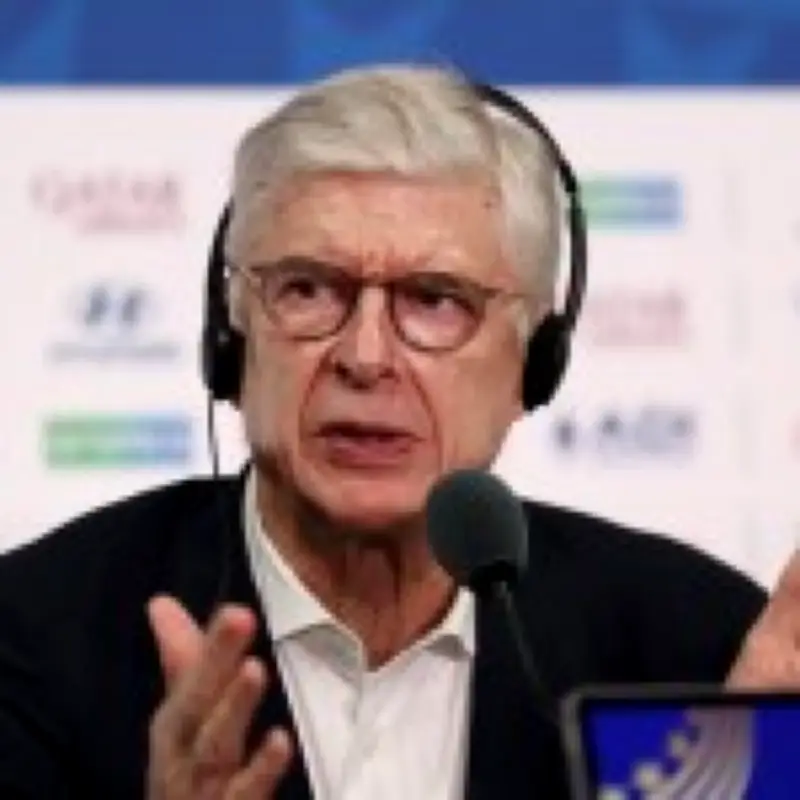
Wenger: No Impact on Results
Arsene Wenger, FIFA's Chief of Global Football Development, has stated that the mandatory hydration breaks introduced at the 2026 World Cup did not alter match outcomes or disrupt the flow of play. Speaking ahead of Sunday's final between Spain and Argentina at the New York New Jersey Stadium, the former Arsenal manager confirmed that FIFA will conduct a thorough review after the tournament before deciding whether to retain the breaks in future competitions.
The three-minute pauses, mandated midway through each half in every World Cup match, were designed to protect players in extreme heat. However, they were met with mixed reactions from fans and coaches, with some arguing they broke the game's momentum and allowed broadcasters to insert commercial breaks.
Mixed Reactions from Coaches and Players
Spain coach Luis de la Fuente and Netherlands captain Virgil van Dijk supported the medical rationale in hot conditions but questioned their necessity in cooler climates and covered stadiums. England manager Thomas Tuchel noted the breaks had a greater impact than anticipated, disrupting the rhythm of matches. Uruguay coach Marcelo Bielsa was more critical, stating the breaks added nothing to football and undermined the sport's cultural essence.
Fans also voiced their displeasure early in the tournament, with booing audible during the pauses. Wenger acknowledged the discontent: 'Sometimes they did not like them and we have to analyze after the World Cup what is the impact.'
Varied Conditions Across Host Nations
The 2026 World Cup, co-hosted by Mexico, Canada, and the United States, featured significant disparities in playing conditions. Matches in some venues were played in extreme heat, while others in Canada and Boston were much cooler. Wenger explained that the breaks were applied uniformly to avoid creating discrepancies: 'In some games it was really needed and because we did not want to make any difference between games we decided to do it for every match.'
He added: 'In some games where stadiums were covered, people were not happy with it. Medically it was needed in many games. We have not come to a conclusion yet.'
Future Decision Pending Review
Wenger emphasized that FIFA's priority is to serve football fans and players. The organization will conduct a deep analysis after the tournament, weighing medical necessity against fan experience and the sport's traditions. The decision on whether to retain hydration breaks will be based on this evaluation.




