
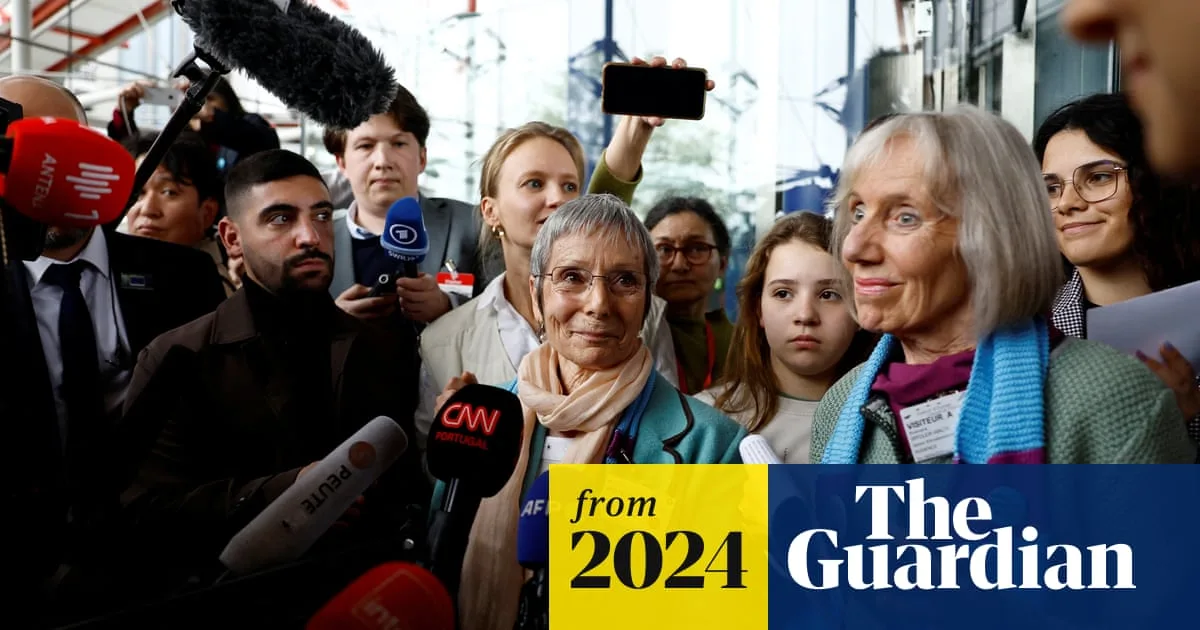
The European Court of Human Rights (ECHR) has ruled that Switzerland violated the human rights of a group of older Swiss women by failing to implement adequate climate policies. In a landmark decision, the court found that the Swiss government's inaction on climate change put the women at greater risk of death from heatwaves, breaching their right to family life.
The case was brought by KlimaSeniorinnen, a group of 2,400 older Swiss women who argued that because older women are more vulnerable to heatwaves, Switzerland had a duty to cut emissions in line with the Paris Agreement target of limiting global warming to 1.5°C. The ECHR ruled that Swiss authorities had not acted in time to develop a sufficient strategy to reduce emissions and had failed to provide the applicants with adequate access to justice in Switzerland.
The court also dismissed two other major climate cases: one brought by a French mayor against France, and another by a group of young Portuguese people against 32 European countries. The Portuguese case was rejected because the applicants had not exhausted legal avenues in Portugal, while the French case was deemed inadmissible.
Despite these dismissals, legal experts hailed the Swiss verdict as a significant victory. Corina Heri, a law researcher at the University of Zürich, described it as a huge success, noting that the ruling sets a precedent for similar cases across the 46 member states of the Council of Europe. Joie Chowdhury, an attorney at the Centre for International Environmental Law, said the judgment leaves no doubt that the climate crisis is a human rights crisis and is expected to influence climate action and litigation globally.
The plaintiffs, including climate activist Greta Thunberg, celebrated outside the court in Strasbourg. Rosmarie Wydler-Wälti, co-president of KlimaSeniorinnen, thanked Thunberg for her support. Nicole Barbry, a 70-year-old member of the group, expressed joy that the court had finally listened to them. The ruling opens the door for organizations to bring further climate cases on behalf of applicants, raising judicial pressure on governments to address climate change.




