A groundbreaking study from the University of Newcastle has delivered a stark warning: UK winters are poised to become even wetter as climate change accelerates. This research provides a sobering glimpse into the future of British weather, highlighting a significant increase in precipitation that could exacerbate flooding risks across the nation.
Alarming Rainfall Increases Linked to Global Warming
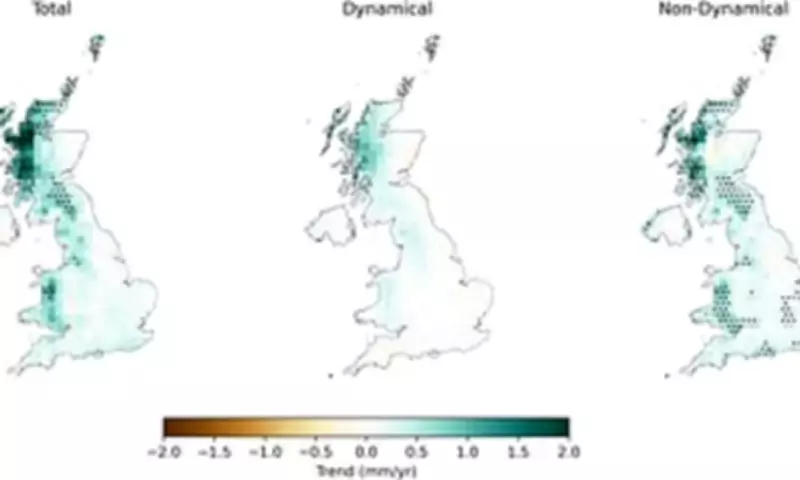
The study, led by Dr. James Carruthers, reveals that for every 1°C rise in global temperatures, winter rainfall in the UK surges by seven per cent. 'Our findings indicate that climate change has already made our winters substantially wetter, with a 7% increase in rainfall per degree of global warming,' Dr. Carruthers stated. 'This is deeply concerning, as seasonal rainfall is escalating at a pace far exceeding predictions from global climate models.'
Remarkably, the UK is experiencing changes in winter rainfall that models had forecast for the 2040s, putting the nation approximately two decades ahead of schedule. 'We're already witnessing shifts in UK winter rainfall that global climate models predicted for the 2040s – we're 20 years ahead,' Dr. Carruthers emphasised.

Historical Data Confirms Wetting Trend
To unravel the complexities of UK winter weather, researchers analysed rainfall data spanning from 1901 to 2023. Their analysis confirmed a clear trend: winters are growing wetter as global warming persists. 'UK Met Office data show that since the 1980s, the UK climate has been warming at a rate of about 0.25°C per decade – resulting in nearly 9% more rainfall compared to the 80s,' Dr. Carruthers explained.
The period from October 2023 to March 2024 set a record as the wettest winter half-year in history, with current conditions challenging that milestone. This increase in precipitation has left many towns vulnerable to flooding, as evidenced by recent events, such as the inundation of Worcestershire County Cricket Club in early February.
Regional Impacts and Flooding Risks
While most Britons have kept their umbrellas handy, certain areas have borne the brunt of the relentless rain. Locations like North Wyke in Devon, Cardinham in Cornwall, and Astwood Bank in Worcester have endured 42 consecutive days of rainfall, highlighting the uneven distribution of wet weather across the country.
Professor Hayley Fowler, a co-author of the study, quantified the extra rainfall: 'The additional water falling every winter across the UK due to fossil-fuel-induced warming would fill 3 million Olympic-sized swimming pools.' She warned that this saturation predisposes the nation to flooding, as ground conditions become increasingly waterlogged.
Urgent Calls for Climate Action
The study underscores that the only way to mitigate this escalating rainfall is by curbing greenhouse gas emissions. 'This extra rainfall will continue to increase annually with additional global warming,' Professor Fowler cautioned. 'We can only halt these rises in flooding by ceasing the burning of fossil fuels.'
She highlighted a growing gap between climate risks and adaptive measures, urging an overhaul of planning and investment strategies. 'It is vitally important that we revamp our planning and adaptation approaches, with increased funding directed toward tackling this mounting challenge. Without enhanced resources, we face rising economic damages and more casualties from severe floods.'
Current Weather Patterns and Jet Stream Influence
Met Office figures for February reveal rainfall well above average in many UK regions. By February 8, Aberdeen had reached 180% of its monthly average, followed by Kincardineshire at 152% and Angus at 130%. In the south, the Isle of Wight and Worcestershire recorded 108% and 103% of their averages, respectively.
The Met Office attributed these early-month totals to a persistent unsettled pattern, with some areas surpassing typical monthly rainfall within the first eight days. This pattern is driven by a 'blocked' jet stream, a fast-flowing air current that influences weather systems. Jet streams, particularly strong in winter due to temperature contrasts between Arctic and tropical air, play a crucial role in distributing precipitation across the UK.

As climate change intensifies, understanding these atmospheric dynamics becomes increasingly critical for predicting and managing future weather extremes.