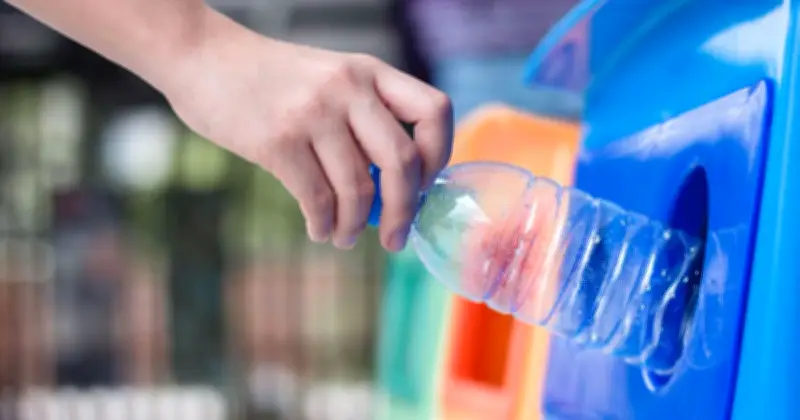
UK households will be paid to return empty plastic bottles and cans to local supermarkets, with no receipt needed, as part of a Deposit Return Scheme (DRS) launching on October 1, 2027. The scheme will reward shoppers with a flat 20p deposit for each container returned to dedicated collection points at retailers such as Tesco, Asda, Morrisons and Sainsbury's, as well as grocery stores, convenience stores and newsagents that sell drinks.
How the scheme works
Shoppers will be charged a small deposit when they buy drinks in plastic bottles or metal cans, and will get this deposit back when they return the empty containers to retailers. Exchange for Change, which will deliver the UK's Deposit Return Scheme, has confirmed that a flat 20p deposit will apply to all in-scope containers, meaning shoppers receive 20p back per bottle or can returned.
Travis Way, managing director at RVM experts EcoVend, part of international circular economy specialists Reconomy, said: "While much of the industry had anticipated a flat 20p deposit, its confirmation is a helpful step forward for businesses preparing for the UK’s Deposit Return Scheme."
Industry reaction and rollout
Way added: "A flat rate also brings practical benefits for businesses by simplifying implementation, reducing administrative complexity and supporting more consistent system design across retailers, producers and return operators. Having greater clarity at this stage allows retailers, producers and operators to plan with more confidence, particularly when it comes to infrastructure, cashflow and customer engagement. A simple, uniform deposit should also support consumer understanding and mirrors other well-established European schemes."
The DRS will be introduced in October 2027 in England, Northern Ireland and Scotland, while the Welsh Government is developing its own DRS for Wales. Way confirmed to The Express: "This will only apply to the UK scheme, not the Welsh scheme, but we can expect that Wales will follow suit with same rate in order to keep both schemes aligned. The deposit will be returned at point of return."
Environmental impact and exemptions
The rollout aims to reduce litter and increase recycling rates, as UK consumers use around 14 billion plastic drinks bottles and nine billion cans annually. Research by charity Keep Britain Tidy shows small plastic bottles and non-alcoholic cans make up 43% of litter by volume, so the DRS is expected to reduce this and boost recycling. Similar schemes operate in more than 50 countries worldwide, including Germany, Sweden and the Republic of Ireland.
Confirming the plans in a briefing published in January, UK Parliament said: "All parts of the UK plan to start schemes on 1 October 2027. England, Northern Ireland and Scotland will include single-use drinks containers between 150 millilitres and 3 litres made from polyethylene terephthalate (PET) plastic, steel and aluminium, but not glass. The UK Government decided against including glass due to concerns about safety, storage, and recycling quality. Wales will include glass bottles in its scheme but initially without a deposit, to avoid immediate changes to labelling and distribution. Wales also plans to introduce a reuse scheme as part of its DRS."
According to the Department for Environment, Food & Rural Affairs (Defra), all retailers in England and Northern Ireland selling drinks included in the scheme must pay a deposit to producers or wholesalers when purchasing the drinks, and then charge the deposit to consumers at the point of sale. Retailers must then pay the deposit back to consumers at the point of return, either by cash, voucher or card. Return points will be based at local supermarkets and other retailers that sell drinks, and can be manual or automated using a reverse vending machine.
Circular Economy Minister Mary Creagh told The Express last year: "This Government is committed to cleaning up our streets and ending our throwaway culture. Deposit return schemes are proven to reduce the littering of cans and plastic bottles and drive up recycling rates which have flatlined for 15 years. Our packaging reforms will create 25,000 jobs and lead to more than £10 billion investment in recycling during the next decade."
Retailers in urban areas with a retail space of less than 100m2 will be exempt from hosting a return point, although they can still apply to be a voluntary return point. Other organisations that sell drinks can also apply to host a voluntary return point, including hospitality venues, food-to-go stores, schools, mobile caterers, businesses with vending machines, and gyms, sports or community centres.
Shehab, team leader at Defra, said last year: "Under this scheme, a redeemable deposit is placed on specific drinks containers that can be claimed when the item is returned to a collection point, such as a local supermarket. There’s no need for a receipt or proof of purchase, so anyone can return their own drinks containers or ones that they find, as long as they’re in good nick. This means we can all chip in to help clean up our communities – and get something for it. This simple change will reward people for doing the right thing and recycling their empty drinks containers. Together, we will turn the tide on plastic waste."