
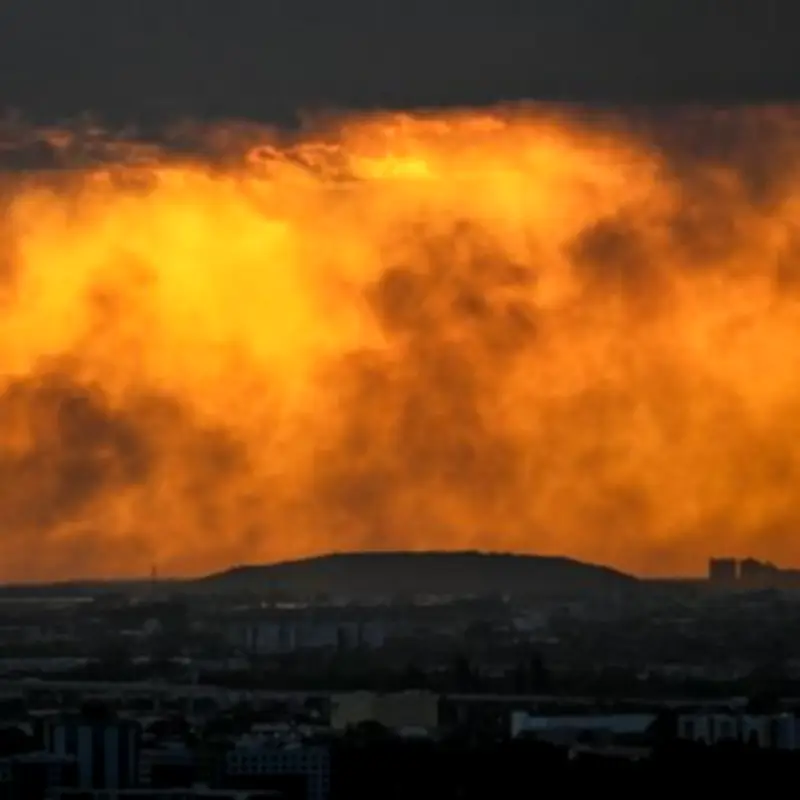
Mediterranean-style 'fire weather' will stretch the guardians of some of England's most expansive woodlands to breaking point should blazes erupt, a top adviser has cautioned. Rob Gazzard, who provides wildfire guidance to the Forestry Commission, warned that 'extreme scenarios are going to be very challenging' for the organisation to handle and could become common across the UK.
Red Alert for Extreme Heat
The Met Office has issued a red alert for 'extreme heat' across swathes of England and Wales on Wednesday and Thursday, encompassing major urban centres including London, Cardiff and Birmingham, alongside rural areas like the Chiltern Hills, Cotswolds and Forest of Dean. Temperatures are expected to soar, raising the risk of wildfires similar to those seen in Spain and Portugal.
Mr Gazzard fielded questions on Tuesday regarding wildfires from the Commons Environment, Food and Rural Affairs Committee. He explained that approximately 97%-99% of wildfires were 'roughly under a hectare', controlled by firefighters, insufficient fuel and weather conditions. However, some blazes prove more extensive, including the Fylingdales Moor and Langdale fire last year. At its height, the inferno consumed 25 square kilometres – nearly 10 square miles – of moorland and forestry in North Yorkshire.
Challenging Capabilities and Capacity
'If we had multiple ones of those, it becomes a capacity issue,' Mr Gazzard said. 'Finally, we have these extreme wildfire scenarios, July 19 2022, Mediterranean weather – the same fire weather as Spain and Portugal, which we're going to be experiencing this week. And those extreme scenarios are going to be very challenging to us. In essence, it might challenge our capabilities and our capacity.'
More than 800 wildfires were recorded on 19 July 2022, when temperatures soared to 40.3C at Coningsby in Lincolnshire. London Fire Brigade alone tackled 106 blazes, including 59 grassland, woodland and crop fires. At Wennington in east London, 16 properties were razed to the ground.
Resource Draw and Prevention
Mr Gazzard explained 'the big resource draw' on the Forestry Commission centred on ensuring 'small fires did not become big fires', drawing on analysis from the 'really challenging' 2018 season. The select committee also received evidence from National Fire Chiefs Council chairman Phil Garrigan. He proposed a 'rating system for fire risk' that could limit activities in wildfire-prone locations, potentially including disposable barbecue prohibitions or, in severe circumstances, 'restrictions around movement of people'.
Outlining how his proposal would operate, Mr Garrigan said: 'We would go to areas – defined areas – and identify the high risk of fire and significant vulnerability, and as a result of that, in that defined area, there would be a number of restrictions that would follow.'
Committee member Barry Gardiner, the Labour MP for Brent West, said: 'That depends presumably on making sure that people are aware of that. And I know that electronic road signage has been used that can say, "you're now entering an area of heightened risk and these controls are in place". Is that something that this committee should be talking about recommending?' Mr Garrigan responded: 'Yes.'




