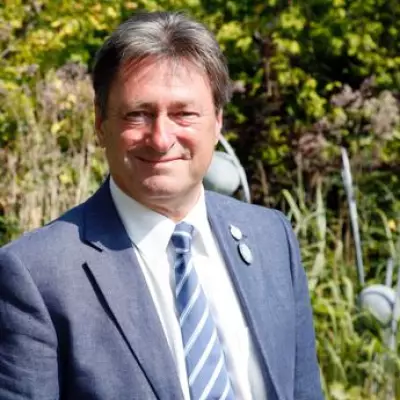
Climate Minister Katie White Advocates for Renewed Net Zero Commitment
In an exclusive interview, UK Climate Minister Katie White has emphasised the urgent need to rebuild public and political support for net zero targets, as progress risks being drowned out by rising climate skepticism and global instability. Speaking from Parliament, White highlighted that despite challenges, the UK remains broadly on course to achieve net zero by 2050, with significant advancements in renewable energy and decarbonisation efforts.
Progress Amid Political Turbulence
According to a 2025 report from the Climate Change Committee, the UK's net zero goal is within reach, provided the government maintains its current trajectory. This success is driven not only by the power sector—where wind energy has soared and the last coal-fired power station closed in 2024—but also through innovations in heat pumps and electric vehicles, which are decarbonising heating and transport. White confirmed that Labour's ambitious target for a clean electricity system by 2030 is also on track, crediting mission lead Chris Stark for diligent oversight.
White, who was elected in the 2024 Labour landslide, brings over two decades of climate advocacy experience, including roles with Friends of the Earth and WWF. Her enthusiasm remains undimmed, as she shared anecdotes from school visits where children championed sustainable practices, such as switching to chickpea korma.

Countering Climate Skepticism
However, White acknowledged a significant shift in public discourse, with net zero facing opposition from political factions and media outlets. She pointed to misinformation, such as false claims linking energy blackouts to renewables, and criticised recent calls from Conservative leaders to prioritise fossil fuel extraction over green alternatives. "We need to re-make the case for climate action," White insisted, noting that support for net zero remains high among 64% of the public, according to recent polling.
To combat skepticism, White advocates highlighting both the risks of inaction—such as intensified hurricanes and increased rainfall due to climate change—and the economic opportunities of the low-carbon transition. She cited data showing that while UK emissions fell by 54%, the economy grew by 80%, debunking myths that decarbonisation hinders growth.
Economic and Security Imperatives
The war in Iran has underscored the vulnerabilities of fossil fuel dependency, strengthening the argument for energy independence through renewables. White referenced Climate Change Committee modelling indicating that a managed transition to net zero would add only 4% to household energy bills, compared to a 60% spike from fossil fuel market shocks. "Net zero is a good thing for the British economy, for British security, and for the climate," she asserted, urging the government to speak more confidently about these benefits.
Challenges and Compromises
Despite progress, White admitted shortcomings in climate adaptation and criticised cuts to international climate aid, though she defended these as necessary compromises amid budget constraints. "Politics is the art of the possible," she remarked, reaffirming the government's commitment to climate goals despite tough decisions.
In conclusion, White called for a renewed narrative that shifts focus from the costs of net zero to its value, emphasising pride in community-led green initiatives and the broader economic advantages. "I want to keep throwing everything at it," she declared, underscoring her ambition to lead the UK in addressing the climate crisis effectively.