
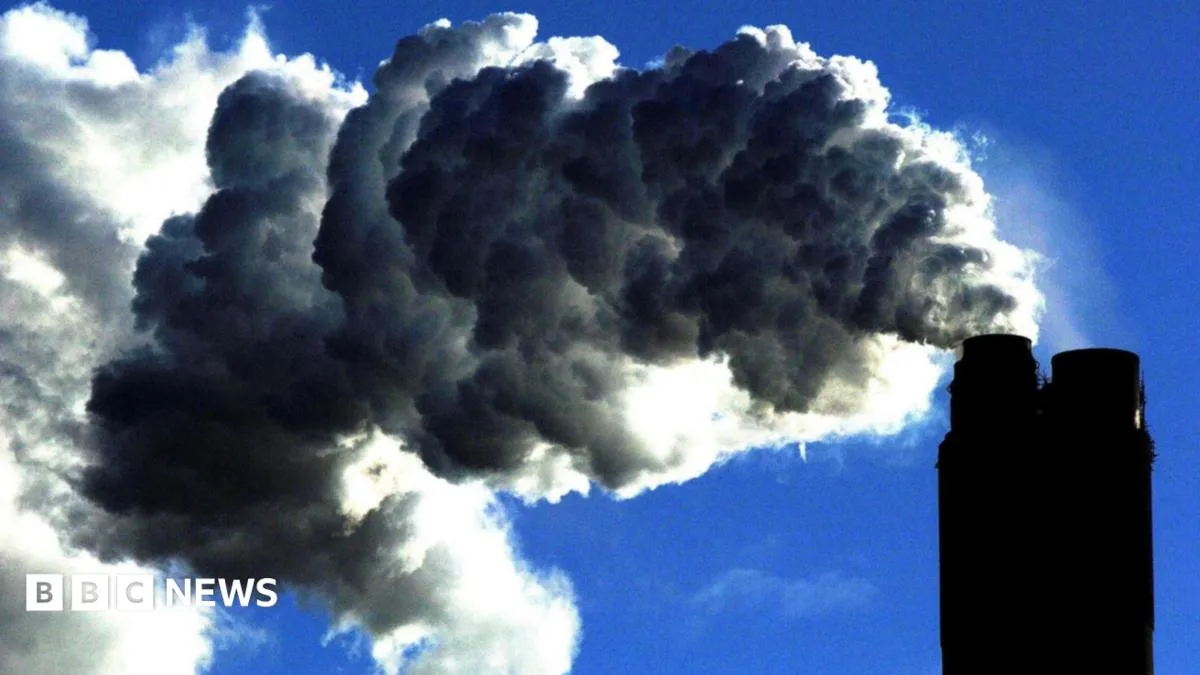
The UK government has adopted the Fifth Carbon Budget, committing to cut carbon emissions by 57% by 2032 compared to 1990 levels. The target is among the most ambitious globally and aims to reassure investors in the country's ageing energy system.
However, the government's advisory Committee on Climate Change (CCC) has warned that current policies are insufficient to meet the target. The CCC's latest report notes that while UK emissions cuts are on track for the 2050 goal of an 80% reduction, a new approach is needed in housing, agriculture, and transport, where emissions are rising.
Energy Secretary Amber Rudd insisted that climate change remains a serious long-term risk to the economy, despite concerns following Brexit and cuts to renewables subsidies. Speaking at the Business & Climate Summit, she said: 'Climate change has not been downgraded as a threat.'
Labour's Barry Gardiner welcomed the budget but called for tougher policies. Environmental groups and industry leaders expressed relief at the decision, though some argued the targets should be more stringent to align with the Paris climate accord.
The CCC also urged support for carbon capture and storage technology. Professor Dave Reay of the University of Edinburgh warned that UK climate action is 'faltering' across multiple sectors, while the National Federation of Women's Institutes praised the budget as important for future generations and wildlife.
The Global Warming Policy Forum criticised the timing of the decision, arguing it should have been delayed post-Brexit. Labour noted the government may be in technical breach of the Climate Change Act by failing to notify Parliament in time, but ministers insist the budget will become law.




