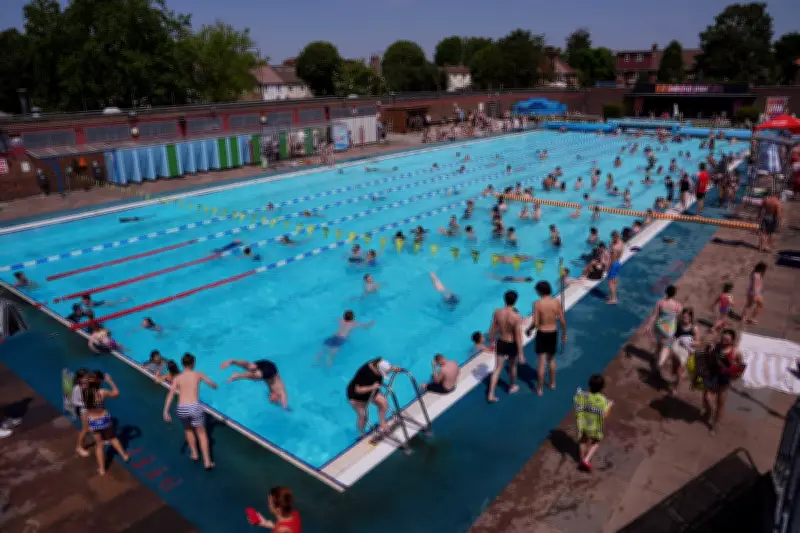
The United Kingdom has broken its June temperature record for the third consecutive day, with provisional data from the Met Office showing 37.1°C recorded in Cavendish, Suffolk, on Friday. This surpasses the 36.7°C measured in Merryfield, Somerset, on Thursday, and exceeds the previous long-standing record from 1976 by more than 1°C—a significant margin given that such records are typically broken by fractions of a degree.
Health Services Under Severe Strain
The London Ambulance Service (LAS) responded to its highest-ever number of life-threatening emergencies on Wednesday, with a 50% increase in such calls compared to a typical Wednesday in June. Cardiac arrests rose by 30%. Chief operating officer Craig Harman warned that demand is expected to grow day on day. He urged football fans preparing for England’s World Cup match on Saturday to drink alcohol responsibly and consume plenty of water between drinks.
University Hospital Southampton declared a critical incident, canceling planned operations and outpatient appointments. Dr. Hilary Williams, clinical vice-president of the Royal College of Physicians, told BBC Radio 4's Today programme that the heat exposes poor NHS infrastructure, with elderly care wards exceeding 30°C and critical machinery like MRI scanners and linear accelerators failing due to the heat.
Widespread School and Transport Disruptions
At least 571 schools have fully or partially closed across southern England, including in Somerset, Gloucestershire, Herefordshire, Buckinghamshire, Oxfordshire, West Berkshire, and Worcestershire. Network Rail urged passengers to avoid non-essential travel across much of England, with services in red and amber zones advised only for absolutely necessary journeys. The M5 was closed in both directions between junctions 22 and 23 in Somerset due to a National Grid fault, causing two-hour delays. Sheffield's tram network was suspended on Friday afternoon.
The RAC reported a 20% increase in breakdowns on Thursday compared to late June averages, with similar demand expected on Friday. Tourist attractions such as Stonehenge moved forward last entry times, and Marwell Zoo in Hampshire closed entirely. Courts were also affected: Bristol Crown Court closed its cells due to heat, and Harrow Crown Court postponed a sentencing hearing because the dock was too hot.
Climate Change Context and Warnings
Scientists noted that this heatwave would have been virtually impossible 50 years ago, with human-driven climate change making extreme heat events more frequent and intense. Met Office climate spokesman Grahame Madge said: “Before this week, the 1976 UK June temperature record had stood for 50 years, but – provisionally – it has been exceeded on three consecutive days this week. And importantly those new records have come from a broad swathe of southern England, from Somerset to Suffolk: this shows what a widespread and impactful event this current heatwave has been.”
A rare red warning for extreme heat remained in place until 9pm on Friday for London and parts of east and southeast England, including Oxfordshire, Bedfordshire, Hampshire, and Kent—the first time red warnings have been issued for three consecutive days. An amber warning covered a wider area until midnight, including the East Midlands, East of England, North West, South West, West Midlands, and Yorkshire and Humber. Yellow thunderstorm warnings were also in place for parts of Scotland, England, Wales, and Northern Ireland.
Additional Impacts
Firefighters from Derbyshire and Greater Manchester Fire and Rescue Service continued to tackle a wildfire on Tintwistle Moor in Glossop, affecting about 200 hectares. Leicestershire Police recovered the body of a teenage boy from Meynell Lake in Syston, and a 50-year-old man died after entering the water at Aberavon beach in Wales. The National Energy System Operator issued an electricity margin notice for between 7pm and 10pm on Friday, warning of potential supply constraints.
Thermal camera images captured for Greenpeace UK showed surface temperatures in London reaching 50°C to 60°C on pavements, rail platforms, building sites, and playgrounds. Met Office meteorologist Annie Shuttleworth said temperatures would finally cool down over the weekend, as the heat dome—an area of high pressure trapping heat over western Europe—begins to break.