
US President Donald Trump has dashed hopes of an imminent Iran settlement with a fresh outburst, as missile exchanges between America and Iran dealt another blow to a fragile ceasefire. Hours after the strikes, Trump slammed Iran for delaying a peace deal, warning Tehran 'will have to pay the price.'
Trump's Social Media Tirade
Out of frustration, Trump posted an astonishing escalation on social media, saying: 'Iran's Military is a complete and total mess. Much of it, like their Navy and Air Force, doesn't even exist anymore – They have been completely defeated. Iran is all talk and no action.' His comments were a stark departure from his repeated optimistic claims about a peace settlement coming 'within days.'
Missile Exchanges and Ceasefire Strain
The Tuesday evening US attacks were a response to Iran's troops shooting down a £60 million US Apache attack helicopter over the Strait of Hormuz on Monday. Although the two-strong crew was saved by a remote drone in the first ever rescue of its kind, the downing of an Apache was a humiliation. Apache helicopters are immensely well-protected with a kevlar shell and hi-tech weaponry and surveillance systems.
The ferocious US response was launched at 5pm GMT, as American forces hit back against Iran with what they called 'defensive strikes.' US Central Command (CENTCOM) said in a statement: 'US Central Command forces began launching self defence strikes against Iran at 5pm at the Commander-in-Chief's direction in response to yesterday's downing of a US Army Apache Helicopter. The mission is a proportional response to unjustified Iranian aggression.'
Civilian Infrastructure Under Attack?
There are fears US forces have started dismantling civilian infrastructure within Iran. Iran's Islamic Revolutionary Guard Corps (IRGC) said US strikes hit targets including Sirik, Jask, Minab, Qeshm Island and the port of Bandar Abbas. The IRGC also claimed the strikes caused major damage to a telecommunications tower in Sirik and destroyed two water reservoirs there. This is the second time there have been claims the US has hit Iran's crucial desalination plants, which convert sea water into drinking water.
On March 7, during the all-out war, Iranian Foreign Minister Abbas Araghchi accused the US of striking a desalination plant on Qeshm Island, cutting off water supply to 30 villages. Araghchi wrote: 'Water supply in 30 villages has been impacted. Attacking Iran's infrastructure is a dangerous move with grave consequences. The US set this precedent, not Iran.'
US Military Presence in the Gulf
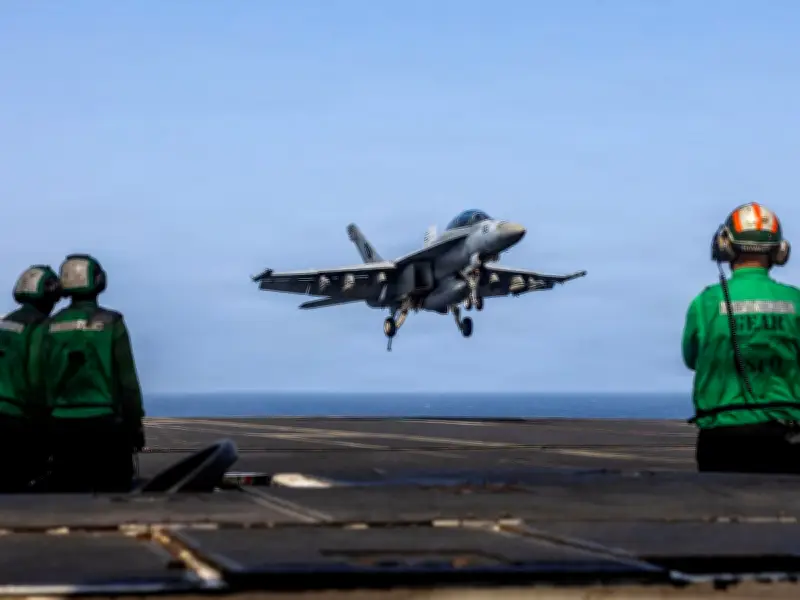
US taxpayers are spending several billion dollars a week on maintaining an immense armada of warships in the Gulf and wider region. It is believed 20,000 sailors and marines are stationed on ships there, aboard the USS Abraham Lincoln and USS George HW Bush carrier strike groups. These are accompanied by 18 guided missile destroyers, the 31st Marine Expeditionary Unit and over a dozen squadrons of warplanes. In addition, around 50,000 US troops are stationed across the entire Middle East.
Strait of Hormuz Tensions
Iran has weaponised the crucial Strait of Hormuz, effectively cutting off the waterway by using the threat of underwater bombs and strikes on vessels that attempt to cross without permission. A South Korean tanker, the Universal Winner, arrived at the port of Ulsan, South Korea, on Wednesday, June 10, after being stuck in the strait since the conflict began. The vessel was one of 26 South Korean boats stranded in the waterway. Around 750 ships are believed to have passed through the strait since the conflict began.




