Political Feud Erupts Over Potomac River Sewage Spill Disaster
President Donald Trump and Maryland Governor Wes Moore are embroiled in a bitter dispute over responsibility for a massive sewage spill contaminating the Potomac River, one of the largest such environmental disasters in United States history. The conflict highlights tensions between federal and state authorities regarding infrastructure management and emergency response.
The Sewage Spill Incident
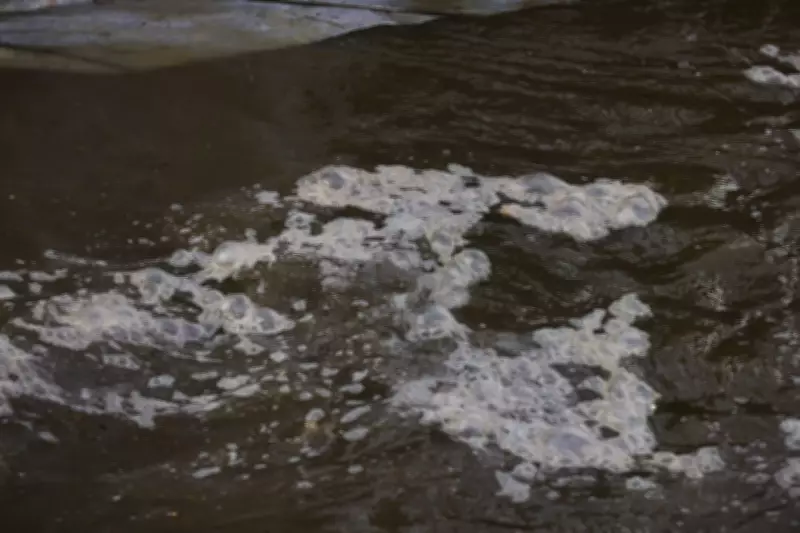
On 19 January 2026, a 72-inch diameter pipeline known as the Potomac Interceptor collapsed near Cabin John, Maryland, releasing more than 200 million gallons of untreated sewage into the Potomac River northwest of Washington D.C. The 1960s-era pipeline is operated by DC Water, a utility under federal regulation and Environmental Protection Agency oversight. Emergency repairs are underway, but sewage continues to flow into the river while officials warn of significant environmental and public health risks.
Authorities have advised the public to avoid contact with the Potomac River and keep pets away from contaminated water, though drinking water drawn from upstream sources remains safe. Immediate repairs are expected to take four to six weeks, while complete restoration could require up to ten months according to local officials.

Political Accusations and Counterclaims
President Trump used his Truth Social platform on Monday to accuse Governor Moore of "gross mismanagement" regarding the sewage disaster. "There is a massive Ecological Disaster unfolding in the Potomac River as a result of the Gross Mismanagement of Local Democrat Leaders, particularly, Governor Wes Moore, of Maryland," Trump posted. "It is clear Local Authorities cannot adequately handle this calamity."
Moore's spokesperson, Ammar Moussa, rejected these accusations, stating that Trump had "his facts wrong" and emphasizing that federal authorities hold responsibility for the federally regulated infrastructure. "Apparently the Trump administration hadn't gotten the memo that they're actually supposed to be in charge here," Moussa said, noting that EPA officials failed to attend recent legislative hearings about cleanup efforts.
Emergency Response Complications
Trump announced he would deploy the Federal Emergency Management Agency to coordinate the response, despite having repeatedly attacked the agency since taking office. The situation is further complicated by a partial government shutdown that began on Saturday, leaving the Department of Homeland Security—which oversees FEMA—without funding after congressional Democrats and the Trump administration failed to reach agreement on legislation.
White House press secretary Karoline Leavitt pointed to the sewage spill as justification for Democrats to "get serious and fund" the department, even as Trump directed the unfunded agency to lead the response effort.
Broader Political Context
This dispute represents another flashpoint in an increasingly contentious relationship between Trump and Moore, who some political observers view as a potential Democratic presidential candidate in 2028. The conflict extends beyond the sewage spill to include other issues:
- Trump excluded Moore from a White House dinner for governors scheduled for Saturday after initially inviting him
- The president has previously threatened to deploy National Guard troops to Baltimore over violent crime concerns
- Trump has challenged Moore over "DEI contracting practices" and "ballooning project costs" for reconstruction of Baltimore's Francis Scott Key Bridge, which collapsed in March 2024 after a container ship collision
Trump told reporters on Monday evening that his dissatisfaction with Moore's handling of both the sewage spill and bridge reconstruction informed his decision to disinvite the governor. "He can't fix anything," Trump said.
Moore's office released a statement emphasizing Maryland's readiness to collaborate with federal officials. "The Potomac isn't a talking point," Moussa stated, "and the people of the region deserve serious leadership that meets the moment."
The sewage spill continues to pose environmental threats while repairs progress, with political finger-pointing complicating coordinated response efforts between state and federal authorities.