
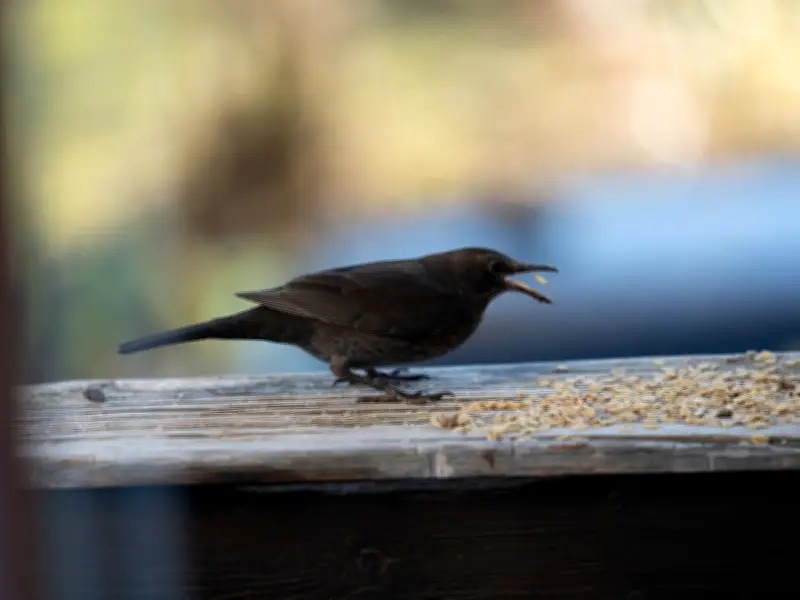
SongBird Survival has issued urgent advice for gardeners as a heatwave approaches, warning that feeding songbirds like blackbirds, robins, and wrens could do more harm than good. With temperatures set to exceed 30°C next week, the charity is urging people to provide fresh water daily instead of bird seed to help at-risk species.
Disease Risk from Summer Feeding
The charity highlights that UK songbird populations are in decline due to habitat loss and diseases spread at bird feeders. Blackbirds have been particularly hard hit by the Usutu virus, a mosquito-borne disease. Avian diseases such as Salmonella and Trichomonosis have increased as garden feeding has become more common, with six in ten people with outdoor space now feeding birds.
Susan Morgan, CEO of SongBird Survival, said: “Although we recognise many people still enjoy feeding birds during the summer, we’ve made the difficult decision to ask bird lovers to stop. In the summer months, there are plenty of insects, berries, and seeds available, so there’s no need for us to put out extra food. Research has also shown that feeding birds in summer may upset the delicate natural balance of different types of birds in your local area and may also increase the risk of disease spreading.”
Scientific Evidence Supports Change
Dr Alexander Lees, Reader in Biodiversity at Manchester Metropolitan University, added: “Feeding garden birds is a national pastime for the British and the most common opportunity for many of us to connect with nature. However, there is an increasing body of scientific evidence which links garden feeding to detrimental impacts including enhanced disease transmission and competition between species, which is contributing to steep declines in several once common species, like willow tits and greenfinches. There is an urgent need to re-evaluate guidelines on what, when, where and how much food we provide to avoid these unintended negative impacts.”
More than half of UK songbirds are threatened or already in decline, including those on the UK Conservation Status Red List like greenfinches and house martins. Songbirds lose more water than other birds and need to drink more often, making water provision critical during hot weather.
How to Help Songbirds Safely
SongBird Survival recommends: put out a shallow dish of clean water for drinking and bathing (a plant saucer or bowl is ideal); don’t make your bird bath too deep – add pebbles or sticks to help smaller birds perch safely; clean the dish weekly to prevent disease; if you have fed birds routinely in the past, start by reducing summer feeding slowly; plant flowers and shrubs that attract insects and offer seeds and fruit to birds.
Garden designer Nicola Oakey, whose songbird-friendly garden for SongBird Survival won a Silver Gilt Medal at RHS Chelsea Flower Show 2025, encourages simple steps: “In my own garden, I tuck shallow saucers of water in places that have shelter from plants. This means the birds can bathe and drink with protection from predators. At this time of year, it’s tempting to cut back or deadhead plants that have finished flowering for the year. Many plants have really valuable seeds or fruits, such as perennial cornflower (Centaurea) and plume thistle (Cirsium), so, I would encourage people not to pick up their secateurs too quickly. Leaving that structure in our borders, especially over autumn and winter, provides vital cover and places for birds to forage for food.”




