
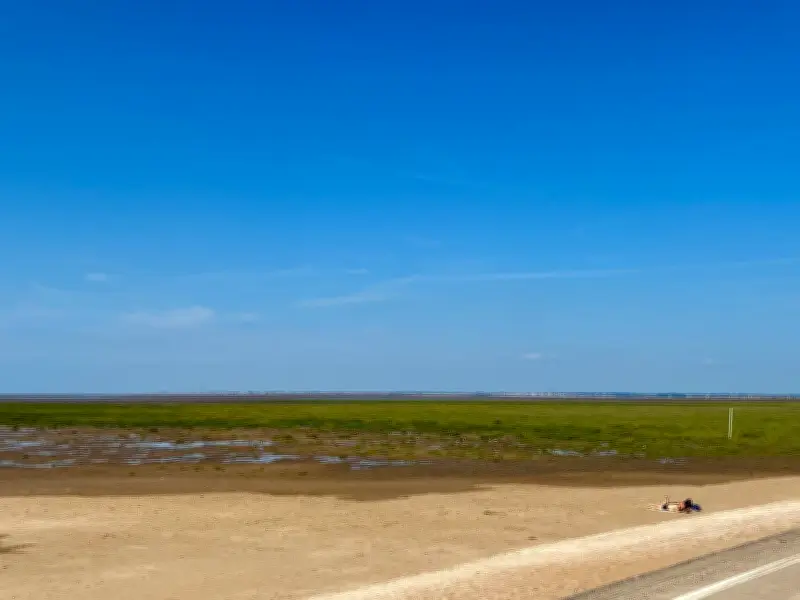
Sefton Council has rejected a motion to preserve a section of Southport Beach for public use, choosing instead to allow natural processes to continue. The decision came during a full council meeting on Thursday, where Green councillor Neil Doolin's proposal to keep a 400-metre stretch of sand free from mud and vegetation was narrowly defeated by 32 votes to 25.
Background of Accretion and Vegetation Growth
Since the Victorian era, Southport Beach has experienced accretion, a natural build-up of land as sand and sediment are deposited. Over time, the beach has increasingly resembled a mudflat, with vegetation growing inward. This has sparked debate between conservationists and those who want to maintain the town's seaside tourist appeal.
Cllr Doolin's motion called for measures such as sand fences, short wooden posts, and partially buried boulders to retain wind-blown sand. He also urged the council to engage with Natural England to explore improved drainage under the pier, where concrete-filled steel boxes block natural tidal channels, causing fine mud to settle and the beach to remain wet longer.
Public Concerns Over Access
Visitors have expressed frustration over the beach's condition. Sunni Patel, 49, visiting from Bolton with her family, told the ECHO: "We were struggling to find the beach because of all the grass!" She supported maintaining a sandy area, adding: "It would be nice to have deckchairs, some food vans along the front." Sandra Byrne, a first-time visitor, noted: "The vegetation is good for birds and wildlife but not for people." Martin Wilson, 47, from Warrington, agreed with keeping one section open, saying it would be "a feather in the cap for conservation efforts" if vegetation continues to provide bird habitats.
Council's Position and Natural England's Role
Cabinet member Joanne Williams explained that the entire Sefton coastline is constantly changing and that any interventions require Natural England's consent. She noted that previous attempts to control saltmarsh expansion through chemical and physical methods were "extremely costly and ultimately unsuccessful." The saltmarsh provides free sea defence, dissipates wave energy, and sequesters carbon.
Liberal Democrat group leader John Pugh criticised the council's approach, saying: "There is a lot of talk about Natural England, but very little evidence that there'd been any real communication with Natural England." He described the response as "a complete vacuum, inertia."
Comparison with Hoylake Beach
Similar natural processes are occurring at Hoylake Beach on the Wirral Peninsula, which is also designated a Site of Special Scientific Interest (SSSI). Wirral Council previously attempted to remove grasses but found chemical treatment and raking ineffective. Under a five-year management plan approved in 2025, the council agreed to only clear vegetation around the RNLI lifeboat station. Natural England stated that allowing habitats to respond naturally builds resilience to flooding, storm surges, and climate change.




