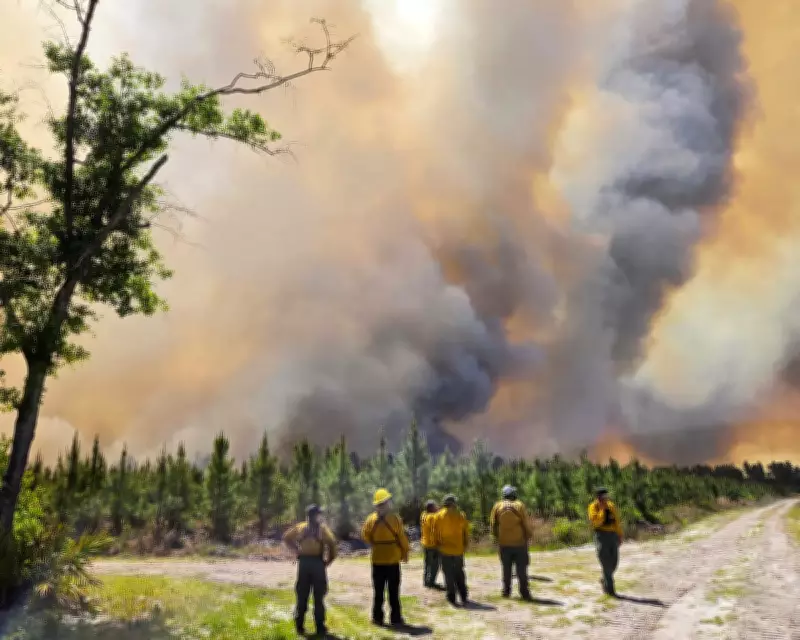
Southeast US Wildfires Intensify, Destroying Homes and Triggering Evacuations
Wildfires burning across the southeastern United States escalated on Wednesday, with significant destruction reported in south-east Georgia and north-east Florida. In Georgia, 50 homes were destroyed, while evacuations and school closures were enforced in affected communities. The Georgia Forestry Commission issued its first-ever mandatory burn ban across 91 counties in the lower half of the state, citing worsening drought conditions and increased wildfire activity.
Government Response and Public Safety Measures
Governor Brian Kemp emphasized the severity of the situation, stating on social media that his office is collaborating closely with the Georgia Forestry Commission to address the growing wildfire threat in South Georgia. He urged residents in directly affected areas to follow guidance from local officials to ensure safety. Smoke from the fires has drifted into major cities, including Atlanta and Savannah in Georgia, as well as Jacksonville in Florida, leading to air quality declines categorized as unhealthy in parts of south Georgia.
According to the Atlanta-Fulton County Emergency Management Agency, smoky conditions were expected to persist in the Atlanta area throughout the day, despite the worst blazes burning over 200 miles away. The fires have been exacerbated by a prolonged drought, low humidity, and strong winds, with some of the largest blazes reported along Georgia's coast and around Jacksonville, Florida.

Scale and Impact of the Wildfires
Georgia's two largest wildfires have collectively burned more than 31 square miles, with at least four other smaller fires reported. In Florida, firefighters are battling 131 wildfires that have scorched 34 square miles, primarily in the state's northern half. Florida Commissioner of Agriculture Wilton Simpson described the fire season as potentially one of the worst in the last 30 to 40 years, attributing it to an 18-month drought across the state.
The fast-moving Brantley County fire in south-east Georgia has grown roughly sixfold in size over half a day, threatening more homes after destroying 47 the previous day. County Manager Joey Cason reported that nearly two dozen fire agencies have been called in to assist, with at least 800 evacuations in the county and five shelters opened. The Federal Emergency Management Agency warned that the fire threatens an additional 300 homes.
Evacuations and Ongoing Threats
Brantley County Sheriff Len Davis advised residents to remain prepared for evacuation, noting that winds could shift rapidly and unexpectedly. Another significant fire in Clinch County has also forced evacuations in multiple communities. Tim Lowrimore, President and CEO of the Georgia Forestry Association, described the situation as serious and evolving, highlighting the need for continued vigilance.
Drought conditions in the contiguous United States have reached record levels for this time of year, with over 61% of the lower 48 states experiencing moderate to exceptional drought. According to the US Drought Monitor, this includes 97% of the southeast and two-thirds of the west, marking the highest level of drought for this period since monitoring began in 2000. Florida, where the worst fires are burning, is currently in exceptional or extreme drought.
Firefighting equipment is being staged across Florida to ensure resources are closer to the fires, as officials work to manage the escalating crisis. The combination of drought, wind, and low humidity continues to fuel the wildfires, posing ongoing risks to homes and communities across the region.