South Australia's Year-Long Algal Bloom Crisis Continues to Devastate Marine Life
The largest and most destructive algal bloom in Australia's recorded history persists along sections of the South Australian coastline, marking a full year since its initial detection. This environmental catastrophe has transformed vibrant marine ecosystems into zones of death and decay, with profound consequences for biodiversity and local communities.
Unprecedented Scale and Duration
Spanning an astonishing 20,000 square kilometers of coastal waters—an area twice the size of greater Sydney—this bloom represents Australia's first encounter with Karenia cristata, a rare and highly toxic algae species. Professor Shauna Murray from the University of Technology Sydney, who first identified the species in South Australian water samples, notes that Karenia cristata has only been documented in two other locations worldwide: South Africa and an island off Newfoundland, Canada.
Unlike typical harmful algal blooms that dissipate within weeks, this crisis has shown remarkable persistence. "It has somehow managed to persist throughout the whole gamut of conditions over the course of a year," Murray explains. "I'm concerned that as conditions become more suitable for Karenia cristata, we might see a repeat."

Catastrophic Impact on Marine Biodiversity
The ecological toll has been staggering. More than 780 marine species have been affected, with mortality events ranging from tiny shellfish to apex predators like white sharks. Professor David Booth, a marine ecologist specializing in sea dragons at the University of Technology Sydney, describes the devastation as "the most awful, tragic thing I've personally seen in the ocean in my 40-year career."
Particularly devastating losses have been recorded for South Australia's marine emblem, the leafy sea dragon. These unique creatures, resembling floating seaweed with elongated snouts for feeding on mysid shrimp, are concentrated in some of the worst-hit areas around Adelaide and the adjacent gulfs. Divers and citizen scientists report that habitats supporting these iconic animals have been "smashed" or completely eliminated.
Marlene, a regular diver at Rapid Bay on the Fleurieu Peninsula, witnessed her local population of 45 leafy sea dragons collapse to just one or two individuals following the bloom's passage. The International Union for the Conservation of Nature is now reassessing the species' extinction risk due to these catastrophic declines.
Broader Ecological Consequences
The damage extends far beyond sea dragons. Once-thriving seagrass meadows are under severe stress, while razorfish—another habitat-forming species—have been nearly completely wiped out in affected areas. Port Jackson sharks, once common along Adelaide's coastline, have mostly disappeared, though researchers remain uncertain whether they have perished or temporarily relocated.
Marine biologist Stefan Andrews, who lives in Ardrossan on the Yorke Peninsula, emphasizes that even where water appears clear, ecosystems have been "stripped of life." Artificial reef environments around the state's historic jetties, which supported diverse communities of sponges, sea squirts, striped pyjama squid, and other unique species, have been particularly vulnerable to destruction.
Human Health and Economic Impacts
The crisis has exacted a heavy toll on human communities as well. A recent study led by Dr. Brianna Le Busque, a conservation psychologist at Adelaide University, found that two-thirds of surveyed South Australians couldn't stop thinking about the bloom, with about one-third of directly affected individuals linking their distress to witnessing dead marine species on beaches.
"My morning beach walk has turned from a connect-with-nature walk to the morning death walk," one study participant reported. Approximately 47% of respondents said they had stopped engaging in recreational activities like surfing, swimming, diving, or beach walking, while about a quarter reported physical symptoms including coughing and respiratory irritation after visiting affected beaches.
Data from the Bloomin' Algae research project confirms that scratchy coughs, sore throats, headaches, and breathing difficulties are commonly reported symptoms from exposure to the toxic bloom.

The economic consequences have been severe. All commercial fishing in Gulf St Vincent and around Kangaroo Island has been halted until June 2026 due to sharp declines in species including calamari, garfish, King George whiting, western king prawns, and blue swimmer crabs. Recreational catch limits have been halved in these zones, with new restrictions implemented for several species in Spencer Gulf.
"The journey ahead is long, painful and turbulent," says Kyri Toumazos, an executive of the SA Northern Zone Rock Lobster Fishermen's Association and director of Seafood Industry Australia.
Scientific Investigations and Future Concerns
DNA analysis of archived seawater samples reveals that Karenia cristata was present near Kangaroo Island for nearly a decade before the explosive bloom began. "However, in 2025 something happened in the environment that made it dramatically increase in abundance," explains Professor Justin Seymour at the University of Technology Sydney. Further research is needed to determine what triggered this proliferation and whether the species might be present in other Australian states.
The South Australian environment department is currently surveying the bloom's impact on marine biodiversity at more than 200 sites across metropolitan Adelaide, the Fleurieu and Yorke peninsulas, Kangaroo Island, and the Spencer Gulf and Gulf St Vincent regions. This work, timed to match previous surveys, will be completed in June.
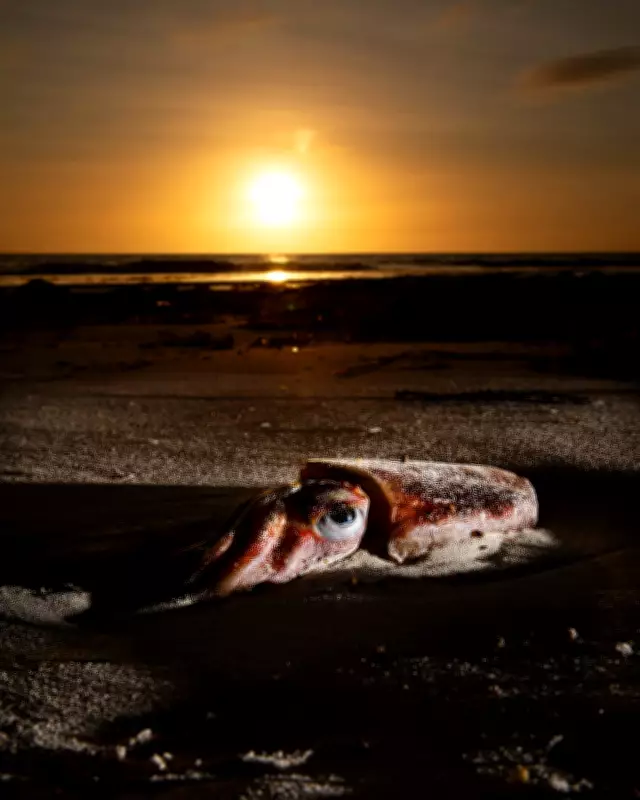
While recent testing shows low or no levels of Karenia at urban sites, the bloom remains active along the south-west coast of the Yorke Peninsula, raising renewed concerns for the globally unique population of giant cuttlefish that gathers in Spencer Gulf each May. Cephalopods are often among the first creatures affected when blooms strike, and a "bubble curtain" installed to protect cuttlefish eggs and hatchlings offers little defense for returning adults.
"They rely so heavily on the reproductive success of the previous year," Andrews warns. "If they don't have a successful season, we could lose that sub-population entirely. There's still a lot to lose."