
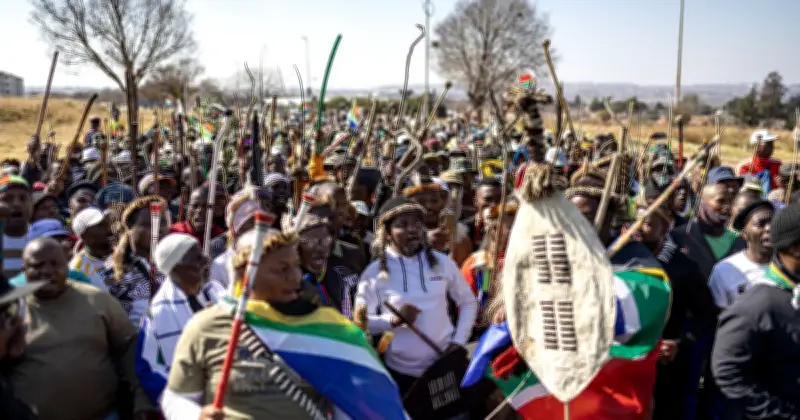
South African President Cyril Ramaphosa has appealed to anti-migrant protesters to avoid "intimidation, threats or ultimatums" as an unofficial deadline for undocumented foreigners to leave the country draws near. Several thousand migrants from other African nations have already departed South Africa in recent weeks, fearing potential violence.
Ramaphosa's Call for Calm
In his weekly newsletter, Ramaphosa stressed that many foreign nationals reside legally in South Africa. "They work, study, raise families, invest in our economy and contribute positively to our society. They too are entitled to the protection of our laws and our Constitution," he wrote. He added that the right to protest does not permit threats, intimidation, vandalism, or violence.
Official figures indicate South Africa hosts over three million documented foreign nationals. Ramaphosa has repeatedly urged calm while acknowledging the need for immigration reform.
Migrants' Plight
One undocumented Malawian told the BBC he was "happy to be going back" but "heartbroken" to leave his four young children behind. In Durban, where large anti-migrant demonstrations have occurred, authorities are dismantling temporary transit camps and arranging transportation home. Women wrapped in colourful sarongs waited beside piles of belongings as buses arrived to take them to Malawi.
Nelson Mbewe said he had come to South Africa hoping to earn money for relatives back home. "But we've faced challenges – they're saying we should go back home because we do not have the right documents," he said, noting the derogatory term "Makwerekwere" used against African migrants. "It's their country, so what can we do? That's why we have accepted that we just have to [unwillingly] go back home."
Another Malawian, Hassan Phiri, appealed for unity: "All I want to say to South Africans is that we are all one. No matter what is happening, no matter what will happen, Africa must remain Africa." He added, "Africa can't be Africa without South Africa... without Malawi, without anywhere. So whatever will happen, we must love each other and stick together as Africa."
Government Response and Statistics
Anti-migrant marches have been authorised in Durban, Johannesburg, and other cities. Police have warned organisers to prevent violence and have prepared for possible unrest. Authorities have banned protesters from carrying traditional weapons, a move that could heighten tensions as many demonstrators are ethnic Zulus who traditionally march with shields, sticks, and whips.
The government reports that over 12,000 immigrants have been deported or repatriated since protests intensified earlier this year. Ghana, Malawi, Mozambique, Nigeria, and Zimbabwe have organised flights or bus services, with about 3,500 foreign nationals volunteering to return home. South African officials say more than 500 repatriated Nigerians lacked correct immigration documents, a claim Nigeria disputes.
Historical Context
Xenophobic violence has long been a problem in South Africa and has periodically turned deadly. According to the African Centre for Migration and Society's Xenowatch tracker, two people have been killed in xenophobic incidents this year. In 2008, more than 60 people died during widespread anti-foreigner riots that shocked the country.




