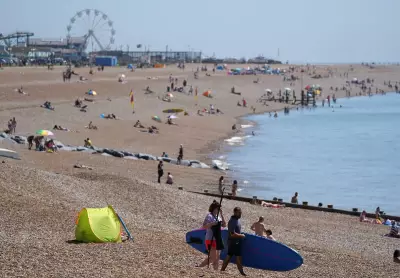
Seven people have died in France as a major heatwave brings record temperatures to Europe. Five individuals drowned in lakes, rivers, or near beaches as France battled scorching heat over the weekend, junior energy minister Maud Bregeon said on Tuesday. The heatwave is expected to persist throughout the week.
Heat-Related Deaths and Health Warnings
Weather alerts were issued after a 53-year-old runner suffered a fatal heart attack during a race in Paris on Sunday. Additionally, a woman died from heatstroke during another sporting event in Lyon, according to local media. Sports minister Marina Ferrari stated on Tuesday that some sports competitions may need to be cancelled in the coming days due to the extreme weather. Organisers are urged to enhance medical facilities and provide water to mitigate the heat.
Ferrari urged the public on social media: "Faced with this unprecedented episode of extreme heat for the month of May, I call on everyone's vigilance. Avoid any activity during the hottest hours, hydrate regularly, adjust the intensity of your effort, and prioritise activities early in the morning or in the evening."

Record Temperatures Across France and the UK
France and the UK recorded record high temperatures for May over the weekend. Paris experienced its first temperature above 30°C on Saturday. Temperatures are expected to peak at 40°C in south-west France on Friday, while Brittany in the north-west braces for 36°C this afternoon. Weather agency Meteo France issued an orange weather alert across north-west France on Tuesday, urging vigilance as the heatwave sweeps through. The west through to the centre of the country received yellow weather warnings for potential thunderstorms.
The agency reported that Tuesday was expected to be even hotter than Monday, which was the hottest May day on record. Wednesday may see a "very slight" decrease in maximum temperatures in Brittany as the heatwave moves southeast, lasting until at least the end of the week.
Government Preparedness and Warnings
French Prime Minister Sébastien Lecornu is expected to hold a meeting with key ministers on Thursday to review government preparations for the heatwave. Spain's Costa de Cantabria in the north anticipated maximum temperatures of 34°C on Tuesday, with weather agency AEMET issuing yellow weather warnings for the coastal region and parts of Extremadura. Some areas in Badajoz, Extremadura, were expected to reach 38°C on Tuesday, with certain regions potentially hitting 40°C this week. AEMET warned that the "extraordinarily high temperatures for this time of year" would continue across the country all week, except in the Canary Islands.
"Widespread tropical nights" are also expected in south-west Spain from Wednesday, according to the agency. Italy has imposed restrictions on working outdoors, with orange heat alerts issued for a dozen cities, warning of risk to life for vulnerable groups. Germany saw temperatures climb past 30°C for the first time this year on Saturday, with temperatures expected to rise throughout the week.
Meteorological Explanation
Meteo-France attributed the soaring temperatures to a "heat dome," which forms when a high-pressure system develops in the upper atmosphere, forcing air below to sink and compress, raising temperatures in the lower atmosphere. The hot air expands, creating a bubble that traps heat, making it harder for winds to move the high pressure on. This leads to stagnant pockets of heat, increasing the risk of death and wildfires.
Britain recorded its hottest May day on record on Monday, with temperatures reaching 34.8°C in south-west London, surpassing the previous record of 32.8°C from 1922 and 1944. A study last year found that the chances of surpassing the previous May record were three times more likely due to human-caused climate change, according to the Met Office. "This heat would be exceptional in the UK even in mid-summer, let alone in May," it stated.