
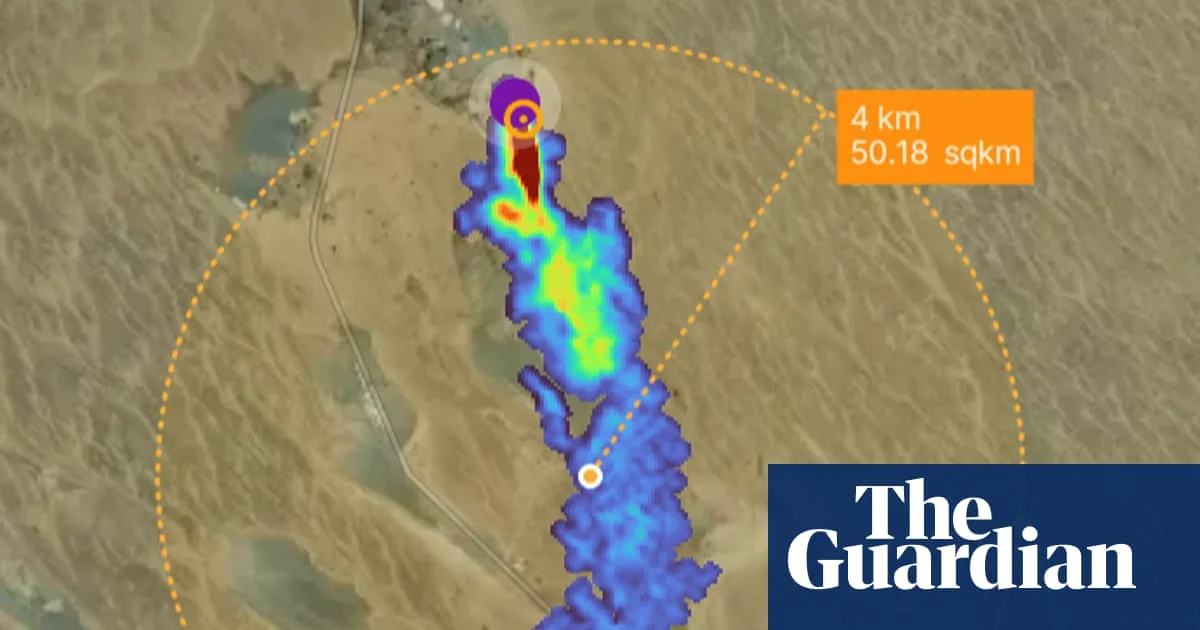
An analysis of satellite data has revealed the world's worst mega-leaks of methane in 2025, with the potent greenhouse gas spewing from oil and gas facilities at rates equivalent to running coal-fired power stations. The assessment, conducted by the Stop Methane Project at the University of California, Los Angeles (UCLA), identified dozens of super-polluting plumes that have a colossal heating impact on the climate.
The top 25 list is dominated by facilities in Turkmenistan, a secretive and authoritarian state where previous methane leaks have been described as 'mind-boggling'. Other mega-leaks were detected in the United States, Venezuela, and Iran. The largest US leak, in Texas, released 5.5 tonnes of methane per hour, equivalent to running about a million fuel-guzzling SUVs.
Methane emissions cause 25% of global heating today, and scientists have warned of a 'scary' surge since 2007 that risks triggering catastrophic climate tipping points. However, cutting methane emissions has a rapid impact because the gas is removed from the atmosphere far quicker than carbon dioxide, leading some experts to call it the climate 'emergency brake'.
Researchers expressed frustration that many leaks result from poor maintenance and can be fixed simply, often at no net cost as captured gas can be sold. 'It is really maddening,' said Cara Horowitz at UCLA. 'These sites are the result of poor maintenance – if you upgraded the infrastructure a little bit, did good housekeeping, you could solve a really important part of the problem.'
The UCLA project also investigated operators of the mega-leak sites. The Texas plume appears to be operated by Energy Transfer, which did not respond to a request for comment. Turkmen officials claimed in October that mega-leaks had been reduced, but the new analysis shows substantial leaks remain. Horowitz warned European buyers to treat Turkmen gas with caution, as the EU is phasing in strict limits on methane leaks linked to imports.




