
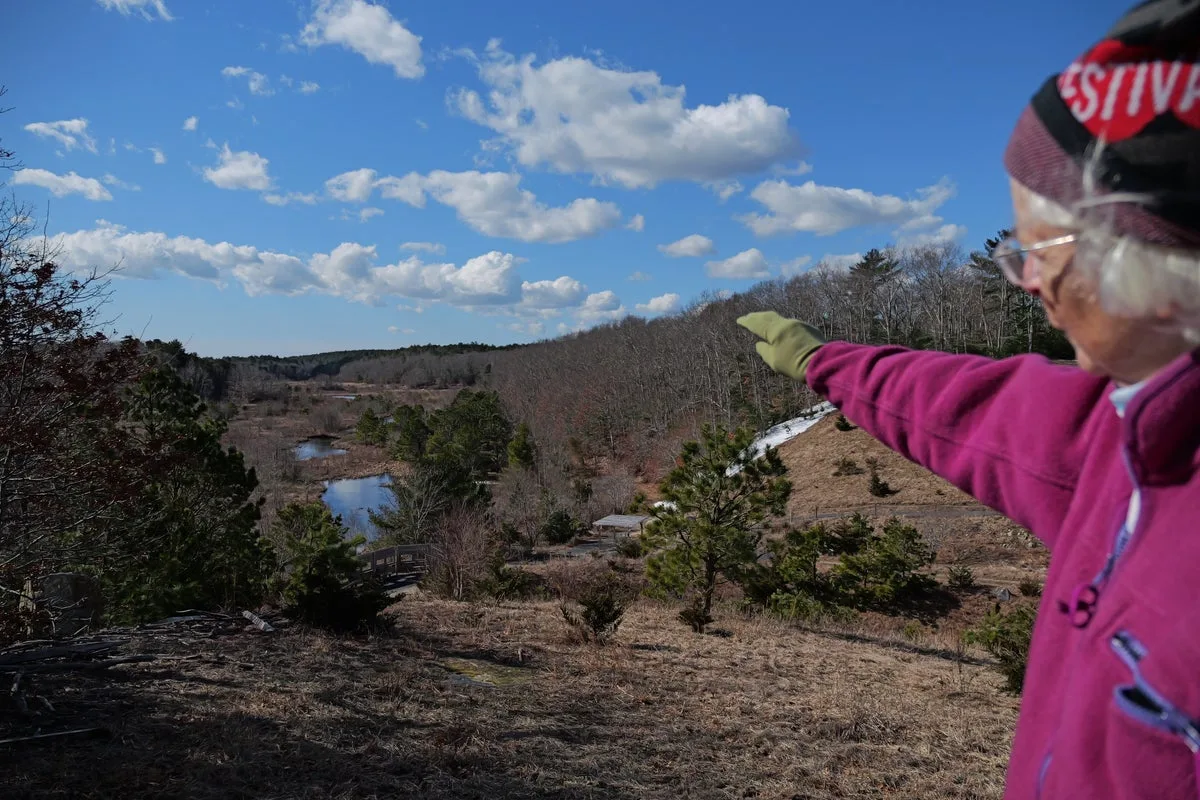
Glorianna Davenport looks out at hundreds of acres of protected wetlands that were once her family's cranberry farms. In her hands are laminated pictures of striking red cranberry bogs fed by razor-straight water channels. It's hard to believe the land where she stands — full of sinuous streams, wildlife, moss and tall trees — once looked so different.
The land's transformation, documented through a network of cameras and sensors, offers a playbook for wetland restoration as cranberry farms see slimmer profits from New England to Wisconsin because of climate change and other factors. The crop requires cold winters and plenty of water, but warmer temperatures and longer droughts are challenging harvest seasons.
Settlers in Plymouth were among the first to farm this native New England crop, and since then cranberry farms have been passed down through families for centuries. “For many of these farmers, it’s their life savings and what they want to pass on to their children,” Davenport says. “It’s very complicated.”
Land that Davenport sold for restoration, now known as Tidmarsh Wildlife Sanctuary, has set an example as the single largest freshwater restoration project in Massachusetts. Together with researchers, technologists and artists, she has created a living laboratory for wetland conservation science. The cameras and sensors provide live, publicly-available data showing how the land is recovering its natural biodiversity.
Scientists who studied the sanctuary and an adjacent town preserve that’s also on her former farmland have published peer-reviewed studies documenting the changes. Lessons learned at Tidmarsh also helped the state launch a cranberry bog restoration program to connect farmers with nonprofits, which will either buy the land to restore it or help them take on a restoration project themselves.
According to the United States Department of Agriculture, the number of retired cranberry bogs is increasing. Beth Lambert, director of the Massachusetts Division of Ecological Restoration, says the state has helped complete construction on nine restoration projects totalling around 500 acres and 10 miles of stream habitat, with 11 additional projects spanning another 500 acres in planning. She aims to restore another thousand acres in the next 10 to 15 years.




