
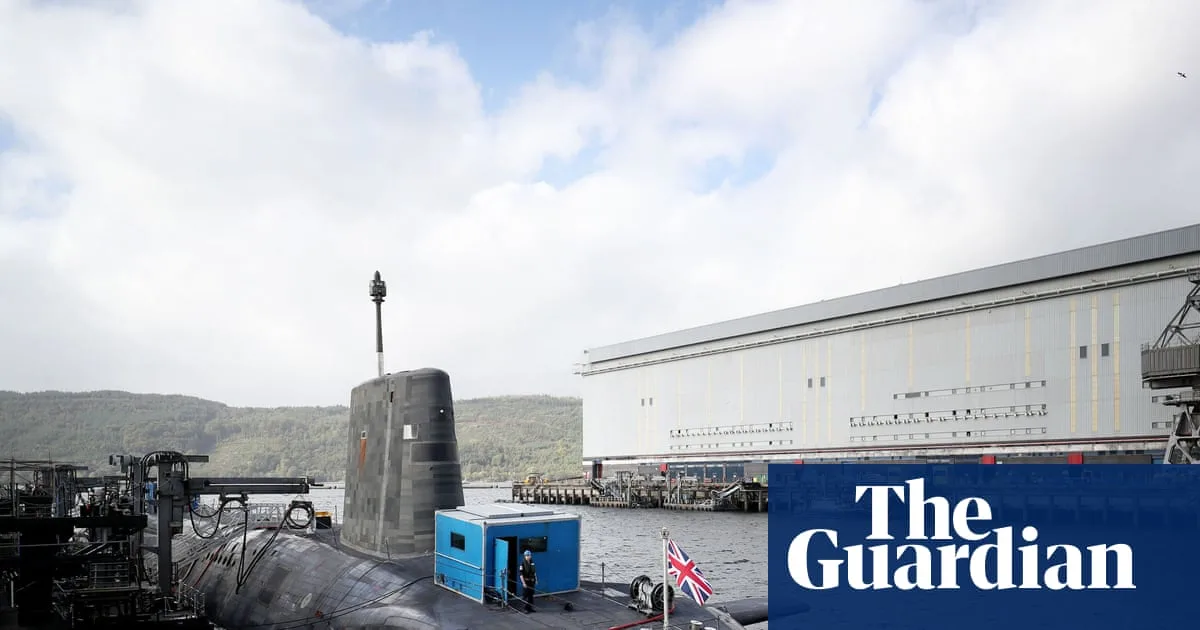
Radioactive water from the Royal Navy's nuclear bomb base at Coulport in Scotland leaked into the sea after old pipes repeatedly burst, official files have revealed. The Scottish Environment Protection Agency (Sepa) found that the Royal Navy failed to properly maintain a network of 1,500 water pipes at the base, leading to the release of low levels of tritium into Loch Long, a sea loch near Glasgow.
The armaments depot at Coulport is one of the UK's most secure military sites, storing nuclear warheads for the Trident submarine fleet. Sepa reports indicated that up to half of the base's components were beyond their design life when the leaks occurred. The agency blamed "shortfalls in maintenance" for the release of "unnecessary radioactive waste".
Confidential inspection reports and emails, obtained by the investigative website the Ferret and shared with the Guardian, were released after a six-year freedom of information battle. The UK government had argued for secrecy on national security grounds, but Scotland's information commissioner ruled that disclosure threatened "reputations" not security.
The files revealed pipe bursts in 2010 and 2019, with the latter flooding a nuclear weapons processing area and contaminating water that flowed into Loch Long. Although Sepa said radioactivity levels were very low and not a danger to human health, it noted that the MoD's response was slow and that 23 remedial actions promised in 2020 had seen delayed progress. Further bursts occurred in 2021.
David Cullen, a nuclear weapons expert at the defence thinktank Basic, called the repeated pollution incidents "shocking" and the attempts to keep them secret "outrageous". He criticised the MoD's lack of proper asset management despite a nearly £2bn infrastructure programme at the base.




