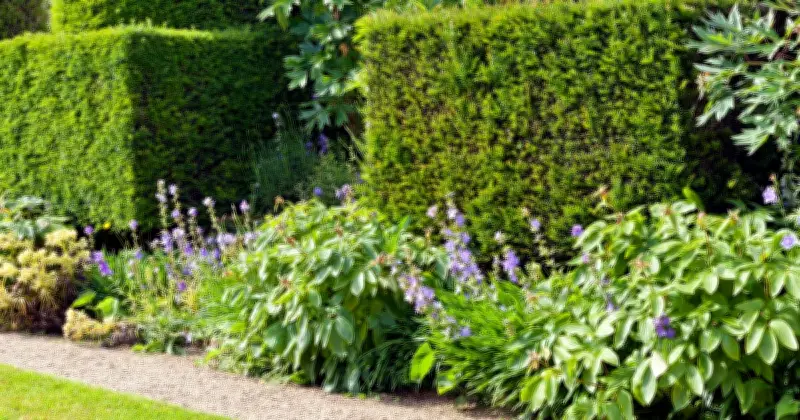
Why Plants Beat Walls for Privacy
During the summer months, many of us start using our gardens more often, and that’s when privacy really matters. A solid wall or fence can feel harsh, but using plants for screening offers a softer, more generous style. They filter views, slow wind, absorb sound, support wildlife, and make the garden feel enclosed but not heavy, according to gardening expert David Domoney.
Start with a View
Before planting anything, work out exactly what you want to screen. It might be an upstairs window, a neighbouring patio, a bin store or a busy path. You rarely need to block everything. Often, one carefully placed tree, climber or planted screen will interrupt the sightline enough to create more privacy.
Use Hedges Wisely
Hedges are the traditional choice, and for good reason. They give structure, shelter, and year-round value if you choose well. Yew, holly, privet, beech, hornbeam, Portuguese laurel and mixed native hedging can all work, depending on soil, space and light. Evergreen options give the most constant cover, while beech and hornbeam hold brown leaves through much of winter, giving softer screening. The key is maintenance. A hedge should be clipped often enough to stay dense and manageable. Also, be considerate of height, especially near boundaries with your neighbours’ gardens.
Add Height with Climbers
Trellises, arches, pergolas and obelisks are brilliant as they give plants something to climb without taking up much ground. Clematis, honeysuckle, climbing roses, jasmine and star jasmine can all soften boundaries beautifully. For quicker summer cover, annual climbers like sweet peas or climbing nasturtiums can fill gaps while permanent planting establishes itself. Climbers need guidance. Tie in young stems, prune according to the plant, and remember that some climbers grow most strongly at the top, so regular training helps keep cover lower down too.
Screen from Above
If the overlooking comes from higher windows, think vertically. A small tree with a clear stem, a multi-stemmed amelanchier, crab apple or ornamental cherry can provide filtered privacy without blocking all of the light. Pleached trees are useful where you want a narrow, raised screen, though they need proper support and regular pruning.
Container Screening
On patios, balconies, and in rented spaces, containers are often the answer. Use large, stable pots with tall grasses, clumping bamboo, bay, olive, phormium or pittosporum. Make sure drainage is good, and water consistently in warm weather. Grouping pots at staggered heights creates a more natural screen than a single straight line.
Keep It Alive and Balanced
The best privacy planting feels part of the garden, not an afterthought. Mix evergreen structure with flowers, scent and movement, and always check for nesting birds before cutting hedges or dense climbers. Done well, planting gives privacy with life, not just a barrier.
Focus Plant: Cotinus (Smoke Bush)
Cotinus, often called smoke bush, is a brilliant shrub for adding drama without relying solely on flowers. By late June, its rounded leaves are already giving strong colour, and the airy summer flower plumes begin to create a smoky, hazy effect above the stems. It is especially useful as a backdrop in a mixed border, where dark or golden foliage can make neighbouring plants stand out. Cotinus coggygria ‘Royal Purple’ is the classic dark-leaved choice, with rich purple foliage that colours well in the sun. ‘Grace’ is larger and vigorous, with purple-tinted leaves and excellent autumn colour. For smaller spaces, ‘Young Lady’ is more compact and is grown with its generous smoky flower display in mind. Cotinus grows best in fertile, well-drained soil, in sun or light shade. Purple-leaved forms produce their strongest colour in full sun, while deep shade can reduce both foliage colour and flowering. It dislikes waterlogged ground, so avoid planting where the soil stays heavy and wet. Care is straightforward. Remove dead or damaged growth in summer if needed, but leave harder pruning until late winter or early spring. Cutting back hard can produce larger, bolder leaves, though it may mean fewer flowers that year. Fun fact: Cotinus is sometimes used in dyeing. The wood and leaves of some species can produce yellow to orange tones, which gives the smoke bush an interesting history beyond the border.
Gardening Jobs for This Week
- Sow pak choi in partial shade, especially if your plot is prone to getting hot. It grows best with steady moisture, and heat or drought can push plants into bolting. Sow thinly, keep the soil damp, and pick young leaves if full-sized plants struggle in summer.
- Check patio pots for vine weevil if you have had problems before. Look for notched leaf edges from adult feeding, plants wilting despite watering, or loose roots. If a pot looks unhealthy, tip it out carefully and check for creamy, C-shaped grubs.
- Prune deciduous magnolias only lightly, and only if needed. Once they are in full leaf, remove dead, damaged or awkward growth, cutting back to a natural fork. Avoid heavy pruning, as magnolias can be slow to recover.
- Plant globe artichokes raised under cover into their final position. Choose a sunny, sheltered spot with fertile, well-drained soil, and give each plant plenty of room. Water well whilst they settle, as these are bold plants that need space.
- Shorten grapevine side shoots beyond developing bunches to keep growth under control and let light and air reach the fruit. Use clean secateurs and keep tying in useful shoots as they grow.
Did You Know?
Potatoes are not roots. The edible tubers form from underground stems called stolons, which swell below the soil and store energy for the plant. Conifers don’t flower like roses or foxgloves, but their cones are reproductive structures. Male cones can release visible clouds of pollen, which is why some conifers seem to “smoke” in spring or early summer. Japanese quince, or Chaenomeles, produces hard, aromatic fruits in autumn. They are too sharp for most people raw, but their natural pectin makes them useful for fragrant jellies. Love-in-a-mist earns its name from the way its flowers sit among fine, misty foliage. Once flowering ends, the inflated seed capsules bring another ornamental detail to the border.