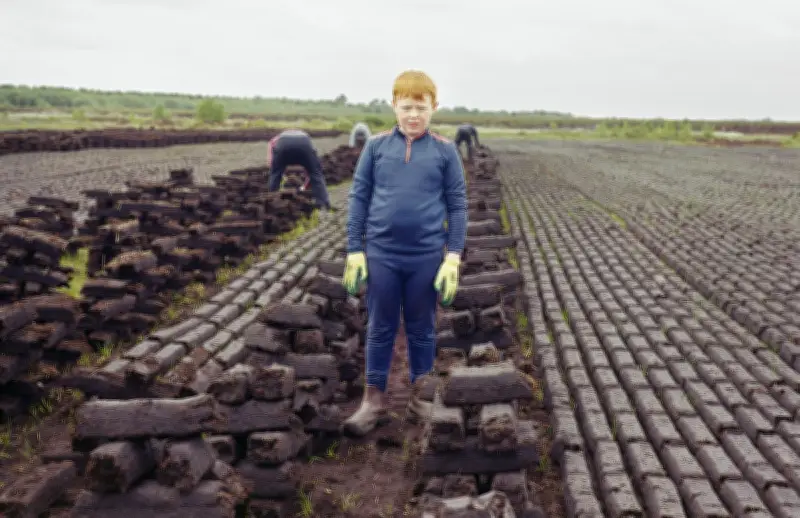
Photographer Shane Hynan's project Beofhód (meaning 'Beneath' in English) delves into the deep connection between Irish peat bogs and the nation's identity, while highlighting the environmental consequences of their use. "You can read Ireland's history in the boglands. They hold millennia in their layers," Hynan says.
Peat Bogs: A Cultural and Ecological Keystone
Peat bogs, known as portachs in Irish, cover approximately 1.2 to 1.5 million hectares, or 14% to 17% of Ireland's total land area. Raised bogs in the Irish Midlands form at a rate of just 1mm per year in low-lying, poorly drained basins or former lakes. Historical geographer Kevin Whelan, writing in the Atlas of the Irish Rural Landscape, notes that "the bog has been etched as deeply into the human as into the physical record in Ireland – to an extent unrivalled elsewhere."
Hynan first became fascinated by bogs after living abroad. "I'd gone from being an insider to an outsider. When I came home, I noticed how much the bogs had changed. In a good way, I saw fewer men cutting. In a bad way, I saw no money in the work any more," he explains.

Turf as a Lifeline for Rural Households
For generations, turf from the bog has been dried and cut into blocks, serving as the primary fuel for rural households. Households using turf may spend up to €800 a year on heating, less than a quarter of the average Irish household's annual energy bill. "It's very, very cheap fuel. They can control the quality and quantity of it; you can't really do that with anything else," Hynan says.
However, bogs face pressure from other directions. Ireland contains 8% of the world's blanket bogs, which are made of remains of grasses and sedges found along the west coast's mountainous areas. Data from An Phríomh-Oifig Staidrimh (Ireland's Central Statistics Office) reveals that more than 80% of the original peatland has been lost to extraction, afforestation, horticulture, and agriculture. "I reckon in 20 years … a lot will be gone. It's a finite resource," Hynan warns.
Environmental Impact and Carbon Storage
Beyond landscape changes, peat bogs are critical carbon sinks. A study by the FarmPEAT project found that a healthy Irish raised bog can store up to 13 times more carbon per hectare than the Amazon rainforest, as carbon is stored underground rather than in short-lived vegetation.
A Complex Situation with No Easy Answers
Hynan acknowledges the complexity: "These bogs are unresolved, just like my work. I'm not trying to resolve anything … It's a feeling that attaches me to them. When people's voices started becoming louder in my head, I started to see a lot of disparities between ideas of what we should do, what's really happening and how people are being demonised. It's a very complex situation here in Ireland."
He rejects the idea that his photography instructs or condemns: "I'm not being didactic and telling you to stop it. I'm here to question your relationship to the environment." He adds, "There's a real uncertainty in terms of the future for boglands, in the way we interact with them and how we perceive them, and how we use them."
Shane Hynan's exhibition 'Beneath | Beofhód' is at the Photo Museum Ireland until 5 July 2026.