Ocean Heat Waves 'Supercharge' Hurricane Damage, New Study Reveals
Marine heat waves are dramatically amplifying the destructive power of hurricanes and tropical cyclones worldwide, according to groundbreaking research published in the journal Science Advances. The study provides compelling evidence that these ocean temperature anomalies are creating more dangerous and costly storms.
Research Methodology and Key Findings
Researchers conducted an extensive analysis of 1,600 tropical cyclones that made landfall since 1981, examining the broader category of storms that includes hurricanes. The investigation revealed that storms passing over marine heat waves—defined as persistent, large ocean areas in the top 10% of historical heat—were significantly more likely to undergo rapid intensification.
This phenomenon has become increasingly frequent with climate change and rising ocean temperatures. The study found that storms crossing these hot water zones resulted in 60% more disasters causing at least $1 billion in inflation-adjusted damage upon landfall.

Scientific Perspectives on the Connection
"These marine heat waves affect more than half of landfalling tropical cyclones," explained study co-author Gregory Foltz, an oceanographer at the National Oceanic and Atmospheric Administration. "They're happening closer to land and more frequently, so I think people need to pay attention and know that these are more likely to result in extreme damages when they make landfall."
Study co-author Hamed Moftakhari, a coastal engineering professor at the University of Alabama, pointed to recent devastating storms as evidence. "The story of Helene and Milton is that if you've got a warmer ocean, you've got the fuel to supercharge tropical cyclones even in a cascade. So within a few weeks you could get two rapidly intensified hurricanes making landfall in the west coast of Florida. This is shocking but should also be alarming for people."
Case Study: Hurricane Otis
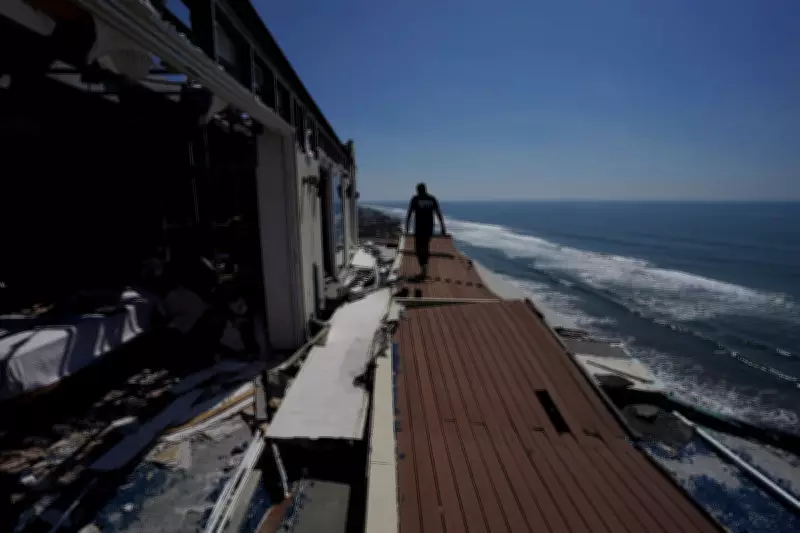
The research highlights October 2023's Hurricane Otis as a prime example. This storm intensified from a tropical storm to a Category 5 hurricane in just one day, ultimately causing approximately $16 billion in damage and 52 deaths when it struck near Acapulco, Mexico, with winds reaching 165 mph (265 kph).
Lead author Soheil Radfar, a hurricane hazard modeling scientist at Princeton University, emphasized that the increased damage wasn't attributable to coastal development alone. The study compared storms crossing hot water and hitting developed coasts with other storms hitting similarly urbanized areas without crossing marine heat waves, confirming the temperature effect.
Future Implications and Preparedness
"All these pieces of the puzzle are going to be really challenging for the coastal environment in the next four decades when you have more rapid intensification, more marine heat waves," Radfar warned. "This is going to be really costly and frightening for the coastline environment, and it's going to cause more billion-dollar disasters in the future."
Moftakhari stressed the practical implications for coastal engineering and risk management. "From a coastal engineering and risk management perspective, this has important implications for how governments plan, design, and respond to these hazards." He noted that evacuation planning must account for storms crossing ocean hot spots being more likely to intensify rapidly, potentially requiring earlier warnings and updated triggers for evacuations.
Broader Scientific Context
University at Albany atmospheric sciences professor Brian Tang, who wasn't involved in the study, connected the findings to established climate science. "Climate change is causing stronger and longer-duration marine heat waves. Tropical cyclones draw their energy and produce heavy rain via evaporation from warm ocean waters. It's reasonable that marine heat waves are turbocharging hurricanes, provided other environmental conditions are favorable for hurricanes to intensify. In effect, the dice is being loaded."
The research underscores the urgent need for improved forecasting, emergency planning, and infrastructure design to address the growing threat of marine heat wave-supercharged hurricanes as climate change continues to warm the world's oceans.