
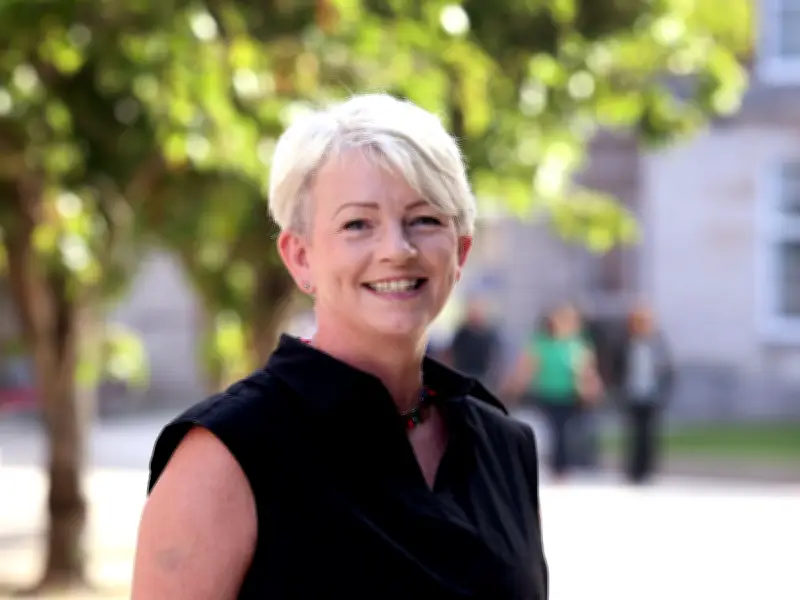
An 'explosion of misinformation' is paving the way for the return of preventable and deadly childhood diseases, according to Professor Louise Kenny, Pro Vice Chancellor of the Faculty of Health and Life Sciences at the University of Liverpool. This week, the ECHO reported that two Merseyside areas have the lowest uptake rates outside London for lifesaving childhood vaccines.
Low vaccination rates in Merseyside
Liverpool and Knowsley have the lowest uptake rates for the MMR 1 vaccine in five-year-olds anywhere in England outside London, with only 87% of children vaccinated. The vaccine provides lifelong immunity to measles, mumps, and rubella. Measles was twice eliminated in Britain, most recently in 2021, but in January 2026, the World Health Organisation announced that the UK had lost its measles elimination status after an outbreak.
Forgotten devastation of measles
Professor Kenny said: 'We have forgotten how devastating measles can be. In my lifetime, the MMR vaccine was introduced, and for a short period, it looked like measles was going to be eradicated like smallpox. The vaccine is almost 100% effective, cheap to manufacture, freely available, and gives life-long immunity. Those are all the components required to make a virus history.' She recalled an elderly professor of public health who taught her in medical school in the late 1980s: 'He told us that when he was a child and they broke for the long summer holiday, every year when they returned to school in September, there would be a child missing because they had died of measles over the summer. We have lost that collective memory.'
Role of social media in spreading misinformation
Professor Kenny said there had been an 'explosion of misinformation because of social media', particularly after the pandemic. She told the ECHO: 'What has happened with the advent of social media is that everyone has a phone and an influencer in their pocket. It [misinformation on vaccines] has become insidious in almost every community; this misinformation is prolific and intensifies on a daily basis. It is so much worse now. If we have two things to do, the first should be tackling this complete barrage of online misinformation about the safety and efficacy of vaccines. The second is simply making vaccines an easy, routine part of accessible healthcare.'
Beyond vaccine hesitancy
Professor Kenny emphasised that low uptake rates are not solely due to vaccine hesitancy. She said: 'I don't think that does anyone any favours because it puts the blame on parents and makes it sound as if parents and young people are simply hesitant about getting vaccines and won't get vaccinated. There is an element of that, but there are other complicating factors that play into vaccine rates. In addition to educating people on the importance and safety of vaccines, we also have to make them easy and convenient to get. It is no surprise that disenfranchised communities have the lowest vaccination rates. This is not just about misinformation and vaccine hesitancy. We need to do more to make vaccines accessible and easy to obtain for these communities. We should be taking vaccines to communities rather than bringing communities to vaccines.'
HPV vaccine success story
Professor Kenny pointed to the HPV vaccine as a source of optimism. She said: 'In my lifetime, we introduced the human papillomavirus (HPV) vaccine for young girls and boys as they start secondary school. A paper published just a couple of weeks ago showed that cancer cases in young women in their 20s are falling. We know already that hundreds of young women are still with us who would have otherwise died from cervical cancer had they not been vaccinated. There are literally hundreds of women alive today who avoided a horrific death in their 20s because of that vaccine. Cervical cancer caused by HPV is a disease that, with a bit of luck, we will never see again. My husband is a surgeon and spends his days operating on women with cervical cancer. It is his dearest wish to be made redundant because his skills are no longer needed. That is completely achievable within our lifetime. While we wring our hands over the fall-off in the uptake of certain vaccines, there is every reason to be confident that if we work closely with our communities, the world will be an infinitely better place.'




