
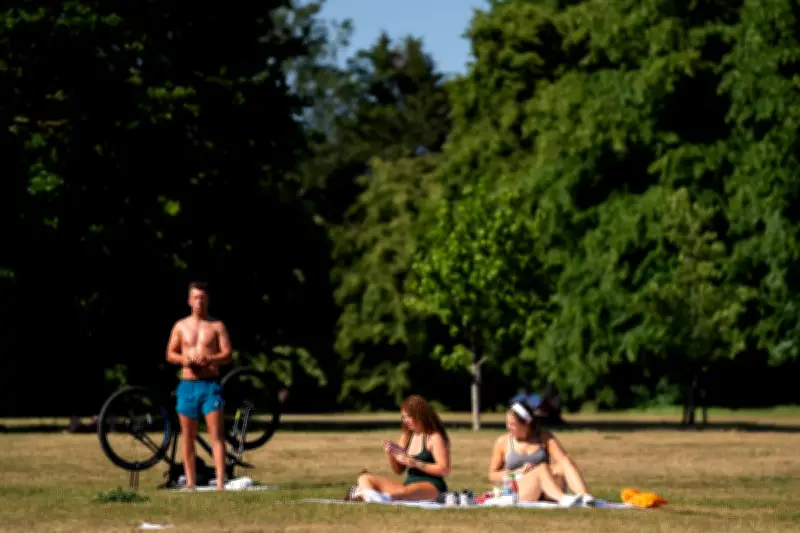
A new report from Central London Forward (CLF) warns that London could face annual costs of up to £15 billion by 2050 due to the impacts of climate change. The report, which represents the capital's 12 most central local authorities, highlights that more frequent and intense heatwaves, floods, and droughts will severely affect both the health and financial well-being of Londoners. The city has been particularly vulnerable to record-breaking temperatures in recent summers, exacerbated by the Urban Heat Island (UHI) effect, which can make it feel up to 10 degrees hotter due to dense building structures trapping heat.
Green Infrastructure as a Key Solution
The CLF suggests that the Greater London Authority (GLA) and individual boroughs can implement measures to tackle both the causes and symptoms of climate change. A key recommendation involves significantly expanding green infrastructure, such as parks, gardens, woodlands, rivers, wetlands, urban trees, and planted roofs. These can absorb heat, create cooler public spaces, and mitigate the impact of flooding. Despite their clear benefits, such green spaces are frequently perceived as 'soft targets' for local authority funding cuts, primarily because there are no statutory requirements mandating their provision or maintenance.
The authors said that boroughs would do well to look to Elephant Park in Southwark, which is one of the largest new green spaces in central London in 70 years. Despite being expensive to maintain, CLF argues that the benefits of green spaces are well worth it.
Retrofitting Social Housing and Flood Resilience
Mass retrofitting of social housing should also be one of the GLA’s top priorities, the report said, though with over a million homes needing attention, funding is likely to be an issue. It is a similar story when it comes to flood resilience. City Hall says that London has “outgrown” its drains and sewers, which were built over 150 years ago and which officials note were “designed for a smaller city with more green surfaces.” “The combined challenges of London’s growing population, changing land uses and changing climate mean that if we continue to rely on our current drains and sewers, we face an increasing risk of flooding,” they said.
To combat this, the GLA’s Surface Water Strategy looks to replace surfaces with ‘permeable paving’ and install Sustainable Drainage Systems (SuDS) across streets, schools and housing estates – but the CLF says that such initiatives “can be difficult to fund and deliver at the scale and pace needed.”
Cool Spaces Network and Legislative Action
The report does praise the GLA for its Cool Spaces Network – which designates certain libraries, leisure centres, and shaded parks as public cooling areas – but notes that the “general public is often unaware of their benefit or existence, and it is difficult to establish enough spaces to make a difference.” As a whole, CLF said there must be a legislative responsibility for local authorities who do not have the “strength and political will” to act voluntarily to undertake future-proofing measures against climate change. This would include embedding climate change as a “priority in planning decisions” and giving it the same weight as energy efficiency and net zero. This would require secure, long-term funding for adaptation projects that boroughs are able to bid for on a non-competitive basis.
Charlie Rainsford, assistant director of policy and external affairs at CLF, said: “The effects of climate breakdown are already being felt in Central London, with severe thunderstorms and heatwaves in the space of 24 hours. It is vital that we make Central London more climate resilient so that we can keep people safe, support businesses and maintain London’s place as an attractive place for visitors. However, the responsibility for action currently falls on local authorities, without any sustainable funding or a common framework. We are calling for long-term, consistent and devolved funding for adaptation projects and embedding adaptation in planning policy.”
City Hall Response
City Hall sources pointed out that the mayor has funded the planting of more than 640,000 trees since 2016, including two major woodland creation projects, alongside the creation or improvement of 900 hectares of green space. A spokesperson for the Mayor of London said: “Extreme heat is becoming more common and more intense as a result of the climate crisis and Londoners are already experiencing more frequent heatwaves, including last week’s rare Red Heat Health Alert. That’s why City Hall is working closely with boroughs, health services, TfL, emergency services and community organisations to plan how to mitigate the effects of climate change and is why we’ve established a network of free Cool Spaces, thousands of water refill points and drinking fountains across the capital. Last week, the mayor launched Heat Ready London, a long-term vision bringing together partners to help our city adapt to rising temperatures, protect vulnerable Londoners, strengthen critical infrastructure and ensure our communities remain resilient in the decades ahead.”




