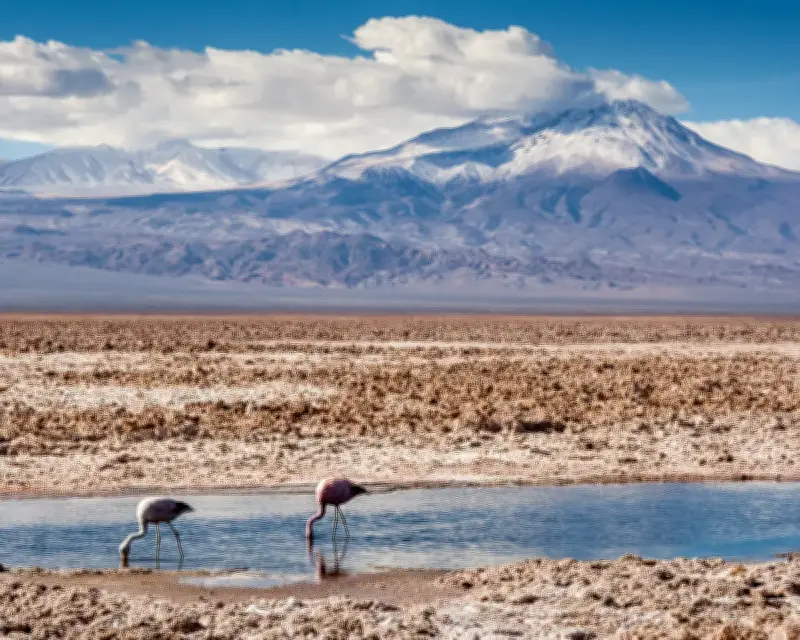
The Atacama salt flats in Chile, home to nearly one-quarter of the world's lithium reserves, are under threat from the very efforts to combat climate change. Lithium is essential for rechargeable batteries that reduce carbon emissions from transportation and energy, but its extraction comes with escalating social and environmental costs.
The Atacama's unique lithium brine
The Atacama is an endorheic basin, where water flows in but can only escape through evaporation. This process concentrates lithium in the brine to levels prized by mining companies. Underground wells of lithium-rich brine, linked to hydrothermal systems, further enrich the deposits.
Miners pump the brine to evaporation ponds, increasing lithium levels 40-fold from 0.15% to 6%. A single cycle takes 10 to 24 months. This relatively low-cost process threatens the fragile desert water system and the species and communities that depend on it.
Impact on flamingos and ecosystems
The Atacama's three endemic flamingo species are in decline, serving as a barometer of wetland health. Warmer temperatures reduce the blue-green algae essential to their diet, and mining noise and traffic disrupt their breeding.
The extraction is a microcosm of the expanding extractive frontiers of green capitalism, where global climate action conflicts with local environmental protection. Researchers struggle to predict the overall direction of the multiple processes changing the Atacama.
Towards a just energy transition
Achieving a globally just energy transition requires understanding supply chains in reverse and demanding they are organised around justice for everyone they touch. Policies promoting alternatives to car use, reducing sprawl, encouraging compact batteries, and requiring recycling would all reduce the scale of mining needed for carbon-free transportation.