
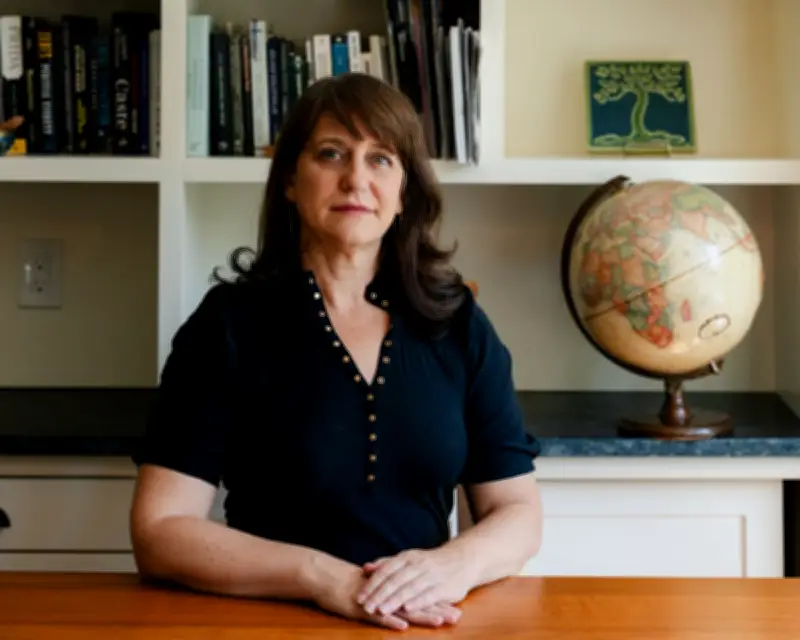
Physicist Laura Grego, research director of the Global Security programme at the Union of Concerned Scientists, warns that humanity has inadvertently created a doomsday system in space. Speaking from Cambridge, Massachusetts, Grego highlights the urgent need for public awareness as commercial and military activities rapidly expand beyond Earth's atmosphere.
The Changing Night Sky
Grego explains that the average person's experience of space is about to change dramatically. With plans for tens of thousands more satellites, including SpaceX's application to launch up to 1 million, the night sky will be transformed. 'Most people don't know we've set up a system that is essentially a doomsday system,' she says. 'And we can dismantle it. We just have not.'
Military Origins and Current Vulnerabilities
Space has always been a military zone, Grego notes, from Sputnik 1 in 1957 to modern ICBMs that spend most of their time in space. Satellites are now the backbone of global military operations, providing communications, targeting, and drone warfare support. However, they remain largely undefended, creating vulnerabilities. 'You can jam them, you can spoof them, you could cyber-attack them,' she says.
Nuclear Risks and Decision-Making
Grego emphasizes the compressed decision-making timeline for nuclear launches. A president would have less than 10 minutes to decide whether to launch ICBMs after detecting an incoming attack. 'If the president decided to launch a counterattack, even if the initial attack was launched by accident, certainly the adversary is going to retaliate. That's a civilisation-ending day – or an afternoon,' she says.
Commercial Expansion and Regulatory Gaps
Elon Musk's SpaceX aims to dominate space with Starlink and plans for Martian colonies. Starlink user agreements state that for Martian activities, 'no Earth-based government has authority or sovereignty.' Grego argues this reflects an extractive colonialist framework. 'We have a chance to do this better as we move into space,' she says. 'We shouldn't cede that power to the first most powerful company that's able to do it.'
Call for Public Awareness
Grego urges a reframing of the narrative around space, moving from a 'final frontier' dominated by singular heroes to a collective responsibility. 'If we think that humanity is something worth saving, then we actually have a lot we need to do to make sure that happens,' she concludes.




