Government to Unveil Land Use Framework for Net Zero and Nature Restoration
Ministers are set to outline the amount of land required to achieve the UK's net zero target through initiatives like windfarms and solar energy generation. This announcement is part of a broader strategy to balance competing land needs for food, housing, energy, and industry.
Simplifying Land Ownership with Land Registry Reforms
Finding out who owns land in England will become much simpler as the government plans to lift a paywall from large parts of the Land Registry. Currently, a small number of landowners control the majority of land, but ownership details are difficult to piece together, even for government departments, due to the Land Registry's operational methods. Freeing up access will facilitate the identification of ownership in key areas such as river catchments, grouse moors, and peatland.
This change is part of a major reform to England's land management. The long-awaited land use framework, to be unveiled by Environment Secretary Emma Reynolds on Wednesday afternoon, represents the first government attempt to assess optimal use of farmland, nature reserves, and degraded land.

Net Zero Targets and Renewable Energy Land Requirements
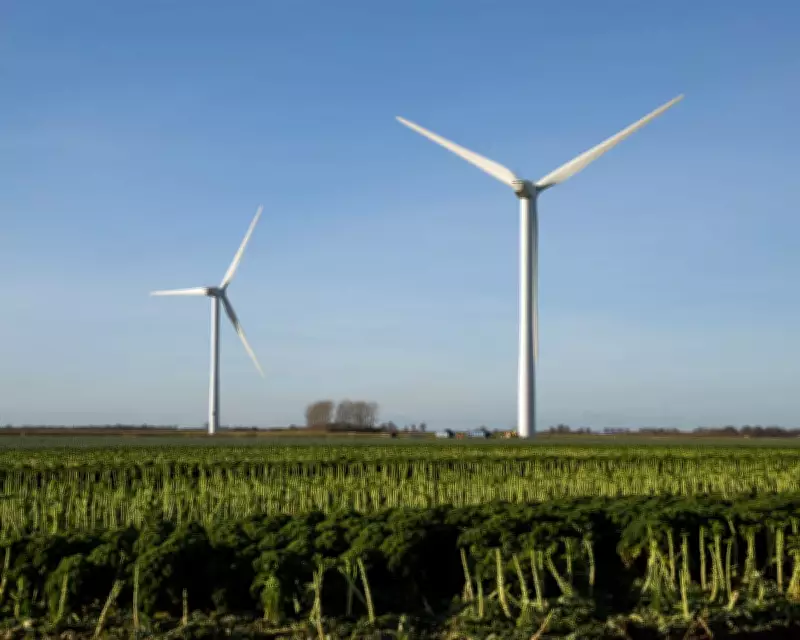
For the first time, ministers will specify how much land is needed to meet the UK's net zero target through growing forests and restoring peatland as carbon sinks, alongside energy generation from solar and windfarms. According to new government estimates, only about 1% of land will be required for renewable energy generation, with much of this land still usable for food production, such as livestock grazing around windfarms and under solar panels.
New mapping tools will also make it easier to evaluate how restoring peatlands in upland areas could reduce river flooding, which is expected to worsen with the deepening climate crisis.
Government Stance and Environmental Advocacy
Reynolds stated: "It is more important than ever that we make the right decisions about our finite land, especially in the face of the dual threat of the climate and nature crises. The land use framework will hardwire climate resilience and nature-based solutions into our decision-making to ensure that we have safe homes for the future."
Guy Shrubsole, author of Who Owns England?, commented: "The bold promise to open up the Land Registry would finally bring to an end a thousand years of secrecy shrouding who owns England, and enable greater scrutiny of what goes on behind the barbed-wire fences that crisscross the countryside. Given that 1% of the population own half of England, it's only reasonable that the largest landowners should be held most responsible for restoring nature to these dewilded isles. The new land use framework is an ambitious step towards making England a greener, fairer and more pleasant land."
Limitations and Focus on Green Spaces
However, the government will not direct how land must be used in any specific area. There will be no attempts to force landowners to relinquish control or mandate national schemes for converting land to carbon sinks. Instead, the framework will be used to steer housebuilders away from constructing homes on floodplains, addressing concerns about new-build homes at risk from flooding as the climate crisis intensifies.
The aim for everyone to be within a 15-minute walk of a green space or water will also be supported by the new framework. Councils will receive tools to identify areas lacking green space, enabling targeted investments. Currently, about one in five people in England lack such access, with the issue most severe in deprived communities.
Balancing Farming and Nature Protection
Farmers have expressed concerns that food production might be downgraded in favour of nature protection or carbon sinks, such as through forest growth. But campaigners argue there need not be a contradiction between nature protection and farming.
Brendan Costelloe, policy director at the Soil Association, said: "Wildlife in the UK is in crisis so nature must be given space to recover. But for the land that will remain farmland, it's vital the government recognises that food production does not have to stop to create space for nature. We can and must make sure the land that's producing food is doing so in a nature-friendly way."

The Soil Association advocates for more support for farmers to grow peas and beans, which naturally fix nitrogen in the soil, and for planting trees for forage, human food, and wood. They also recommend shifting away from growing crops that require high soil disturbance on slopes and floodplains.