Climate Change Pushes Lamb Prices Higher Ahead of Easter
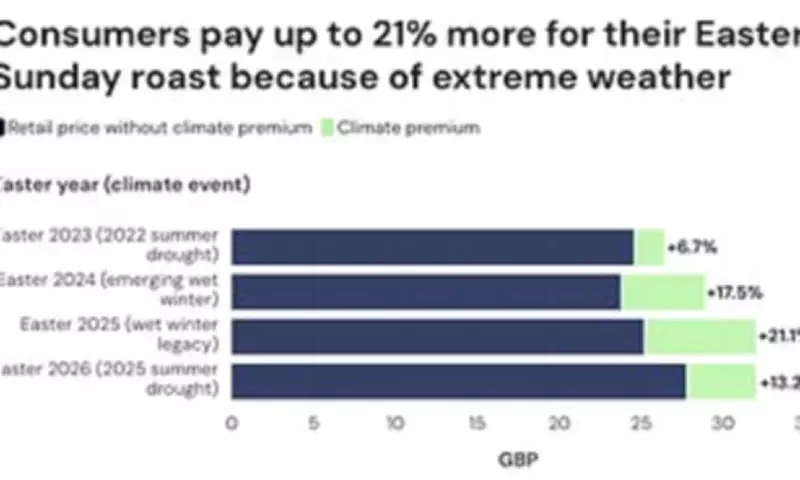
With Easter approaching, many British families are preparing for their traditional Sunday roast. However, a new analysis indicates that including lamb on the menu could come at a significantly higher cost this year. Experts from Zero Carbon Analytics, working with the Energy and Climate Intelligence Unit (ECIU), have issued a stark warning: extreme weather events are driving lamb prices up by between seven and 21 per cent.
Financial Impact on Households
For the 2.6 million UK households that regularly consume lamb, this price surge has translated into an additional £168 in expenses over the past three years. Chris Jaccarini, a land, food and farming analyst at the ECIU, commented, 'As families and communities sit down to celebrate this Easter, the cost of climate change is hitting home.' He explained that droughts, extreme heat, and heavy rainfall have severely impacted farmers' production costs, weakening grass growth and depleting hay stores without allowing time for recovery.
Jaccarini further noted, 'With beef and dairy prices also rising due to similar weather impacts, it is clear that climate change now poses a major and worsening challenge for livestock farmers.' He emphasised that without accelerated progress towards net zero emissions and increased investment in agricultural resilience, food affordability remains dangerously exposed to escalating climate shocks.

Analysis Methodology and Findings
The research team utilised Met Office data spanning the last four years, incorporating events such as the extreme heat of 2022, record-breaking rainfall in 2023 and 2024, and the hottest spring and summer on record in the UK in 2025. By combining this with market data from the Agriculture and Horticulture Development Board, they modelled the effect of extreme weather on farmgate prices.
The results were revealing:
- The drought and extreme heat in 2022 caused an 11 per cent increase in lamb prices.
- Wet weather conditions in 2023 and 2024 led to a 25 per cent price surge.
- The recent drought in 2025 resulted in a 13 per cent spike.
The team attributed these increases primarily to adverse impacts on grass growth caused by weather extremes. For consumers, this meant the wet winter of 2023/2024 added an extra £5 (17.5 per cent) to lamb prices at Easter 2024, and £7 (21 per cent) at Easter last year.
Broader Implications for Food Affordability
Sofie Jenkinson, Co-Director of Round Our Way, an organisation supporting those affected by climate change in the UK, stated, 'We regularly speak to people who are noticing and struggling with the rising costs of food and scarcity of produce.' She highlighted that extreme weather is impacting everyone from small businesses and pubs to families and farmers, affecting daily essentials as well as celebratory occasions like Easter and Christmas.
Even those who do not eat lamb may feel the financial strain this Easter. The researchers point out that the price of Easter eggs has risen by two-thirds in just three years, driven by heavy rain, droughts, and heatwaves in West Africa, a major cocoa-producing region.
The Global Context: The Paris Agreement
This situation underscores the urgency of global climate action, as outlined in the Paris Agreement. Signed in 2015, this international accord aims to limit global temperature increases to below 2°C (3.6ºF) and pursue efforts to cap warming at 1.5°C (2.7°F). Research suggests that achieving the 1.5°C target is critical, as 25 per cent of the world could face significantly drier conditions otherwise.
The Paris Agreement's key goals include:
- Keeping the global average temperature rise well below 2°C above pre-industrial levels.
- Aiming to limit the increase to 1.5°C to reduce climate risks and impacts.
- Encouraging global emissions to peak as soon as possible, with flexibility for developing countries.
- Implementing rapid reductions in emissions based on scientific evidence.
As climate change continues to disrupt agricultural production, the findings highlight the tangible economic consequences for consumers, reinforcing the need for robust policy measures and sustainable farming practices to safeguard food security in the UK and beyond.