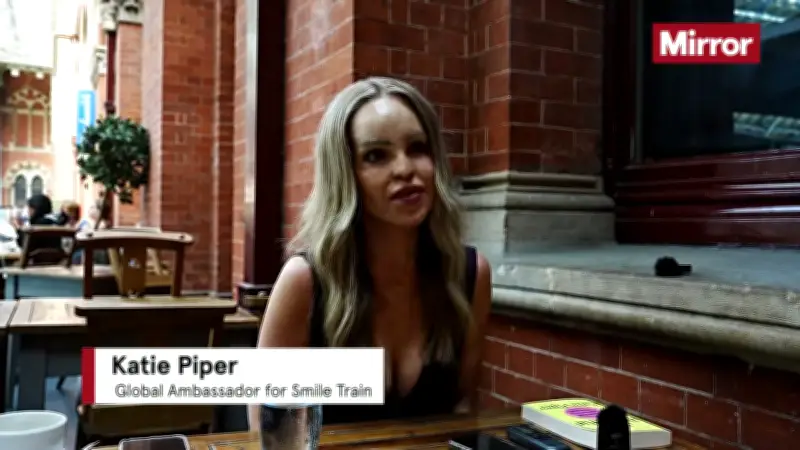
Katie Piper, 42, was moved to tears during her visit to Kumasi, Ghana, as an ambassador for Smile Train, where she met children and families affected by cleft lip or palate. In many developing countries, such conditions are stigmatized, with some believing they are a curse. Piper, who survived an acid attack in 2008, said she was told stories of babies being suffocated or drowned at birth, and mothers being blamed for the cleft.
Stigma and Shame in Ghana
Piper met five-month-old Richlove Amoateng and her mother, who had hidden the baby due to community stigma. Before Smile Train's intervention, the mother had not taken Richlove outside. Piper explained, 'When people came over, they’d put a cloth over her face. It wasn't for lack of love, but because her mum was stigmatised for having a cleft baby.'
Cleft lip, a gap or split in the upper lip often accompanied by cleft palate, affects about one in 700 babies worldwide. In Ghana, lack of awareness leads to shame and isolation. Piper, a mother of two, said, 'As a mum, I felt the pain of the mothers I met so deeply.'
Impact of Cleft Without Surgery
Without surgery, children may struggle to eat, breathe, and speak. Piper noted that clefts can cause malnutrition as babies cannot latch properly. She also highlighted that a single operation can leave a tiny scar, enabling a normal life.
Piper, who was partially blinded and severely scarred in an acid attack, empathized with the stigma. She said, 'I’ve experienced stigma myself. People stare. In Ghana, there was a huge blanket of shame for those with visible differences. The whole family is sometimes ostracised.'
Success Story: Eunice Obeng Yeboah
Piper met five-year-old Eunice Obeng Yeboah, whose father, a pastor, openly addressed his daughter's cleft in his congregation, dispelling myths that it was a curse. 'He said, ‘I have a cleft child – this isn’t anything from Satan. My wife hasn’t done anything wrong, it’s a genetic thing,’' Piper recalled. After surgery, Eunice was healthy and doing well at school.
Piper's Advocacy for the NHS
Piper, who has undergone over 400 operations, emphasized the importance of equal healthcare. 'It’s just luck where you're born and what services you have access to. I feel very strongly about protecting the NHS. We must not privatise it. Everyone should have equal access to healthcare,' she said.
She also shared a message for the new Prime Minister: 'Life is unpredictable. The NHS provides a safety net. To see it abolished would be catastrophic.'