
An exclusive analysis shared with the Guardian reveals that the US-Israel war on Iran has released approximately 5 million tonnes of greenhouse gases in its first 14 days, draining the global carbon budget faster than the 84 lowest-emitting countries combined. The conflict, involving extensive bombing, missile strikes, and infrastructure destruction, is described as a climate disaster.
The analysis, conducted by researchers including Patrick Bigger of the Climate and Community Institute, estimates that destroyed buildings account for the largest share of emissions at 2.4 million tonnes of CO2 equivalent (tCO2e), based on reports from the Iranian Red Crescent of about 20,000 civilian buildings damaged. Fuel consumption by aircraft and support vessels, including US heavy bombers flying from as far as England, contributed 529,000 tCO2e from an estimated 150-270 million litres of fuel.
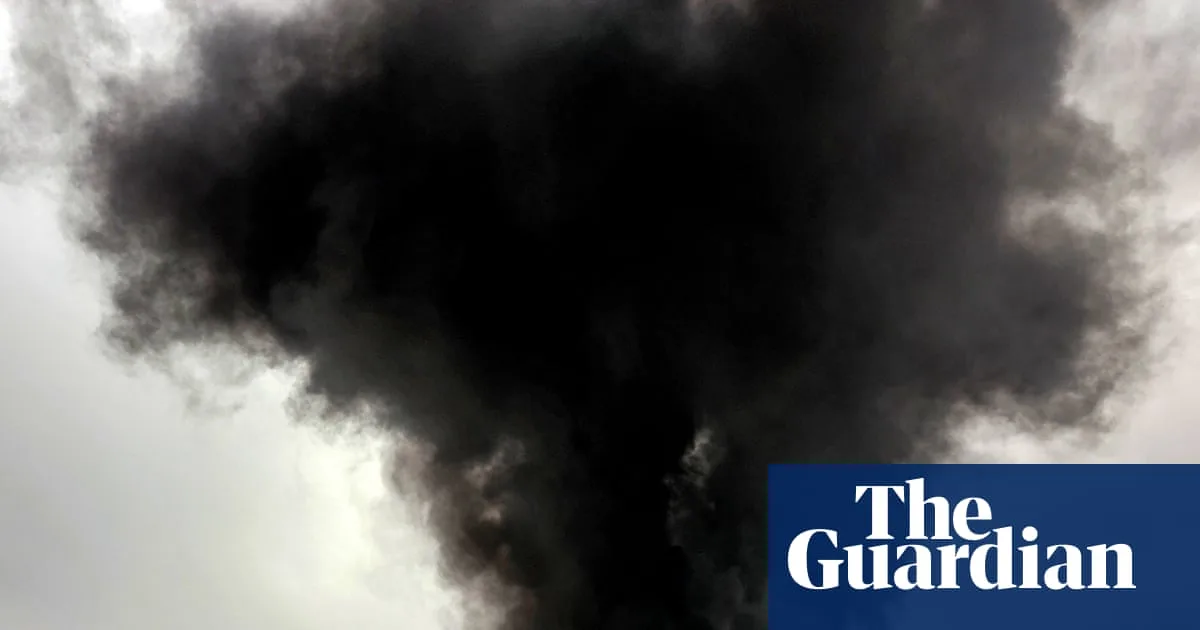
Bombing of fuel storage depots, notably around Tehran where black rain fell after Israeli strikes, burned an estimated 2.5-5.9 million barrels of oil, emitting 1.88 million tCO2e. Destroyed military hardware—including 4 US aircraft, 28 Iranian aircraft, 21 naval vessels, and 300 missile launchers—added 172,000 tCO2e, while munitions used in over 6,000 US-Israeli strikes and Iranian retaliations contributed 55,000 tCO2e.
Fred Otu-Larbi, lead author from the University of Energy and Natural Resources in Ghana, warned that emissions are expected to rise rapidly as oil facilities continue to be targeted. The two-week total of 5,055,016 tCO2e is equivalent to 131,430,416 tCO2e annually, matching the output of a medium-sized fossil fuel economy like Kuwait. Bigger noted that such conflicts often lead to increased drilling, further exacerbating the climate crisis.




