
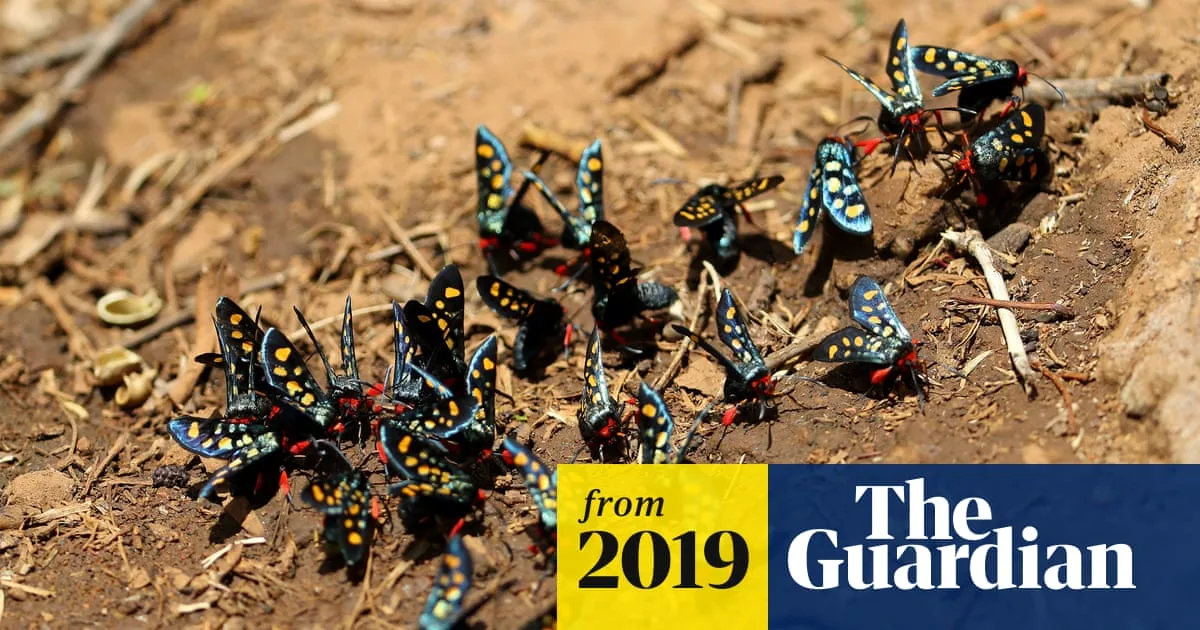
A new report warns that the 'unnoticed insect apocalypse' poses a grave threat to all life on Earth, including humans. The analysis, written by Professor Dave Goulson of the University of Sussex for the Wildlife Trusts, suggests that half of all insects may have been lost since 1970 due to habitat destruction and heavy pesticide use. It states that 40% of the one million known insect species face extinction.
The report focuses on the UK, where insects are among the most studied in the world. It reveals that 23 bee and wasp species have become extinct in the last century, while pesticide applications have roughly doubled in the past 25 years. UK butterflies specialised in particular habitats have declined by 77% since the mid-1970s, and generalist species by 46%. The knock-on effects on other animals are stark: the spotted flycatcher, which eats only flying insects, has seen its population drop by 93% since 1967.
Conservationists stress that insects are essential for ecosystems as pollinators, food for other creatures, and nutrient recyclers. Gary Mantle, chief executive of Wiltshire Wildlife Trust, said: 'This unnoticed apocalypse should set alarms ringing. We have put at risk some of the fundamental building blocks of life.' However, he noted that insects can recover quickly if we stop killing them and restore their habitats.
The report calls for binding targets to reduce pesticide use in farming, which covers 70% of Britain. It suggests a tax on pesticides, similar to Sweden's levy introduced in 1984. Professor Goulson said: 'We can't wait another 25 years before we do anything because it will be too late.' He advocates 'rewilding' urban gardens and parks to create a network of insect-friendly habitats, but stresses that farmland must also become more wildlife-friendly.




