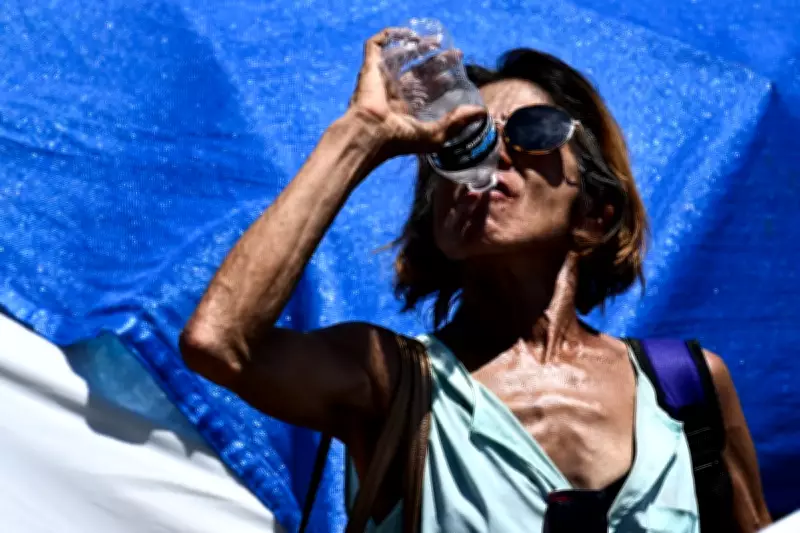
Heatwaves Already Creating 'Non-Survivable' Conditions for Humans
Extreme heatwaves are already creating conditions that exceed human survival limits, according to groundbreaking new research that suggests people are far more vulnerable to rising temperatures than previously understood. Scientists have re-examined six major heat events between 2003 and 2024, discovering that all contained periods that would have been potentially deadly for older populations.
New Model Reveals Greater Vulnerability
The study, published in the journal Nature Communications, applied a sophisticated new model of human survivability that accounts for the body's ability to function and maintain coolness based on age factors. This approach represents a significant advancement beyond traditional temperature-only measurements, providing a more accurate understanding of how heat events become deadly.
"My first thought was 'Oh shit' - I really didn't expect to see that, especially when you zoom in to individual cities," said Professor Sarah Perkins-Kirkpatrick, the study's lead author from the Australian National University. "If it's already happening now, then what does a future that is two or three degrees warmer hold?"

Six Deadly Heatwaves Analyzed
The research team examined heatwaves in Mecca (Saudi Arabia, 2024), Bangkok (Thailand, 2024), Phoenix (United States, 2023), Mount Isa (Australia, 2019), Larkana (Pakistan, 2015) and Seville (Spain, 2003). While none of these events approached the previously assumed absolute human limit of a six-hour exposure to a wet bulb temperature of 35°C, all contained periods that proved non-survivable for vulnerable populations.
Professor Perkins-Kirkpatrick explained that traditional heatwave definitions have relied too heavily on temperature measurements alone. "Using this model of how the body functions, it is a much better way to understand how these events can be deadly," she emphasized.
Older Populations at Greatest Risk
The findings revealed particularly alarming risks for older individuals. All six heatwaves included periods that would not have been survivable for people aged over 65 remaining outside in full sun. The Larkana and Phoenix heatwaves contained periods that were non-survivable for older people even if they had found shade.
Most strikingly, the Larkana heatwave included a non-survivable period that would have been deadly even for younger adults aged 18 to 35 exposed to full sun conditions.
Underreported Death Toll and Future Threats
The research suggests heat-related deaths, particularly in developing and densely populated regions, are "undoubtedly and seriously underreported." The study authors wrote that "deadly conditions have already placed hundreds of millions of people at grave risk."
Professor Ollie Jay, a co-author and director of the University of Sydney's Heat and Health Research Centre, warned: "Conditions that threaten human life are already here and the risk moving forward is almost certainly much greater than we previously thought."
Physiological Limits and Climate Implications
The human body's primary cooling mechanism - sweating and evaporation - becomes compromised when high temperatures combine with humidity. Older individuals face particular vulnerability as their ability to sweat diminishes, especially for those over 75.
Professor Steve Sherwood, a climate scientist at the University of New South Wales who contributed to early research on human temperature limits, noted that "the newer work more accurately establishes where the true limits are."
He warned that "the fact we are so close to physiological limits means that mitigating higher temperatures is essential to humans still being able to live and thrive in the hottest and most humid places." This includes critical regions like India, the Middle East, and northern Australia where billions currently reside.
The research underscores the urgent need for improved heatwave preparedness and adaptation strategies as climate change continues to intensify extreme weather events worldwide.