
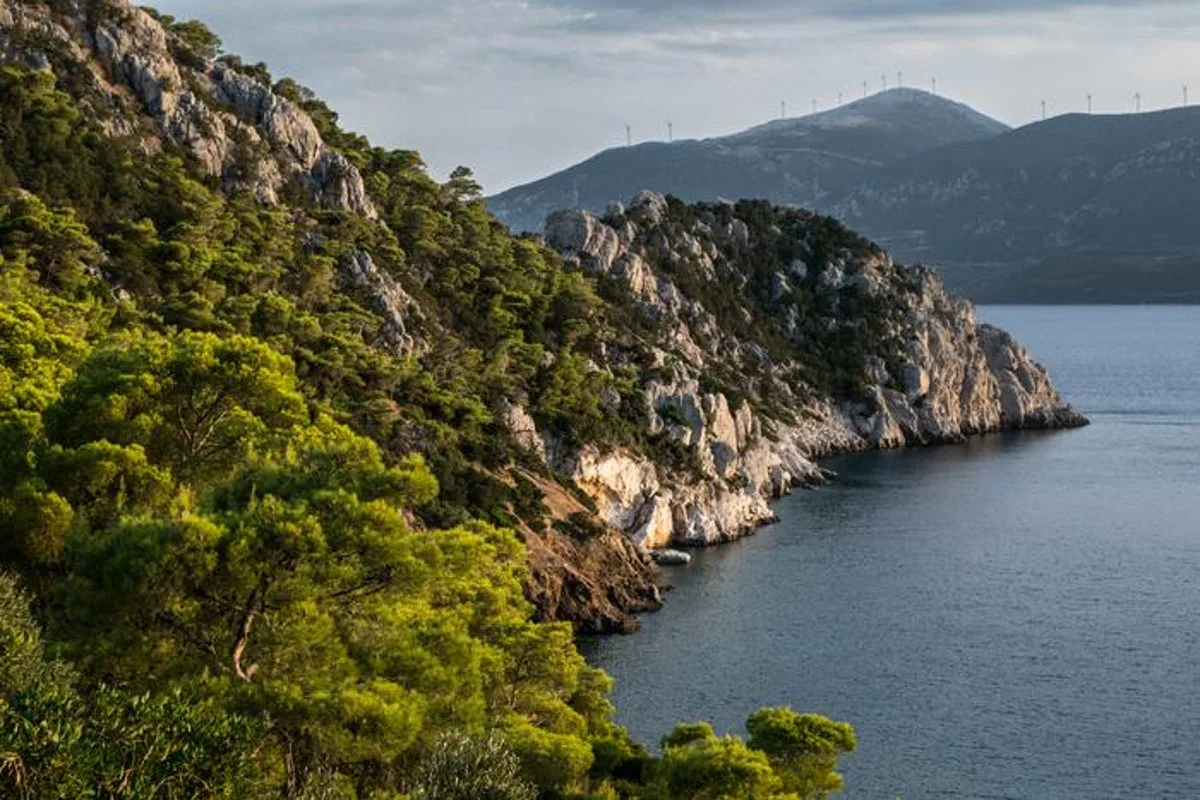
Scientists have discovered that the Methana volcano in Greece, considered dormant for over 100,000 years, has been steadily accumulating large amounts of magma beneath its surface. The volcano, located 50km southwest of Athens, has shown no signs of eruption, such as lava flows or ash clouds, for millennia.
Research published in the journal Science Advances reveals that the volcano's magma chambers have been building up magma deep underground. The study analysed tiny zircon crystals from magma reservoirs, which act as natural time capsules. By dating more than 1,250 crystals spanning 700,000 years, researchers reconstructed the volcano's internal activity.
“We can think of zircon crystals as tiny flight recorders,” said volcanologist Olivier Bachmann from ETH Zurich. “What we learned is that volcanoes can ‘breathe’ underground for millennia without ever breaking the surface.” The analysis showed that magma production beneath Methana was almost continuous, despite the long quiet period.
The magma supplying the volcano's upper chamber was found to be very water-rich, likely due to ocean-floor sediments and water influencing the mantle. This process hydrates the mantle, triggering crystallisation and making magma production more efficient. However, rapid crystallisation of water-rich magma may lead to fewer eruptions.
“This highlights the importance of monitoring dormant volcanoes, even in the absence of recent eruptions,” the researchers wrote. They warn that prolonged silence does not mean a volcano is extinct; it could signal the buildup of a large and potentially dangerous magma system, with major implications for volcanic risk assessment in regions such as Greece, Italy, Indonesia, and the Americas.




