
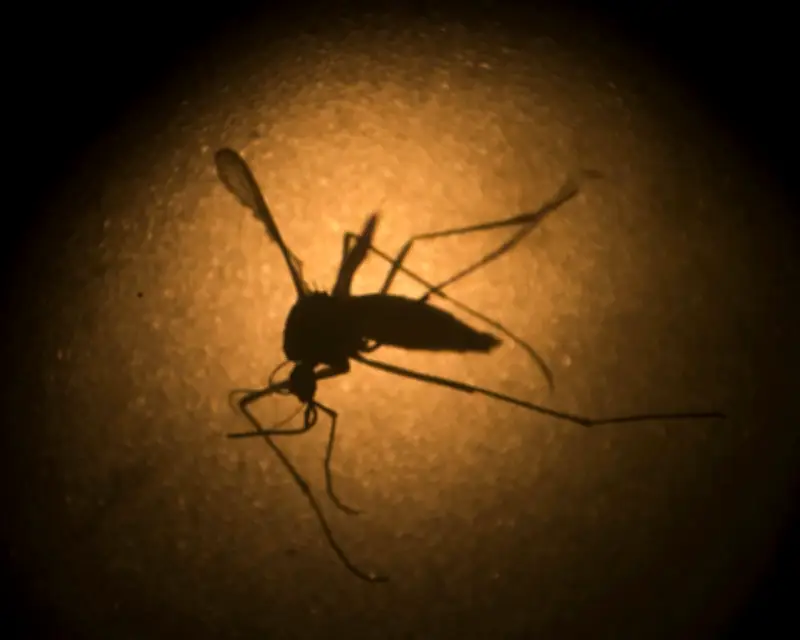
Google's (now Alphabet) Debug initiative has asked the US federal government for permission to release up to 32 million sterilised male mosquitoes in California and Florida. Male mosquitoes don't bite or carry disease. The hope is these millions of male mosquitoes will mate with disease-carrying females, the eggs won't hatch and mosquito numbers will fall. Google/Alphabet's plan is to release more than 16 million mozzies each year, for two years.
Australian trials provide evidence
More than a decade ago, Nigel Beebe, a professor at the University of Queensland, led a project with Google's life sciences division (now Verily) to test a novel mosquito-control strategy in far north Queensland. The results showed releasing specially bred male mosquitoes can dramatically suppress populations of the exotic, invasive mosquito species Aedes aegypti. This species is responsible for spreading deadly diseases such as dengue, Zika, chikungunya and yellow fever.
The strategy focuses on male mosquitoes because they don't bite, and female Aedes aegypti generally only mate once during their lifetime. If that mating event was incompatible, it could not produce viable offspring. The approach relied on Wolbachia, a naturally occurring bacterium found in many insects. Some Wolbachia strains create a form of reproductive incompatibility.
North Queensland trial details
The Cassowary Coast in north Queensland provided ideal conditions for a large-scale trial. The region contained towns with abundant Aedes aegypti populations, while surrounding agricultural areas limited movement between communities. Before a single mosquito was released, the project team spent two years conducting field surveys and engaging with communities. The project, known as "Debug Innisfail", ultimately received regulatory approval from multiple authorities.
During a 20-week release period in 2018, around three million Wolbachia-carrying male mosquitoes were released into three treatment towns. Control towns where no mosquitoes were released were monitored. The results were striking: mosquito populations in towns where mosquitoes were released began declining within four weeks. In one town, monitoring detected only a handful of Aedes aegypti 12 months later, corresponding to roughly 95% suppression.
Implications for the US
The Australian trials provide evidence-based answers to many concerns now raised in the US. First, ecological impacts are likely to be very small, as Aedes aegypti is an invasive species that lives around humans and biting them. Second, the approach can work at scale. Third, benefits may persist after releases finish, as suppression can carry over into subsequent seasons. However, success depends on factors such as local ecology, mosquito movement patterns and community participation.
Perhaps the most important lesson from the trials is the value of collaboration. This project brought together researchers from six universities and Verily. Combining scientific expertise with industrial-scale engineering accelerated the journey from laboratory concept to real-world field trial. As Aedes aegypti expands its range and insecticides fail to suppress it, using the mosquito against itself as a biological control tool will become increasingly important.




