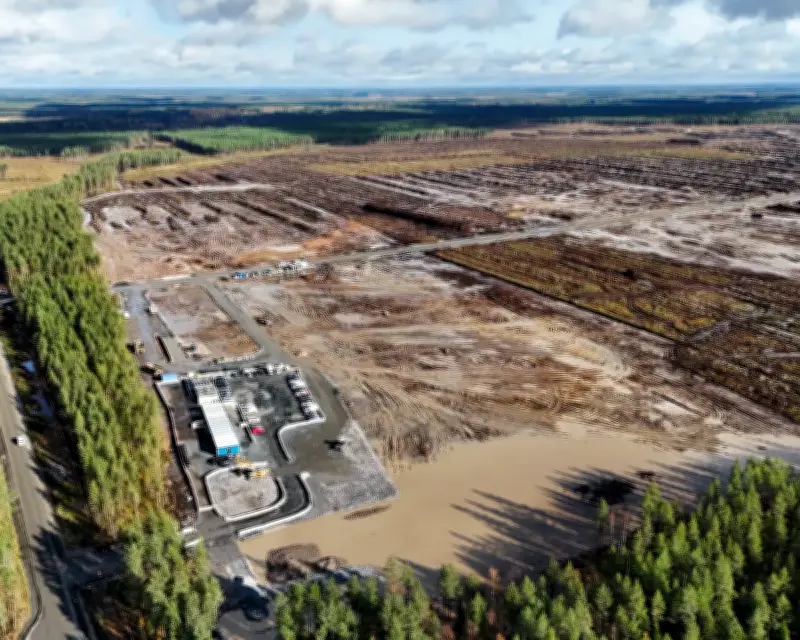
Google has been ordered to temporarily stop work on two datacentres in Finland after failing to carry out the necessary environmental impact assessments on its construction sites. The Finnish Licensing and Supervision Authority (LVV) issued a notice to the company to immediately suspend preparatory measures at the sites in Muhos and Kajaani until the environmental impact assessment (EIA) is completed.
The planned datacentres are part of a 13bn euro project across multiple sites in northern Finland by the technology company, amid huge demand for space to house online infrastructure. The order comes after it emerged that Tuike Finland Oy, the company representing Google, had felled 330 hectares (815 acres) of forest in Muhos without completing an EIA. In Kajaani, the company has reportedly been logging across just under 200 hectares (494 acres) of land.
Environmental impact assessments overlooked
LVV said Google had gone ahead with extensive preparatory measures, including removing trees, stripping topsoil and constructing site roads, despite the EIA being ongoing and expected to be completed later this year. The authority has given Google until 23 October to suspend the measures, and until next Wednesday to submit a written explanation.
Tommi Muilu, head of the environmental department at LVV, said: “In our opinion, the measures in question will change the environment and cause impacts, the identification and assessment of which are among the key objectives of the EIA procedure.” If Google does not comply, LVV said it would consider enforcement proceedings and a fine.
Concerns over forest loss
The Finnish Union for Nature Conservation said the sites had been reduced to “sand”, blaming the oversights on the “overheated” market for new datacentres. Tapani Veistola, chief operating officer at the union, said the malpractice across two sites appears to be a “systemic problem”. The site at Muhos, he said, is “not a forest any more. It is a sand area.”
Veistola cited the enormous demand to build datacentres in Finland as a key factor, leading companies to work as fast as possible and overwhelming small municipalities. “The main reason behind everything is the overheated market situation that makes companies speed up processes so much. Also a lack of expertise in municipalities,” he said.
Google response
In response, Google said in a statement “we understand the concerns” and admitted that it had “fallen short of our own high standards”. The company added: “We will study the LVV’s findings and follow their guidance. We acted in good faith under the Forestry Act, ran nature surveys and put in place measures to protect high-value areas. As we continue our long-term work in the region, we are advancing our landscaping and biodiversity plans, which include tree planting across 130 hectares (321 acres) at Muhos.”