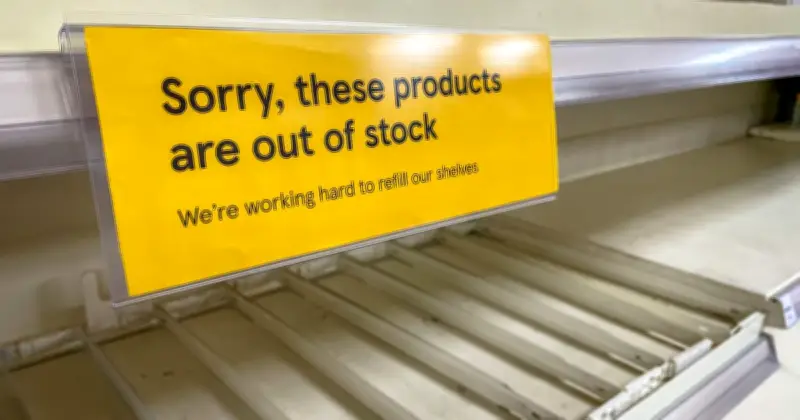
Food shortages could hit the UK within seven days, the NFU has warned as a lack of rain and constant sunshine begin to take their toll on the country's food production.
As highlighted by TV favourite Jeremy Clarkson on hit Amazon show Clarkson's Farm, extremes of weather are increasingly making life difficult for British farmers and food producers, with long periods of heavy rain and long periods of drought having a direct impact on growers.
NFU warns of critical period
Today, the National Farmers Union has warned that the next 'week to 10 days' could have an impact on food supply as rain continues to be scarce.
A spokesman for the NFU told The Independent: “Some areas haven't harvested yet so what happens over the next week to 10 days could have an impact. We're asking the Environment Agency to be flexible when it comes to abstraction.”
Environment Agency reports impact
On Tuesday, the Environment Agency (EA) warned that the weather is already impacting water supplies and food production. Not just the sunshine and lack of rain, but wildfires have also ‘ripped through’ farmland, while ponds and wetlands have dried out.
It said that farmers have begun harvests early and warned that cereal yields will be ‘lower than expected’, which could push prices up.
The EA reported: “The recent extreme weather is having a severe impact on our environment and affecting water supplies and food production, the National Drought Group heard yesterday.
“Wildfires have ripped through several areas, including dozens of delicate protected sites, and prime agricultural land. The third heatwave of the year has seen ponds and wetlands dry out, which will impact bird breeding, while some rivers have dried up in places.
“A lack of July rainfall, combined with the heat, is also putting pressure on public supplies – with demand for water soaring up to 30% on the hottest days.
“Seven water companies have now implemented or announced future temporary use bans for 23 million customers to protect the environment and reduce the strain on their treatment works and storage during peak demand.
“Farmers have had to begin their harvests early, with warnings that cereal yields will be lower than expected.”
Farmers face challenges
Paul Tompkins, Deputy President at the National Farmers Union, said: “Farmers and growers across the country are working around the clock to harvest crops which have come early, keep fruit and vegetables watered, and care for their livestock. Parts of the country, particularly in the east and south, have seen exceptionally low rainfall this spring and summer, creating real challenges for farm businesses. For many arable farmers, this could be another difficult and expensive harvest after extreme weather impacts in both 2024 and 2025 which saw both drought and flood.
“To help farmers adapt, we must strengthen resilience to climate volatility. That means a more responsive abstraction licensing system, a consistent positive approach in planning to make building reservoirs easier, which will lead to investment in on-farm water storage.”
Water usage and restrictions
Helen Wakeham, Chair of the National Drought Group and Director of Water at the Environment Agency, said: “Dry weather depletes our water, while the hot conditions mean we use more of it. This is a difficult combination, and we are seeing the effects on our farmers, our wildlife, and the amount available for public and business use.
“All sectors are taking action, and we are grateful to the public for following the restrictions, where in place, to make sure there is enough water for everyone this summer.
“We want everyone to stay safe and hydrated during the hot weather but every drop we can save is a drop more for nature and agriculture.”