
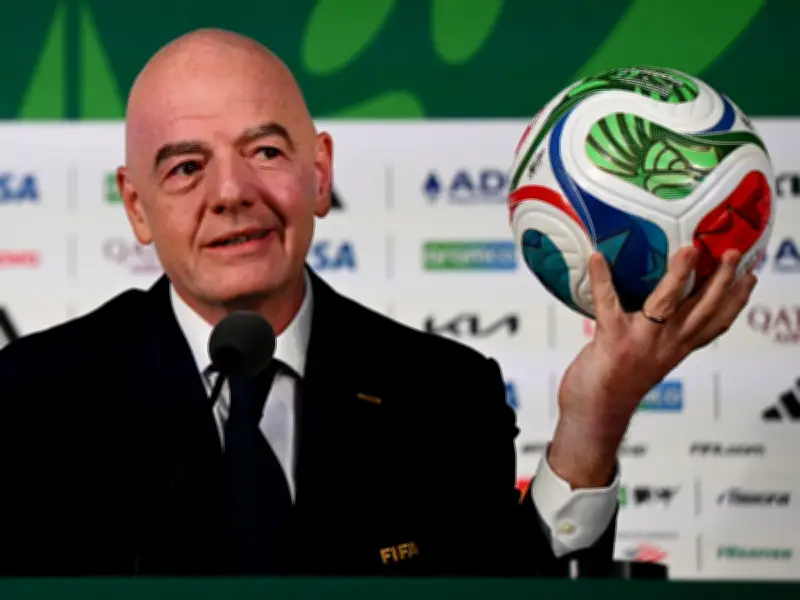
FIFA president Gianni Infantino faces a major headache as extreme weather threatens to undermine the governing body's rule requiring simultaneous kickoffs in the final round of World Cup group matches. The regulation, introduced after the infamous 1982 'Disgrace of Gijon', is designed to prevent teams from colluding based on knowledge of other results, but severe storms could force matches to be suspended, creating a scenario where one team knows the outcome of another fixture before their own concludes.
Weather Delays Already Disrupting Tournament
The issue came to the fore during France's 3-0 victory over Iraq on Wednesday, which was delayed by two hours due to torrential rain, thunderstorms, and lightning in the Philadelphia area. Under US safety protocols, play must be suspended if lightning is detected within eight miles of a stadium, a rule that FIFA cannot override. The match, originally scheduled to kick off at 5pm local time, did not finish until shortly before 9pm.
If such a delay occurs during one of the final group matches, teams could return to the pitch long after the other fixture in their group has ended, knowing precisely what result they need to advance. This could allow for a repeat of the notorious 'Disgrace of Gijon', the 1982 match between West Germany and Austria that prompted the simultaneous kickoff rule.
The 'Disgrace of Gijon' Explained
In 1982, West Germany and Austria met in their final group match knowing that Algeria, who had already completed their fixtures, had beaten Chile 3-2. A West German victory by one or two goals would see both European sides advance on goal difference, while a win by three or more would eliminate Austria. After Horst Hrubesch scored for West Germany in the 10th minute, the scoreline reached the ideal margin, and an unspoken 'non-aggression pact' took hold.
For the remaining 80 minutes, players recycled possession sideways and backwards in their own halves, barely making a challenge or mounting meaningful attacks. The farcical encounter sparked widespread outrage and led FIFA to mandate simultaneous kickoffs in the final group round to prevent such collusion.
Potential for Controversy 44 Years On
According to reports, the prospect of each group concluding at the same time could be derailed by extreme weather, which has already left its mark on the tournament. FIFA has no authority over lightning protocols, meaning a delayed match could create a situation where teams know the result of the other fixture. In theory, a repeat of the 'Disgrace of Gijon' could be on the cards, with teams potentially colluding based on full knowledge of the group standings.
The tension is set to intensify across North America as the concluding round of group fixtures gets underway on Wednesday. Managers will have one eye on the other game, but weather disruptions could undermine the very fairness the simultaneous kickoff rule was intended to protect.




