
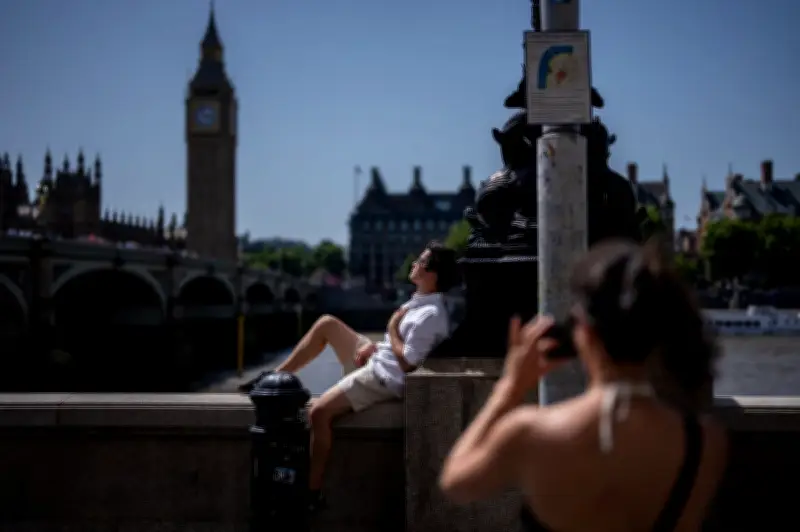
A London event focused on adapting to extreme heat was ironically cancelled on Wednesday due to extreme heat, organisers confirmed. The meeting, titled Extreme Heat: Improving Governance and Strengthening Action Around the World, was scheduled to take place at the Shaw Library at the London School of Economics as part of Climate Action Week.
Red Warning Prompts Cancellation
The event was called off after the Met Office issued a Red Extreme Heat Warning for London and parts of England, with temperatures of up to 35°C forecast in the capital. Officials warned of significant disruption to daily life, urging Londoners to adapt their routines to cope with the scorching conditions.
In a social media post on Tuesday, a spokesperson for the Zurich Climate Resilience Alliance explained: “The event venue, like most buildings in London, does not have any cooling mechanisms in place, and we cannot risk the wellbeing of speakers or guests by subjecting everyone to very unpleasant indoor conditions in addition to hot journeys to the venue.”
Government Response and Expert Warnings
A COBR meeting was held on Tuesday morning in response to the heatwave, the Government said, as ministers continue to monitor the situation. The Zurich Climate Alliance noted: “The magnitude of future impacts from extreme heat will largely depend on global mitigation efforts, local heat governance, and response plans. Cities like London have unique potential to adapt to changing heat risks through effective risk management at multiple levels.”
Emma Pinchbeck, chief executive of the Climate Change Committee, said the UK needed to continue reducing emissions driving global warming, but also adapt to the “weird heat” forecast for the week. The committee has recommended cuts of 87% in UK greenhouse gas pollution by 2040 on 1990 levels – a proposal the Government has accepted and will be debated by Parliament on Wednesday. The UK has halved emissions since 1990.
Need for Adaptation
“It’s important that we carry on doing that, because effectively it prevents a world we can’t adapt to,” Pinchbeck said. However, she warned: “Even with action to reduce emissions, this weird heat, these unusual weather events are the world as we will know it. This is going to be much more typical in the UK, even under 2°C of warming.”
She emphasised the need for cooling in care homes and hospitals, regulations to protect outdoor workers, and infrastructure upgrades to keep trains running on time. “This is doable. We just need to do it,” she concluded.




