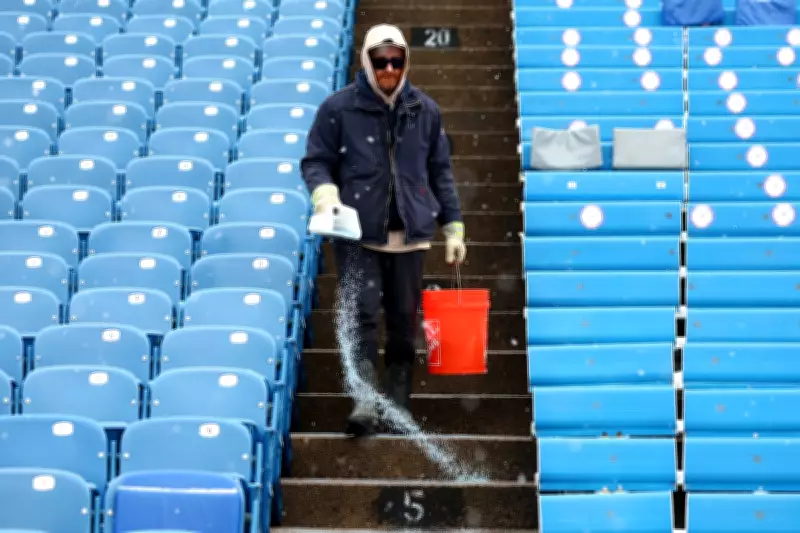
Experts Issue Critical Warning on Home Use of Salt for Snow and Ice Clearance
As winter storms blanket regions with snow and ice, many homeowners instinctively turn to rock salt as their primary de-icing solution. However, environmental and safety experts are now raising urgent concerns about this widespread practice, warning of significant ecological damage, structural harm, and risks to pets and plants.
The Environmental and Practical Limitations of Rock Salt
Rock salt, scientifically known as sodium chloride, remains the most affordable and commonly used product for melting ice on driveways, sidewalks, and steps. Yet its effectiveness dramatically diminishes when temperatures drop below 15 degrees Fahrenheit. Martin Tirado, CEO of the Snow and Ice Management Association, explains that beyond this threshold, additional applications yield minimal results.
"There's a chart we reference that shows chemical effectiveness at certain temperatures. When you get to about 15 degrees or colder, you can keep applying more and more rock salt and it's not going to do any more than it already does," Tirado stated.

Alternative formulations like calcium chloride and magnesium chloride release heat that enhances melting capabilities in extreme cold, though they typically cost at least twice as much as traditional rock salt.
Widespread Environmental and Structural Damage
All chloride-based de-icers pose serious environmental threats. These products can pollute freshwater sources, damage shrubs, trees, and grass, and accelerate the deterioration of concrete surfaces including sidewalks, stoops, and driveways.
Pamela Bennett, a horticulture professor at Ohio State University, identifies rock salt as particularly harmful to plants. "It gets them in two ways: through the roots and through the air," she explains. Salt permeates soil, causing roots to dry out when plants absorb salty water in spring, resulting in brown-tipped leaves. Evergreens face additional damage when salt spray carried by wind and vehicle mist settles on foliage, creating burn-like effects.
Safety Concerns for Pets and Alternative Solutions
Pet owners have witnessed the painful consequences when animals encounter heavily salted surfaces. Dogs frequently stop suddenly, lifting paws in discomfort as sharp salt crystals cause dryness and small cuts.
"Their paw pads get dry or they get little cuts because those crystals are sharp, and then they're chewing them because that's the only way they know to make it feel better," said Alison Manchester, an assistant clinical sciences professor at Cornell University. Ingesting significant amounts of salt can also lead to vomiting in animals.
This has prompted many to seek non-salt alternatives. Abrasives like gravel and sand provide temporary traction but create their own problems, including freshwater contamination and soil composition issues. Innovative solutions are emerging, including de-icers combined with beet juice for improved performance and a Korean company developing products from invasive starfish that slowly release chlorides to reduce environmental impact.
Strategic Approaches to Winter Maintenance
Experts emphasize that preparation and proper technique can significantly reduce reliance on harmful chemicals. Monitoring weather forecasts and clearing snow incrementally during heavy storms proves more effective than waiting until accumulation becomes overwhelming.
"People wait until after the storm to start shoveling. That's fine if you're having 1 to 2 inches. If you start getting 3, 4 or more inches than that, you can't wait... you need to go out multiple times," advises Tirado.
Ground temperature also influences de-icer effectiveness, with warmer conditions requiring less product and colder surfaces potentially needing more. David Orr, director of the Local Roads Program at Cornell, stresses moderation in application: "The key here is to not use too much and scatter it too much. We also do probably need to get into the habit that it may not be perfectly bare and that can be OK."

As winter continues to challenge homeowners with ice and snow, experts urge consideration of environmental impacts and safety consequences before automatically reaching for the salt bag. With numerous alternatives available and strategic approaches to snow management, households can maintain safety while minimizing ecological damage.