
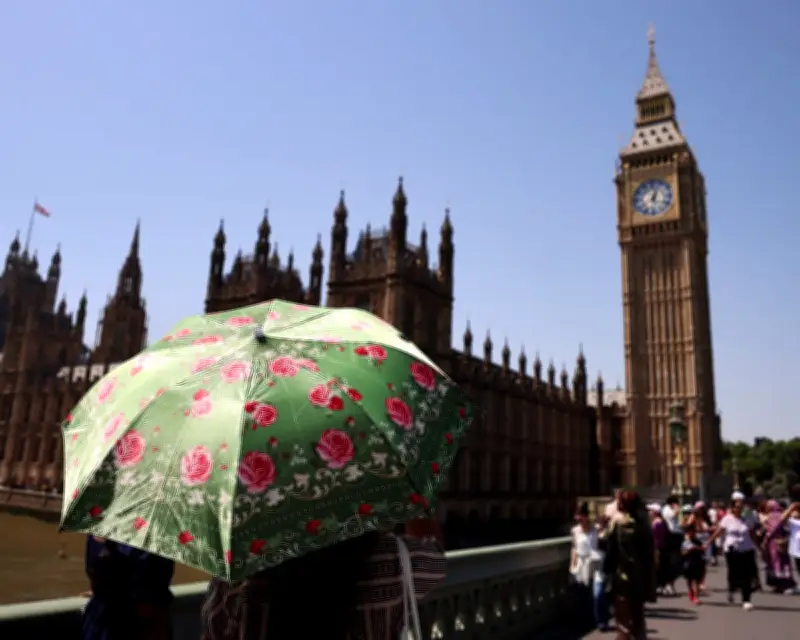
The heatwave scorching western Europe is the most severe and widespread ever recorded and is only possible due to the climate crisis driven by fossil fuel burning, scientists have said. Almost half of Europe’s 850 largest cities are enduring their worst ever heat stress, a combination of temperature and humidity, according to the World Weather Attribution (WWA) consortium.
Record Temperatures and Health Impacts
The analysis comes as the UK recorded its hottest ever June temperature on Thursday, reaching 36.7C (98.06F) in Somerset. Much of western Europe has seen a sharp rise in medical emergencies, including some deaths. In summer 2022, more than 60,000 people died due to heat in Europe. The statistical analysis to assess the current heatwave's impact will take time, but it is certain to exact a heavy toll, disrupting lives with school closures, hospital strain, and rail and air cancellations.
Dr Theodore Keeping, an extreme weather research associate at Imperial College London and part of the WWA team, said: “This is the most severe and widespread heatwave to have ever affected this large a region of Europe. We found that in the last 50 years, during which time the planet has warmed by 1.1C, the chance of a heatwave like this has changed immensely. This event would not have been possible in June without climate change.”
Humidity Exacerbates Heat Stress
The scientists used wet bulb globe temperatures to assess the additional impact of high humidity. “It accounts for the ability of the human body to cool itself down. With the worst conditions ever experienced in 45% of cities over 50,000 people, the health impacts of this heatwave are likely to be extremely high,” Keeping said. “The speed of change is startling.”
On Wednesday, the London ambulance service responded to its highest ever number of life-threatening emergencies in a single day – 641. The UK Health Security Agency (UKHSA) and Met Office have issued red alerts, warning that everyone is in danger. The UKHSA extended its red heat-health alert by 24 hours, to 11pm on Friday.
Climate Change the Driving Force
The WWA team used observed and reliable forecast temperature data to analyse the hottest three-day period across western Europe, which is sitting under a “heat dome”. They found unequivocally that climate change was the driving force behind the severity of the heat. As recently as 2003, a similar heatwave would have been 2C cooler due to lower global heating; in 1976, it would have been 3.5C cooler. Sweltering night-time temperatures are about 100 times more likely today than in 2003.
Simon Stiell, the UN’s climate chief, commented: “Climate change is running rampant, caused by the world’s addiction to burning coal, oil and gas. But the solutions are equally clear: a faster shift to clean energy – which is now much cheaper than fossil fuels – as well as protecting forests and building climate resilience.”
Urgent Need for Adaptation
Carolina Pereira Marghidan, of the Red Cross Red Crescent Climate Centre, said: “After the devastating 2003 heatwave in Europe, many countries invested in early warning systems and action plans. Research shows that those have saved many lives, but it’s not enough. We need greater investment in heat-resilient homes, cities and infrastructure to keep people safe.”
The UK government’s Climate Change Committee said in May that the country’s infrastructure was “built for a climate that no longer exists” and needed urgent improvement. A study of a smaller European heatwave in 2024 found that in 12 cities, more than 2,300 people died in three days due to higher temperatures, with two-thirds of those deaths attributable to climate change, according to Prof Friederike Otto, a climate scientist at Imperial College London and co-founder of WWA.
“Scientists like me are beginning to sound like a broken record, reacting year after year to heat extremes that climb ever higher,” Otto said. “Yes this is climate change, yes it’s us, yes we have the solutions, no we’re not implementing them fast enough. It’s really now a question of what kind of future we want for ourselves, and whether we’re willing to do what it takes to secure it.”




