Emperor Penguins and Antarctic Fur Seals Face Dire Extinction Threat in New Climate Assessment
Both emperor penguins and Antarctic fur seals are confronting the imminent threat of extinction, according to a devastating new conservation evaluation. The latest assessment for the International Union for Conservation of Nature's red list of threatened species has revealed dramatic population declines for these iconic Antarctic species, primarily driven by climate change impacts.
Emperor Penguins Reclassified as Endangered
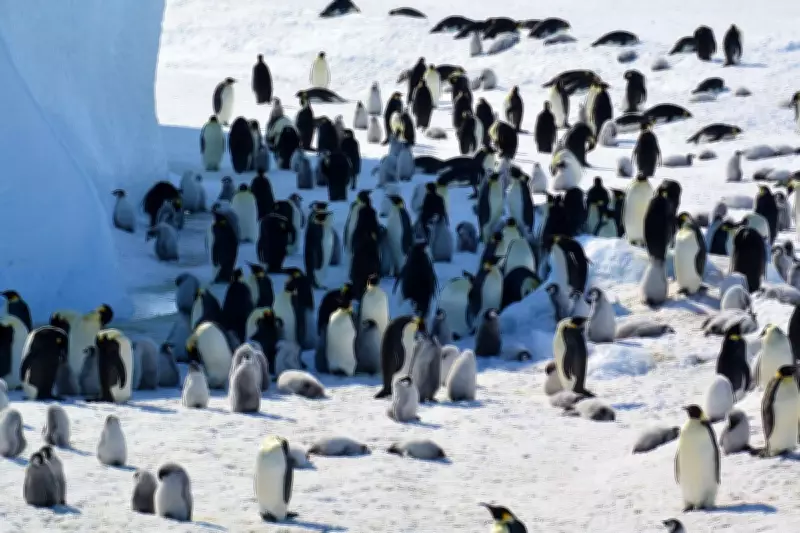
The emperor penguin, found exclusively in Antarctica, has been officially reclassified from "near threatened" to "endangered" status on the IUCN red list. This significant change reflects how accelerating global warming is causing the premature break-up and disappearance of vital sea ice that these birds depend upon for survival.
Satellite imagery analysis indicates the species experienced approximately a 10 percent population decrease between 2009 and 2018 alone, representing over 20,000 adult penguins lost. New projections suggest the emperor penguin population could potentially halve by the 2080s without immediate and substantial reductions in greenhouse gas emissions.

Martin Harper, chief executive of BirdLife International, which led the emperor penguin assessment, stated: "Climate change is accelerating the extinction crisis before our eyes. Governments must act now to urgently decarbonise our economies."
Critical Dependence on Sea Ice
Emperor penguins rely specifically on sea ice that is "fastened" to coastlines, ocean floors, or grounded icebergs. They utilize this stable ice as essential habitat for raising their chicks and during their annual moulting season when they temporarily lose waterproofing, making sea ice loss potentially fatal for entire colonies.
Rod Downie, WWF's chief adviser for polar and oceans, warned: "The fate of these magnificent birds is in our hands. With the shocking decline in Antarctic sea ice that we are currently witnessing, these icons on ice may well be heading down the slippery slope towards extinction by the end of this century – unless we act now."
Antarctic Fur Seals Experience Dramatic Decline
Concurrently, the Antarctic fur seal has been moved from "least concern" to "endangered" status following a population collapse exceeding 50 percent over just 25 years. The number of mature seals has plummeted from an estimated 2,187,000 in 1999 to approximately 944,000 in 2025.
This alarming decline is attributed to rising ocean temperatures and shrinking sea ice, which are forcing krill – the seals' primary food source – into deeper, colder waters. In South Georgia, an island north of Antarctica in the Atlantic Ocean, krill shortages have severely impacted seal pup survival rates during their critical first year, resulting in an ageing breeding population.
Additional Species Affected by Environmental Changes
The southern elephant seal has also seen its conservation status change from "least concern" to "vulnerable" on the red list, following population declines caused by bird flu outbreaks. The disease has affected four of the five major subpopulations, killing over 90 percent of newborn pups in some colonies and significantly impacting adult females.
This development raises growing concerns that disease-related mortalities among marine animals will increase with global warming, particularly in polar regions where animals historically had limited exposure to such pathogens.
Urgent Calls for Action and Monitoring
Dr Kit Kovacs, co-chair of the IUCN pinniped specialist group, emphasized: "These assessments sound an alarm for all Antarctic seals, as we are concerned about how environmental changes are affecting all ice-dependent species." Despite logistical challenges and high costs, Dr Kovacs stressed that monitoring climate change impacts in Antarctica is "urgently needed."
She urged parties to support enhanced data collection on seals at the upcoming Antarctic Treaty consultative meeting in May, where nations will convene to collaborate on research activities across the continent.

Dr Grethel Aguilar, IUCN director general, stated: "These important findings should spur us into action across all sectors and levels of society to decisively address climate change. As countries prepare to gather at the Antarctic treaty consultative meeting in May, these assessments provide essential data to inform decisions regarding this majestic continent and its awe-inspiring wildlife."
Conservation Efforts and Future Protection
WWF, which has supported research efforts monitoring these vulnerable species, is advocating for emperor penguins to be designated as a "specially protected species" under the Antarctic Treaty framework. The findings have intensified calls for immediate global action to curb planet-heating greenhouse gas emissions and to bolster Antarctica's crucial role in stabilizing the global climate while safeguarding its unique wildlife.
The conservation assessment underscores how climate change is creating cascading effects throughout Antarctic ecosystems, threatening species that have evolved to survive in one of Earth's most extreme environments. Without decisive intervention, experts warn that these iconic animals could disappear within decades, representing an irreversible loss to global biodiversity.