
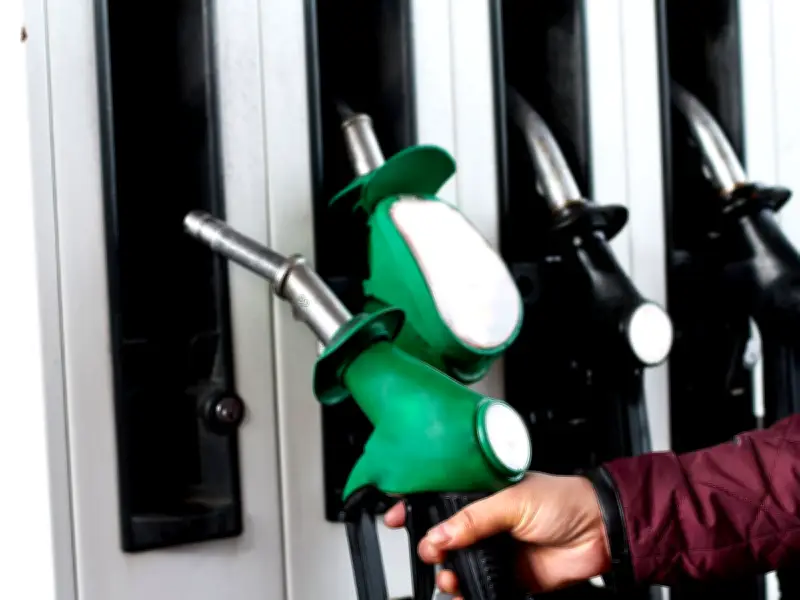
The Met Office has warned that temperatures could hit 34°C in parts of the UK next week, prompting experts to advise drivers to fill up their tanks before the heatwave strikes. Hot weather can cause cars to burn fuel more quickly, potentially leaving motorists stranded if they rely on normal fuel level estimates.
Heatwave Forecast and Fuel Economy Impact
Temperatures are expected to reach the low 30s Celsius at the start of the week, peaking at 34°C in the South East on Thursday or Friday. The heat can have a significant impact on fuel economy, largely due to driver behaviour such as using air conditioning. According to the US Department of Energy, under very hot conditions, air conditioning use can reduce a conventional vehicle's fuel economy by more than 25%, especially on short trips. The effect is even greater for hybrids, plug-in hybrids, and electric vehicles on a percentage basis.
Fuel gauges can also become inaccurate in extreme heat, making it harder to judge remaining fuel. The Express reported that drivers should not rely on their usual estimations of how much time they have left before needing to refuel.
Expert Advice on Refuelling
Experts at PassMeFast.co.uk said: “When it comes to topping up the petrol in your car, there are two kinds of people: those who refill as soon as the fuel tank gets to around a quarter full, and those who are happy to drive around with the fuel warning light on. The thing is, when the weather's nice and warm, your car's fuel levels drop a lot quicker than usual. This means you can't rely on your normal estimations of how much time you have left before needing to fill up. To avoid getting stuck in the middle of nowhere, or at the centre of a traffic jam on a hot day (both nightmare scenarios), make sure you head to the petrol station in good time. Playing it close to the line is just not worth it if the sun's out!”
Myth of Explosion Risk Debunked
Some drivers have previously been warned not to fill up their tank during hot weather due to a risk of the vehicle exploding. However, this is a myth. RAC spokesperson Rod Dennis said: “There is no truth in this. All fuel systems on passenger vehicles are designed to cope with any expansion of fuel, or vapour coming from the fuel. There is no risk of explosion from filling up a fuel tank fully and drivers should have no concerns in doing so.”
Optimal Temperature for Fuel Economy
Experts note that there is a sweet spot for fuel economy. Fuel Finder UK explains: “According to official fuel economy tests, your car's efficiency drops by around 10% at -5°C compared to 20°C. For short trips under four miles, that penalty can reach 20% or more.” The ideal temperature range for fuel economy is between 15°C and 20°C. However, when temperatures hit 32°C, engine performance decreases and the risk of overheating increases, further reducing fuel efficiency.




