
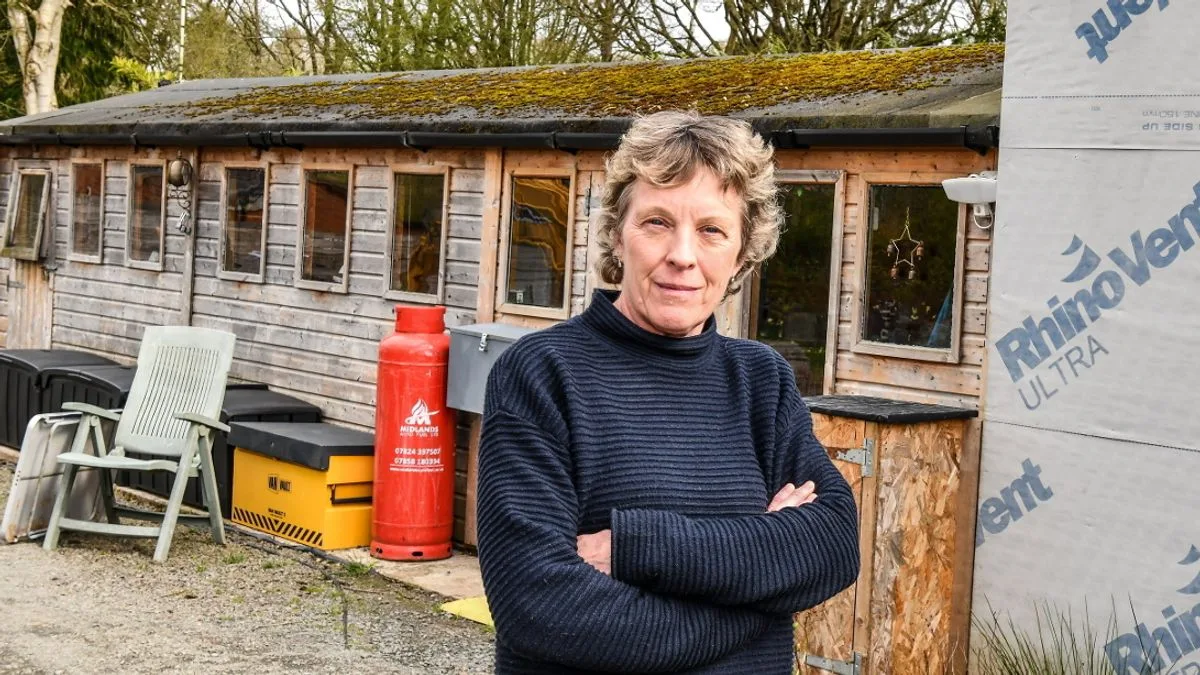
A retired couple from Herefordshire have been forced to live in a garden shed for four years after strict river pollution rules prevented them from building their dream eco-home. Jane Coyle, 64, and her husband Anthony, 67, sold their six-bedroom farmhouse in Ross-on-Wye in 2018 and invested £120,000 in a plot of land in Edwyn Ralph, with plans to build a three-bedroom home.
However, their planning application, submitted in September 2020, was blocked by the 'Lugg Moratorium' — a ban on new developments that could add phosphate pollution to the River Lugg, despite the site being 12 miles from the river. The couple initially lived in a caravan on the land, but in 2022 they moved into a 19ft by 9ft garden shed after becoming unable to continue in the static vehicle.
Mrs Coyle said they were encouraged by a planning officer who assured them the ban would be lifted quickly, but it took five years to obtain permission. She described the situation as 'crazy', noting that houses just three-quarters of a mile away had been granted permission. The couple finally received planning approval in July 2025 after purchasing 'phosphate credits' costing £7,000, which fund a wetlands project to offset pollution.
Mrs Coyle, who has three grandchildren, said the delay has been particularly difficult as her husband is 'very ill' and unable to carry out building work themselves. The couple now face paying £400,000 to £500,000 for a professional builder, on top of the £250,000 they had already set aside for construction.
The Coyles have joined one of the largest environmental lawsuits in UK history, brought by law firm Leigh Day against poultry producer Avara Foods, its subsidiary Freemans of Newent, and Welsh Water. The legal action, representing around 4,000 people affected by river pollution, alleges that chicken farms produce 66% of nutrient pollution in the river, while new homes account for less than 1%. Avara Foods has said it has 'done more than any other poultry business' to address river health and that there is no scientific evidence directly linking its operations to pollution.




