Colombian Wetlands Crisis: Oil Spills and Armed Gangs Threaten Endangered Species
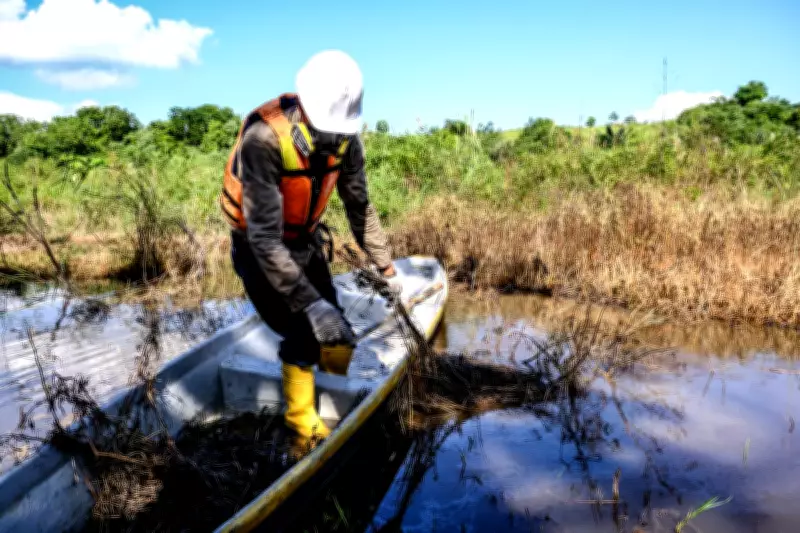
Polluted vegetation is being cleared from the water following a refinery pipeline burst that occurred last October. The wetlands, located near the Colombian oil town of Barrancabermeja, serve as a habitat for several endangered species, including manatees – animals once revered as guardian spirits of the lagoons – and jaguars. This area, once a paradise, has transformed into a death zone due to environmental damage and violence.
Environmental Catastrophe Unfolds
Standing on her wooden canoe with a machete in hand, Yuly Velásquez hacks away at reeds coated with blackened sludge. Nearby, a burst oil pipe has released a slick of crude into the San Silvestre wetlands in Barrancabermeja, Colombia's oil city, suffocating the water and its wildlife. "The destruction is immense," says Velásquez, president of Fedepesan, a sustainable fishing organisation. "For the fish, the animals and flora, it means immediate death."
With its swamps, lagoons, and forests, Barrancabermeja is situated in a biodiversity hotspot, home to endangered river turtles and manatees, while the wetlands act as a corridor for roaming jaguars. However, it is also Colombia's largest oil town, where gas flares shoot into the sky from a complex network of tanks, pipes, and chimneys, producing up to 250,000 barrels of crude oil daily and meeting 80% of the national fuel demand.

Decades of Pollution and Cover-Ups
For decades, the refinery, operated by the majority state-owned company Ecopetrol, has faced accusations of releasing oil and toxic waste into nearby rivers and wetlands, causing leaks that pollute the region's fishing grounds. Environmental authorities and residents report catastrophic impacts: fish populations have crashed, water quality has deteriorated, and manatee numbers are believed to be on the brink of collapse.
A report published last year by the Environmental Investigation Agency and Earthworks identified over 800 records of "major environmental damage" caused by Ecopetrol, mostly from the mid-1990s to the mid-2010s. Based on leaked files known as the Iguana Papers, the report described a "web of deceit and cover-ups" allegedly used to conceal incidents, with a fifth not reported to Colombian authorities. A BBC investigation last year further found that Ecopetrol has spilt oil hundreds of times since then.
Ecopetrol has rejected claims of polluting local water sources, insisting on full compliance with Colombian law. However, by the end of last year, vast areas remained contaminated from a pipeline fracture, with an oily sheen on the water and a pungent petrol smell in the air. The company states that its subsidiary is working to contain and remediate October's leak, maintains that operations comply with environmental regulations without harming water quality, and highlights investments to reduce discharges and protect wildlife. It also rejected the Iguana Papers allegations, asserting that incidents were duly reported, data was misinterpreted, and most historical contamination sites have been restored.
Impact on Local Communities and Livelihoods
For riverside communities relying almost entirely on fishing, the impact is stark. "Yet again, hundreds of fish, snakes, birds, turtles and caimans have died overnight," says Luis Carlos Lambraño, 56, a fisherman for 37 years. "If we can't fish, we can't eat. I feel utter sadness."
Ronaldo Martínez, a 68-year-old farmer, reports that contamination has become impossible to ignore, with water buffalo drinking poisoned water and dying. "We've had about 30 buffalo die on us this way in the last five years," he says, noting that finding dead animals, including caimans and fish, has become normal. He adds that fish during oil spills "taste like oil" when cut open, blaming Ecopetrol for inadequate management of oxidation ponds.

Armed Groups and Intimidation Escalate Crisis
Compounding the environmental crisis is the expansion of illegal armed groups, known as "gasoline gangs," which seek to control the waterways. These groups hack into oil pipelines to steal and sell fuel illicitly, often causing spills. "Every single day they steal the gasoline," says Velásquez, who monitors biodiversity. "When their massive plastic bags break, it spills into all of the water."
The presence of armed groups has made fishing perilous, with local activists facing threats, intimidation, and assassination attempts. Drones are used to monitor fishing boats until they retreat. Velásquez has suffered repeated attacks on her home, three assassination attempts – one involving her bodyguard being shot – and threats to her family for speaking out. Colombia is one of the most dangerous countries for land and environmental defenders, accounting for a third of all documented lethal attacks, according to Global Witness.
Lambraño describes being intercepted by gang members in February, chased off the water with shots fired. Eñi Salazar, a 66-year-old fisher since childhood, has been threatened multiple times, with armed men seizing her boat engine and warning, "If we ever see you here again, we'll kill you." Amnesty International reports a permanent atmosphere of harassment, including extortion attempts and forced displacements, with 26 fishing families displaced in February 2025. Velásquez estimates about 100 colleagues have stopped fishing due to intimidation.
Community Calls for Peace and Protection
Despite the dangers, Velásquez emphasizes that waiting for action is no longer an option. "Every day we see places where wildlife used to live disappear," she says. "We can't wait for someone else to come and take care of it for us." The community's demands are simple: "We want to be left alone to live in peace and to truly be able to enjoy our marsh, our river, day and night, without limits or restrictions."