How the Climate Crisis Endangers Our Food and Its Producers
Data reveals why non-governmental organisations, politicians, and businesses are urgently pressing the government to enact legislation that will strengthen supply chains as the climate crisis intensifies. Across the globe, harvests long relied upon for familiar and beloved foods are failing. Spanish olives, Floridian oranges, Ghanaian cocoa beans, and Costa Rican pineapples are among the crops affected by climate shocks in recent years, disrupting supplies and inflating prices on supermarket shelves.
Escalating Risks and the Push for Mandatory Checks
This growing climate threat is a key reason why NGOs and ethical investors are vigorously campaigning for the UK to implement mandatory assessments of environmental impact and human rights in supply chains. This initiative is hailed as a once-in-a-decade chance to mitigate the UK's global footprint. Currently, the absence of due diligence laws means there is insufficient clear data on how many UK companies effectively monitor and address supply chain risks.
Available indicators suggest very few do, with a recent evaluation finding that food and drinks companies averaged only 15 out of 100 in labour standards monitoring. Advocates argue that introducing a new supply chain law would establish measures to keep favourite foods available year-round at fair prices. It would also ensure fair treatment for farmers and suppliers, enabling them to better adapt to the climate crisis.

Evidence from Inflation and Crop Failures
The need to fortify food systems against climate threats is evident in the UK's prolonged high inflation. The Bank of England's Monetary Policy Committee noted in an August report that extreme global weather, raising costs of specific foods, contributed significantly. For instance, coffee prices surged in commodity markets as unusually hot, dry conditions in Brazil and Vietnam affected Arabica and Robusta beans in 2023 and 2024, leading to a notable rise in the UK's Consumer Price Inflation for coffee.
Data also shows particularly high inflation for beef and dairy products in the UK. Consecutive years of weather extremes, including summer droughts, unseasonal rainfall, and flooding, reduced pasture productivity and disrupted grazing patterns nationwide. Simultaneously, droughts in the Brazilian Amazon and pasture fires in Australia increased beef import prices. Climate extremes also impacted dairy outputs, pushing butter inflation to 18.9 per cent year-on-year in 2025. Experts warn that without intervention, such scenarios will become more frequent.
Expert Warnings and Technological Disparities
Christian Jaccarini from the Energy and Climate Intelligence Unit states, These climate-related food price risks could get significantly worse. We've already crossed one climate tipping point – the point of no return for warm water coral reefs – with major implications for fisheries worldwide. And as the government's own recent national security assessment says, every critical global ecosystem is now on a pathway to collapse. He adds that this would have profound consequences, such as water insecurity, reduced crop yields, loss of arable land, fisheries collapse, heightened disease risks, and accelerating climate change.
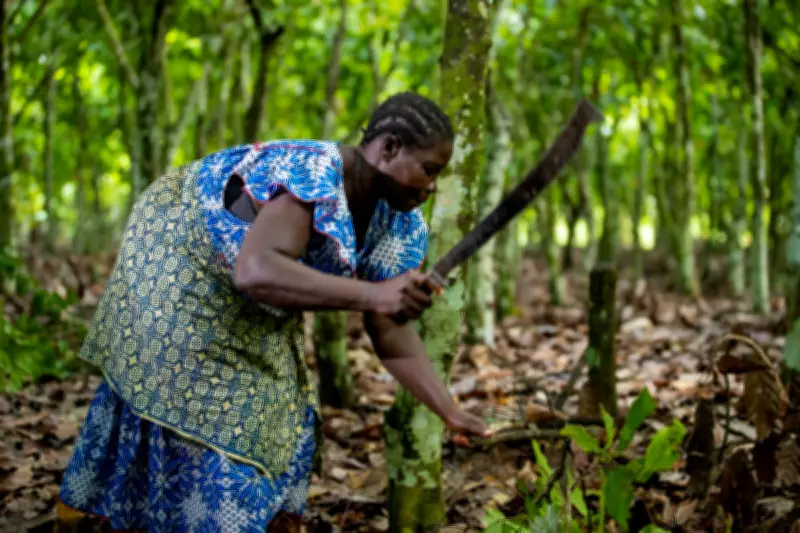
Wealthier food-supplying countries like Brazil and Australia can invest in new technologies to hedge against climate risks. Sabine Altendorf, an economist at the UN Food and Agriculture Organisation, explains that advancements in farming technologies, such as drones, precision application of pesticides and fertilisers, and drip irrigation, drive yield improvements. However, these technologies are very expensive and largely inaccessible to small-scale farmers in developing countries, who produce about one-third of the world's food and a significant share of tea, coffee, cocoa, and tropical fruits consumed in the UK.
Altendorf notes, While agriculture yields have so far held up globally, among small-holder farmers we are seeing climate and adverse weather conditions lead to really dire consequences. Their struggles are exacerbated by pricing from Global North retailers, making bananas and pineapples often cheaper than domestic fruits like cherries or apples.

Aid Cuts and Legislative Hopes
Furthermore, aid programmes historically supporting farmers' climate adaptation are increasingly threatened as countries like the US and UK reduce overseas spending. For example, US funding for the FAO, which runs many climate adaptation programmes in developing countries, more than halved year-on-year. This decline in public aid underscores why campaigners emphasise the importance of mandatory supply chain due diligence in the UK, ensuring that UK trade and investment abroad yield fair profits for food suppliers.
Martin Rhodes, the Labour MP and chair of the All-Party Parliamentary Group on Fairtrade, tells The Independent, With the reductions in official development assistance by the UK and globally, and the ongoing climate emergency, we should be viewing ethical trade including through mandatory Human Rights and Environmental Due Diligence as a cost-effective way to put our principles into practice. The Government's recent trade strategy contains very welcome and strong commitments to embedding human rights and environmental standards into trade policy. I hope the responsible business conduct review builds on this and leads to a clear commitment to introduce HREDD in the next Parliamentary Session.
Campaigners anticipate news on whether the UK will introduce a mandatory supply chain law in March. This article has been produced as part of The Independent's Rethinking Global Aid project.