
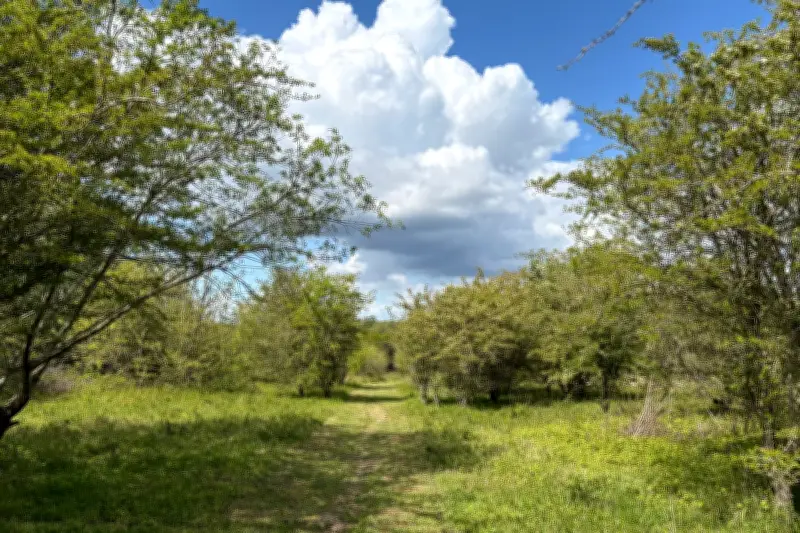
Truly wild areas should be “within striking distance of everyone” so people can see how nature-rich their landscapes could be, conservationists have said. As nature has declined in the UK, each generation accepts a world with progressively less wildlife as normal and only understands the losses since they were young, in a phenomenon known as shifting baselines. But some flagship rewilding sites are reversing the trend, amazing experts and the public with how much nature they can hold and prompting calls for more places where people can find inspiration and a boost to health and wellbeing from being close to the wild.
Strawberry Hill: A 40-Year Rewilding Success
At Strawberry Hill, Bedfordshire, farmland was left to go wild nearly 40 years ago and rescued as a nature reserve in 2024 thanks to a public appeal by the Wildlife Trust for Beds, Cambs and Northants (BCN). In the scrub, low trees and grassy landscape at the centre of the 350-acre reserve in early summer, the air is filled with the calls of nightingales, cuckoos, willow warblers and grasshopper warblers. A single swish of a bug net against a hawthorn bush reveals what is sustaining so many birds – a huge number of different caterpillars, as well as bugs and spiders. The site also has species such as red-listed turtledoves, black hairstreak butterflies and common lizards.
BCN Wildlife Trust’s chief executive Brian Eversham puts the richness of the site down to its size and diversity, and the amount of “middle” it has, where the drift of pesticides from surrounding conventional farmland cannot reach. “I’ve lived through 50-odd years of good natural history, as someone who has seen the shifting baseline in my own life, and Strawberry Hill is taking me back to my teenage years and beyond, both in terms of insect abundance and birdsong,” he said. “On a good day at Strawberry Hill – you wouldn’t want to talk over it – but you actually have to raise your voice to talk over the volume of birds, and that’s not a problem that many people suffer from any more.”
Insect Abundance and Surprise
The level of insect life has led one entomologist to describe Strawberry Hill as the best rewilding site he has seen, Mr Eversham said, and the reserve has the “element of surprise” for visitors that they would not get in their local park or green space. “Every time you turn a corner, there could be something new and different,” he said. “It renews this sense the countryside can be surprising.” That sense of surprise, and a “feeling everything is alive”, is something people experience at flagship rewilding site Knepp in West Sussex, according to Isabella Tree, who owns the estate with her husband Charlie Burrell. The couple halted conventional farming at Knepp in 2000 and began restoring natural processes on the estate, with animals including longhorn cattle, red and fallow deer, Exmoor ponies, pigs, beavers and storks.
Knepp is home to soaring numbers of birds such as nightingales, butterflies including purple emperors, dragonflies and damselflies, and even pine martens have been spotted. Ms Tree says that within the first year after arable fields had been resown with native wildflowers and grasses, the noise of the insects was “overwhelming”. “And with every footstep you were kicking up common blue butterflies and grasshoppers, this life just lifting from the ground in front of your feet. That was both profoundly joyful, but also really shocking, because you suddenly realised what we’d been missing and hadn’t known we’d been missing,” she said.
Need for More Rewilding Sites
Birders conducting surveys have been unable to cope with the number they could hear at once, and ecologists could not believe the number of nightingales there are, she said. And she said there was a need for more Knepps in every county, to shift the “baseline” in the other direction through exposure to abundant wildlife. “Then you go away to the farmland that you love, or the Downs that you walk or a nature reserve, even, and you realise that actually there’s not as much there, and it makes you hungrier for more, because of how it makes you feel, just lighter and happier,” she said. “Truly wild areas should be in striking distance of everyone,” she added, so people could see how wildlife could be brought back to their own area, and also gain physical and mental health benefits from being in nature.
Alison Ruyter, wilder grazing lead at Kent Wildlife Trust, says projects like the scheme to bring bison to Blean Woods, near Canterbury, generate excitement for people who see a solution to growing issues they are experiencing such as climate change. It is hoped the animals, the closest relative of ancient steppe bison that would have roamed Britain thousands of years ago, can restore habitats with their natural behaviours of grazing, felling trees, eating bark and taking dust baths, to help nature thrive and improve resilience to climate change. “People need to envisage what they want, and once you can see it, once you can imagine it, you will drive yourself to create it. And places like Knepp and places like Blean show the art of the possible,” she said.
Future Vision: A Network of Wild Spaces
For his part, Mr Eversham wants a series of Strawberry Hills dotted through the countryside of the Oxford-Cambridge arc – an economic development zone planned for the swathe of England between the two university cities. These could be “nodes” in a network of nature sites that help wildlife move through the landscape in response to climate change, but also for people moving into the area to experience beautiful, wilder places. “The good news from Strawberry Hill is we can bring it back, we know roughly what to do, and for a lot of bird species, we can create the habitat if we have the space and the time,” he said.




