
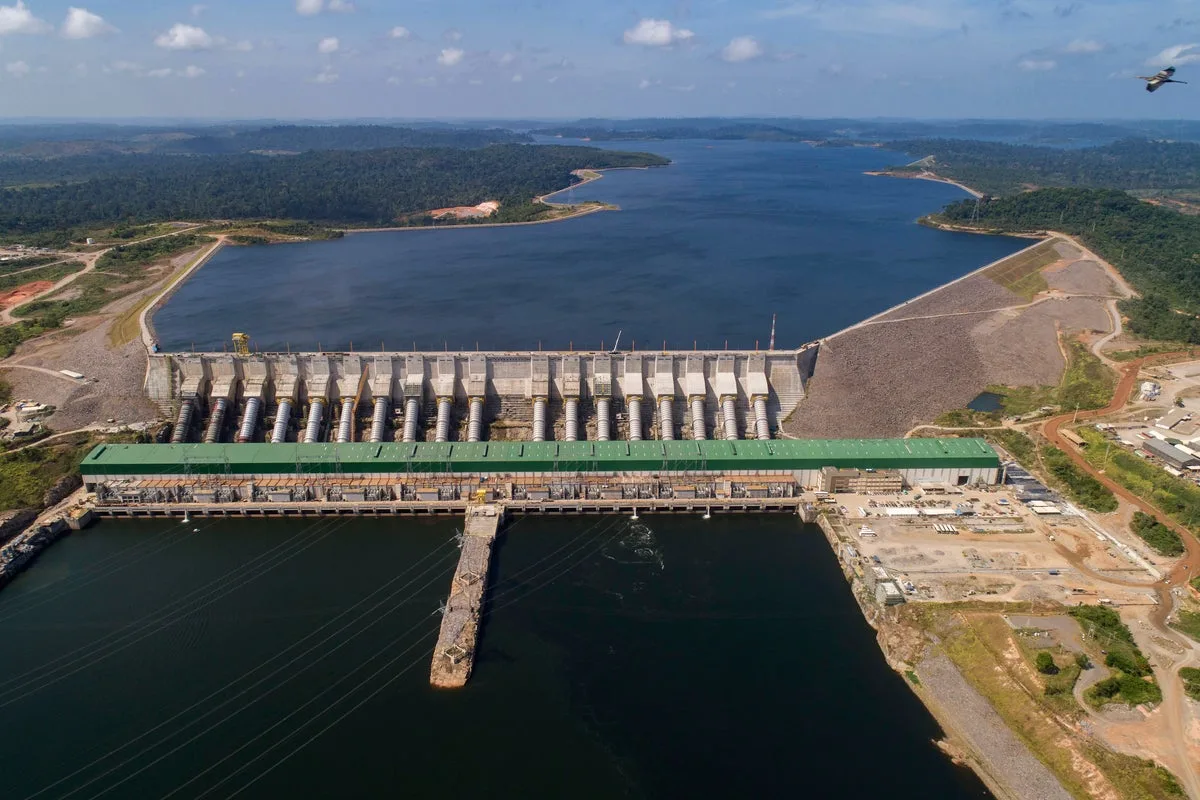
Legal setbacks against the Belo Monte hydropower plant in the Brazilian Amazon have raised broader questions about Brazil's reliance on hydropower. The dam, one of the world's largest, was designed to channel water from the Xingu River without large reservoirs, but courts have found its environmental and social impacts far greater than forecast.
In December, the Supreme Court ordered the federal government to pay 19 million reais ($3.6 million) in compensation to affected Indigenous communities. Separately, a local court ordered operator Norte Energia to supply clean water to communities whose natural sources dried up. The most consequential ruling requires the company to reassess how much water it diverts from the Xingu River, potentially reducing power output.
Norte Energia said the ruling would have no immediate effect, as changes could only occur after appeals. It also said its current model balances environmental concerns with energy security and consumer costs. The company has begun supplying 20-litre water jugs every 15 days to families in the Xingu region, though not all households have been registered.
Belo Monte was built amid protests and legal challenges. In 2012, construction was temporarily halted after a court ruled that potentially impacted communities had not been properly consulted. Norte Energia denied the damages and said the dam did not displace or flood Indigenous communities.
Starting in February, new legislation will fast-track approval of strategic infrastructure projects, reducing licensing processes from six or seven years to 12 months. Analysts say this could lead to less rigorous scrutiny of social and environmental impacts. The Brazilian Institute of Environment and Renewable Natural Resources said the new legislation could potentially impact environmental protection and legal certainty.
Natalie Unterstell, president of Talanoa, a Brazilian climate think tank, said Belo Monte illustrates how impacts such as altered river flows are often underestimated. “Belo Monte is a reminder that climate leadership is not just about curbing deforestation or making speeches at COP summits,” she said.




