
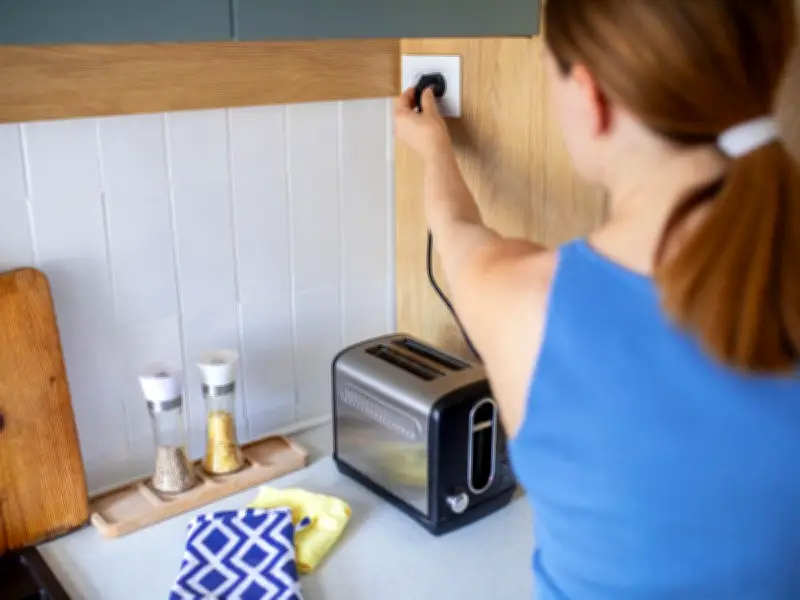
With schools breaking up for summer and thousands preparing for their holidays, experts are warning that many still overlook simple but important steps to prepare their home before going away. Failing to properly switch off appliances, water systems, and heating can lead to unnecessary energy costs, as well as increased risks of fire and water damage while properties are left unoccupied.
10 Devices to Unplug Before You Go
Martin Garbutt, Head of Technical Governance at Ding, said: “Even short trips away from home can create unexpected risks that people often overlook. A few simple checks before leaving can help prevent issues such as electrical faults, water leaks, and unnecessary costs while you’re away.” From coffee machines and air fryers to laptops and chargers, many household devices continue drawing power even when not in use. Martin says, “People often forget how many appliances are left plugged in around the home. Unplugging unnecessary devices not only cuts energy waste, but also reduces the risk of electrical faults and fires while the property is empty.”
The appliances to unplug include: kettles, air fryers, toasters, electric hobs, ovens, laptops, computers, washing machines, TVs, and games consoles. He added: “Unplugging devices can also help protect expensive electronics from power surges while you’re away. Replacing damaged appliances after a surge can be far more costly than taking a few minutes to unplug them before leaving.”
Lithium-Ion Battery Risks
Households are also being reminded to avoid leaving lithium-ion devices charging unattended for long periods. The British Safety Council adds that: “Lithium-ion battery failures are relatively rare, but in the event of a malfunction, they can represent a serious fire risk. Items should never be left on charge unattended.” Laptops are another commonly overlooked item. Closing the lid without fully shutting the device down can continue draining power and generating heat unnecessarily.
Appliances That Should Stay On
However, some appliances should remain switched on, including your fridge-freezer and Wi-Fi router. “Your router uses very little electricity, and switching it off could disable smart security systems, cameras, or other connected devices while you’re away,” Martin adds. He also recommends a simple test to check for hidden power cuts while away: “Freeze a small container of water and place a coin on top. If the coin sinks beneath the ice by the time you return, it could indicate your freezer defrosted during a power cut.”
Turn Off Your Water Supply
Martin said: “Many people only think about burst pipes in winter, but leaks from toilets, washing machines, or taps can cause serious damage at any time of year.” Despite the stopcock being the main water valve in every UK home, almost seven million UK citizens have no idea what a main stopcock valve is. Before travelling, households are advised to turn off their internal stopcock, which is usually located under the kitchen sink or near where the mains water enters the property. Martin said: “To close off your water supply, firmly turn the valve handle clockwise (to the right) until it is fully closed. Never force it. If it is seized or stiff, applying too much pressure could break the valve. Then you want to go to your nearest cold water tap (like your kitchen sink) and turn it on to let any remaining water in the pipes run out. This helps depressurise the system. When you return from your travels and are ready to turn the water back on, turn the stopcock anti-clockwise (to the left) slowly.”
Don’t Leave Your Heating Running Unnecessarily
If you’re travelling during warmer months, there’s little reason for your heating or hot water to remain fully operational while the house is empty. However, during colder periods, experts recommend keeping the heating on at a low protective temperature to prevent frozen pipes. “If you have a smart thermostat or digital heating system, using ‘Holiday Mode’ is the easiest and most efficient option,” Martin explains. “Most systems allow users to set an away period and maintain the home at a low temperature, typically between 7 °C and 12 °C, while they’re away. For traditional heating systems, turning the thermostat down low or programming the heating to run briefly once a day can help prevent damage without wasting energy.”




