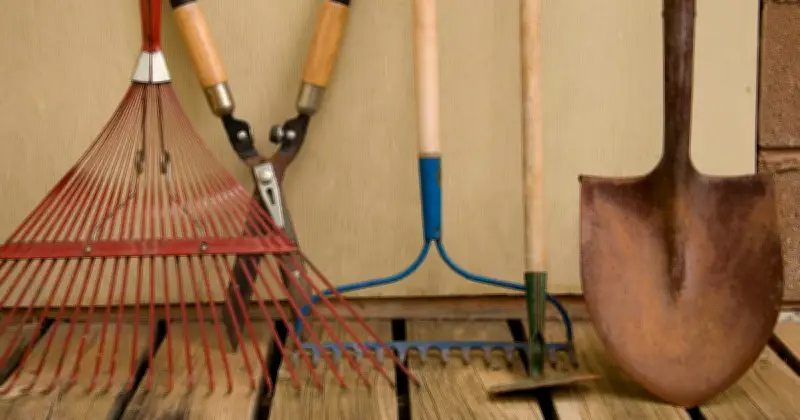
As winter approaches and the garden slows down, it is an ideal time to give garden tools some attention. A little maintenance now can extend their working life, make spring jobs easier and prevent damage from rust, damp or neglect.
Clean and Inspect Before Repairing
Start by removing dried soil, sap and plant debris. A stiff brush will deal with most dirt, while stubborn sap on secateurs and loppers can be loosened carefully before wiping the blades clean. Dry everything thoroughly afterwards, as moisture left on steel encourages rust, particularly if tools are stored in a cold shed over winter.
This is also the moment to inspect each tool properly. Check wooden handles for cracks or splinters, metal heads for movement, and blades for chips, bends or heavy corrosion.
Sharpen Working Edges
Sharp tools make cleaner cuts and require less effort. Secateurs, loppers, shears, hoes and spades can all benefit from sharpening. For bladed tools, follow the original bevel rather than creating a new angle. Work slowly with a sharpening stone or suitable file and always move the sharpener away from your body. Secure the tool firmly first, wear gloves and eye protection, and never hold a blade loosely in your hand while filing it.
With bypass secateurs, sharpen only the bevelled cutting blade unless the manufacturer advises otherwise.
Oil Moving Parts and Store Properly
Once clean and sharp, apply a light coating of oil to exposed metal surfaces to help protect against rust. A few drops around the pivot points of secateurs, shears and loppers will also keep them moving freely. Wooden handles can be lightly sanded if rough, then treated with a suitable oil to help prevent drying and splitting.
Finish by hanging tools somewhere dry and under cover rather than leaving them on a damp floor. Keep cutting edges protected and store heavier tools where they cannot fall. For powered equipment, remove batteries or disconnect the power supply before maintenance, then follow the manufacturer's instructions. More involved repairs are best left to a qualified professional. Half an hour spent caring for tools now can save money and effort when the garden gets busy again.
Repair or Replace?
Not every tired-looking tool needs replacing. Loose screws, worn springs, blunt blades and damaged handles can often be repaired, and many good-quality secateurs have replaceable parts. However, retire tools with badly cracked heads, severely bent blades, unsafe handles or metal that has become deeply weakened by corrosion. If the tool flexes, slips or cannot be made secure for safety, it has likely reached the end of its useful life.